Wat Chong Klang
Wat Chong Klang
35/1 Soi Chamnan Sathit, Tambon Chong Kham, Amphoe Mueang Mae Hong Son, Chang Wat Mae Hong Son 58000, Thaïlande
On the shores of Nong Chong Kham Lake in Mae Hong Son, Wat Chong Klang showcases 19th-century Burmese art with its teak viharn and 180 glass paintings.
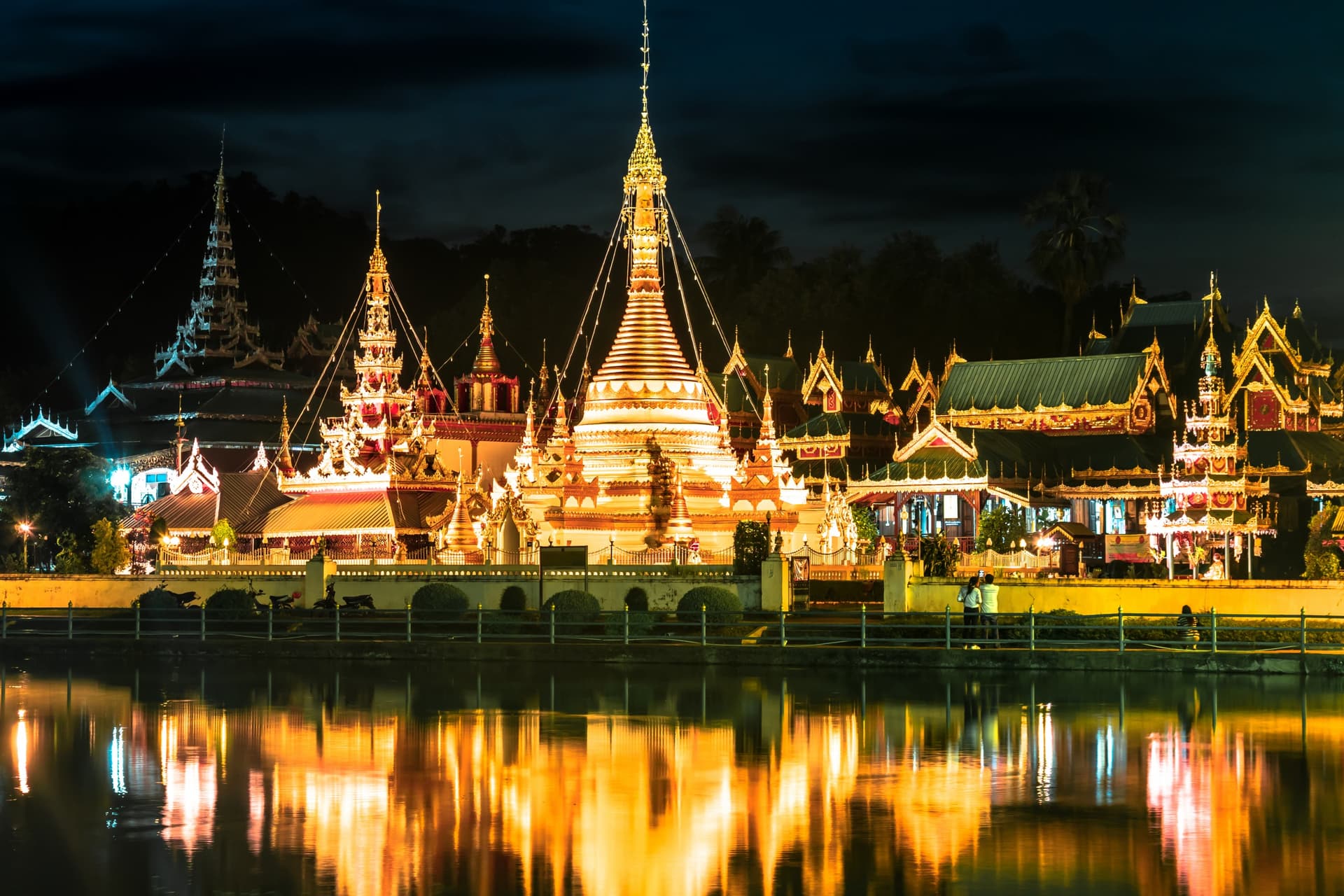
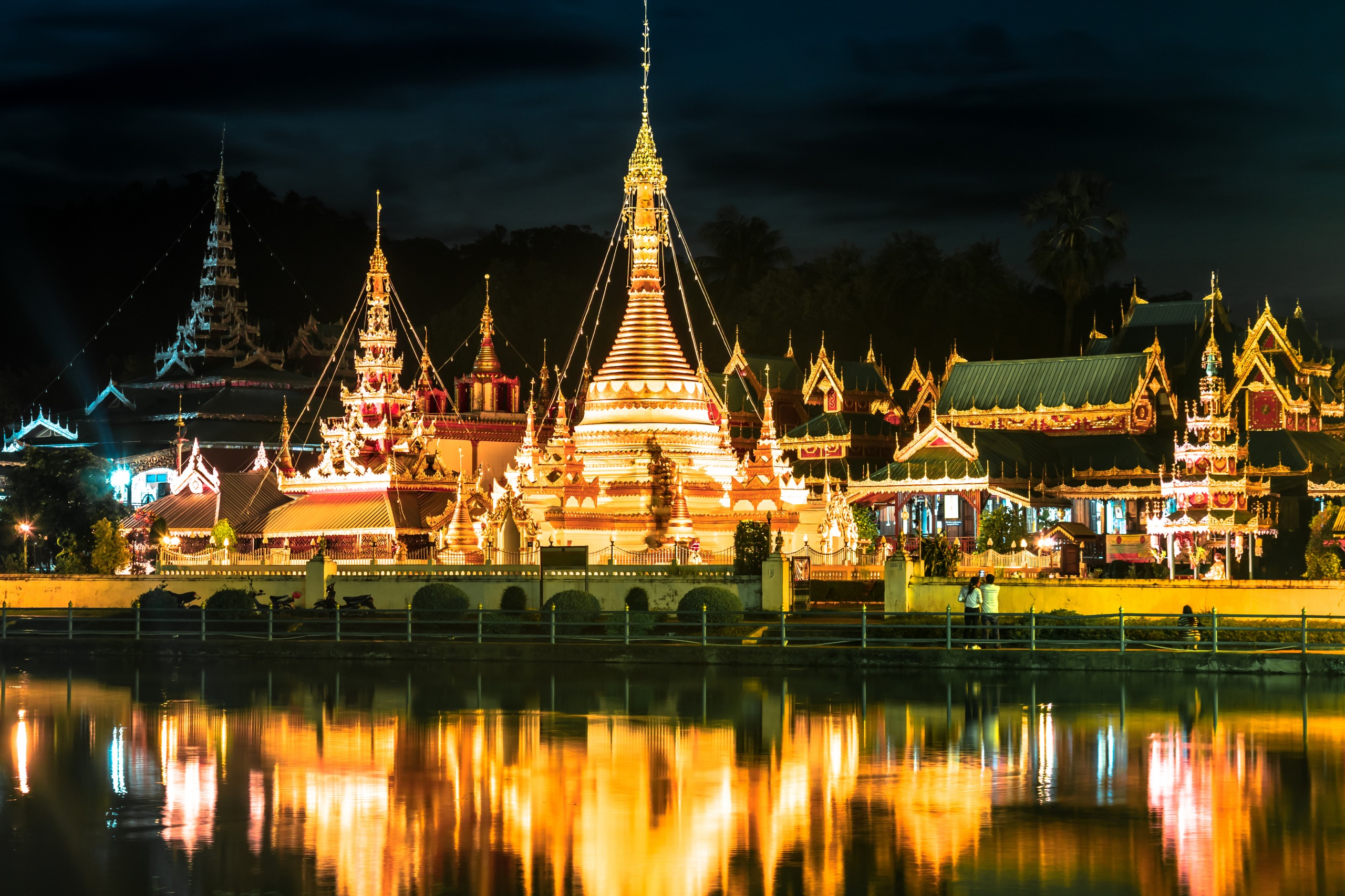
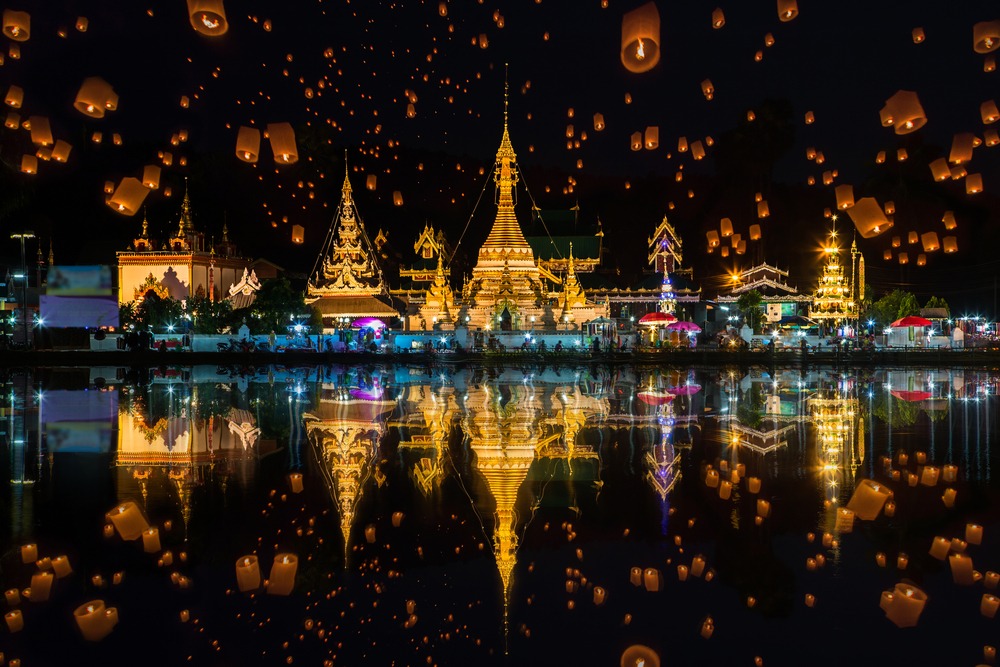
On the shores of Nong Chong Kham Lake in Mae Hong Son, Wat Chong Klang displays its tiered rooflines and white stupa right beside Wat Chong Kham. Built in teak in the early 19th century by Burmese craftsmen, it bears witness to Shan and Yai Tai influence in this border province of northern Thailand.
Why visit Wat Chong Klang
Wat Chong Klang is worth the detour for three compelling reasons. First, its architecture is representative of 19th-century Burmese style, rare in Thailand outside the border provinces. Second, it houses approximately 180 glass paintings evoking the legend of Vessantara Jataka, a central narrative in Theravada Buddhism. Finally, its lakeside setting, paired with the neighbouring Wat Chong Kham, makes it a visual landmark of the city—particularly photogenic in the late afternoon when the rooflines reflect in the water.
History and Shan origins
The sanctuary's construction dates to the early 19th century, when a noble of Shan descent governed Mae Hong Son. With relations between Siam and the Burmese kingdom eased, several Yai Tai families migrated from the Mandalay region to northern Thailand, where the teak trade offered economic opportunities. It was these families, alongside Burmese craftsmen, who undertook the construction of the city's first temples.
Wat Chong Kham was built first, followed shortly after by Wat Chong Klang. Originally, the latter was merely a modest pagoda. The arrival of a venerated monk in the village sparked an expansion programme, supported by royal and local donations. Renovation work spanned four years, between 1867 and 1871, transforming the initial pagoda into a monastic complex.
The white stupa, completed in the 20th century, completes this ensemble. It is crowned by a hti, the metal finial that traditionally caps Burmese stupas.
What to see
The temple grounds can be explored in roughly an hour. Several elements merit particular attention:
- The teak viharn: the main building, entirely constructed of wood, exemplifies Burmese craftsmanship in teak work. The multi-tiered rooflines and gilded facades are characteristic of the style.
- The glass paintings: inside the viharn, some 180 glass panels narrate the story of Vessantara, a former life of the Buddha according to the jataka tales. The narrative features a prince renowned for his absolute generosity.
- The white stupa: tapered in form, completed in the 20th century and crowned with the Burmese hti. A niche in the stupa houses a Buddha in Burmese style.
- The green-roofed sala: an open pavilion used for gatherings and meditation.
- The small attached museum: it preserves some thirty wooden carved figurines representing kings, queens, animals and characters from jataka tales. These pieces were acquired in 1969 from the Burmese sculptors who created them.
Practical information
Access to the temple is free and unrestricted. It is open during daylight hours, from morning through late afternoon. As in any Thai Buddhist temple, plan to wear clothing that covers your shoulders and knees, and remove your shoes before entering buildings. Allow 30 to 60 minutes for your visit, longer if you combine it with the neighbouring Wat Chong Kham.
When to visit
Mae Hong Son enjoys a warm and humid climate tempered by altitude. The most pleasant period extends from November to February, with cool temperatures and clear skies. Peak heat is recorded in April, a month best avoided for comfortable sightseeing. The rainy season, from June to October, can complicate travel in the region but offers interesting light over the lake.
How to get there
Wat Chong Klang is located in the heart of Mae Hong Son, on the south shore of Nong Chong Kham Lake, immediately to the right of Wat Chong Kham. From most central accommodation, it is within walking distance of just a few minutes. For longer distances, songthaews (shared pick-ups) and motorcycle taxis operate throughout the city. A car with driver remains the most flexible option if you combine the visit with other temples in the surrounding area.
Nearby attractions
Several sites naturally complement your visit:
- Wat Chong Kham, the immediate neighbour, renowned for its five-metre Buddha.
- Wat Phra That Doi Kong Mu, perched on a hilltop overlooking the city with sweeping panoramic views.
- The village of Ban Rak Thai, founded by descendants of Chinese settlers from Yunnan, roughly an hour's drive away.
- Tham Lod Cave, near Pang Mapha, accessible as a day excursion.
To place your visit in its regional context, consult our comprehensive guide to Mae Hong Son.
Frequently asked questions
Frequently asked questions
No, access to the temple is free and open to all visitors, whether Thai nationals or foreign guests. A donation remains possible if you wish to contribute.
Allow 30 to 60 minutes for Wat Chong Klang alone, and 1.5 to 2 hours if you combine it with the neighbouring Wat Chong Kham and a walk around the lake.
They illustrate the legend of Vessantara Jataka, the narrative of a former life of the Buddha as a prince celebrated for his generosity. The viharn houses approximately 180 of these paintings.
From November to February, when temperatures are cool and skies are clear. Avoid April, the hottest month of the year in the region.
Planning a journey through northern Thailand? Discover our tailor-made Thailand itineraries to incorporate Mae Hong Son and the loop of Burmese temples into your travel plans.
Also discover
Interested in this visit?
We can include it in your personalised itinerary.