Kanchanaburi
Kanchanaburi
Just 130 km from Bangkok, Kanchanaburi blends the poignant history of the Death Railway, turquoise Erawan Falls and villages along the River Kwai.

Nestled in the River Kwai valley, 130 km west of Bangkok, Kanchanaburi is an unmissable stop for anyone seeking to understand the tragic underbelly of World War II in Asia. Beyond the famous bridge, the province hides turquoise waterfalls, dense forests and a peaceful atmosphere that contrasts sharply with the frenzy of the Thai capital. Its temples, museums and landscapes are well worth a detour for a 2 to 4-day stay.
At a Glance
Why go there: poignant history of the River Kwai Bridge, Erawan Falls, train rides on the Death Railway.
Ideal duration: 2 to 4 days.
Distance from Bangkok: 130 km, 2.5 to 3 hours by car.
Best time to visit: November to March, dry and cool season.
Must-see: River Kwai Bridge, Erawan National Park, Hellfire Pass, JEATH War Museum.
Average budget: €30 to €80 per day depending on comfort level.
History of Kanchanaburi in Thailand
The history of the city and region is closely tied to the famous River Kwai Bridge.
In December 1941, the Japanese launched their expansion policy in Asia, attacking French Indochina, Dutch Indonesia, British Malaya and Burma. With Thailand, the Japanese reached an agreement, and sensing their supply lines weakening all the way to Burma, they decided to build a 250 km railway between Burma and Thailand.
The line had to pass through hostile regions, a source of numerous difficulties. The workforce consisted of prisoners of war and local workers (Thai, Burmese, Malay, Indonesian). Built in just a few months despite complicated geographical conditions and lack of equipment, the railway cost the lives of nearly 100,000 workers and around 12,000 prisoners. This earned it the nickname of the Death Railway.
During this same period, the bridge was bombed about ten times. After the war, the Thai government asked the Japanese for help restoring the River Kwai Bridge to attract more tourists to the region.
What to Do in Kanchanaburi?
Kanchanaburi is a pleasant small town known for its natural landscapes and peaceful setting. It's visited to enjoy train rides and discover the famous River Kwai Bridge, renowned not for its aesthetics but for its tragic history.
You can cross it on foot and watch the train pass slowly over the rails. You can also cross it aboard the train, as the railway is still used to connect Bangkok.
Its history with the Japanese during World War II also explains the many military cemeteries found throughout Kanchanaburi and its surroundings, as well as its two commemorative museums: the JEATH War Museum and the Thailand-Burma Railway Museum.
Attend the River Kwai Bridge Festival
Each year, in late November or early December, a key moment in the city's history is celebrated: the commemoration of the construction of the River Kwai Bridge. During the festivities, various activities are organized: carnivals, folk performances, historical exhibitions, and even a rave party. The event is also an opportunity for merchants in the region to do business. You'll find everything from clothing to food. Fried insects, for example, pique the curiosity of Western travelers. For the occasion, an old steam locomotive from the World War II era is specially brought back into service.
Walk the Hellfire Pass Trail
To complete these visits, follow the rails along the Hellfire Pass trail, the deadliest section of the railway, now transformed into a commemorative path. Over 4 km, you make your way through a narrow corridor carved into rock to the Hellfire Pass Memorial Museum. It's also possible to reach Nam Tok station by train via this same railway.
Explore Erawan Falls and Surrounding Nature
Kanchanaburi is still a relatively wild province. Once there, it's pleasant to venture a little away from the city for adventures in the great outdoors. The Erawan National Park is the perfect example. With its waterfalls spread over 7 levels and natural pools with turquoise waters, the Erawan Falls offer a breath of fresh air. Swimming is allowed: remember to bring your swimsuit.
Further west, Sai Yok National Park is home to waterfalls that cascade directly into the River Kwai, caves and hiking trails. It's a quieter alternative to Erawan, perfect for a day away from the typical tourist circuit.
Visit Elephant Camps Responsibly
The region is home to several elephant camps. Choose ethical sanctuaries that prohibit riding and favor observation. Ask around before booking to ensure practices respect the animals.
Stroll Through Markets and Temples
The Kanchanaburi Night Market, near the railway station, is the ideal place to taste local cuisine in the evening: pad Thai, skewers, fresh fruit. On the spiritual side, Wat Tham Sua (Tiger Cave Temple) offers, after climbing its 157 steps, a panoramic view of the surrounding rice fields.
When to Visit Kanchanaburi?
Thanks to its position in the River Kwai valley, surrounded by mountains, Kanchanaburi enjoys a slightly cooler climate than central Thailand. The average temperature hovers around 30°C year-round.
November to February: dry and cool season, ideal time to visit. Pleasant temperatures, clear skies.
March to May: hot season, up to 38°C. Bearable but challenging in mid-day heat.
May to October: rainy season. Showers are often brief but intense. September sees the heaviest rains, and some trails in Erawan Park may be closed.
The best time to discover Kanchanaburi is therefore between November and March.
How to Get to Kanchanaburi from Bangkok?
By Bus
From Bangkok, allow approximately 3 hours. Head to the Sai Tai Mai bus station: buses to Kanchanaburi depart every half hour. The first bus leaves at 5:30 am, the last around 10:30 pm. Tickets cost around 80 baht. From the Mo Chit bus station, departures run from 5 am to 3:30 pm for around 130 baht.
By Train
Trains to Kanchanaburi leave from Thonburi station around 7:30 am. The journey takes approximately 2.5 hours. The scenery along the route makes it a memorable experience in itself.
By Minivan
This is the fastest option. Minivans depart from Victory Monument starting at 6 am and finish service around 6 pm. Expect around 130 baht for about ten seats per vehicle.
How to Get Around Kanchanaburi?
Once there, several options are available depending on your pace and budget. Tuk-tuks and motorcycle taxis are perfect for short trips around town: remember helmets for the latter. For exploring freely, renting a scooter or bike remains the most flexible option, especially for reaching the bridge from the center.
The local bus network covers most of the city and is the most economical option. For distant sites like Erawan or Hellfire Pass, car rental or a vehicle with driver through your agency offers the most comfort. Finally, local boats offer excursions along the River Kwai, ideal for viewing the bridge from a different angle. With the town being compact, many travelers simply prefer to explore the center on foot.
Where to Stay in Kanchanaburi?
Accommodation in Kanchanaburi is mainly concentrated along the River Kwai, to enjoy a peaceful setting and memorable sunsets.
Guesthouses and hostels (€15-30/night): numerous in the center and near the station. Ideal for budget travelers, often family-run, friendly backpacker atmosphere.
Boutique hotels and floating resorts (€60-120/night): the signature of Kanchanaburi. Bungalows built on rafts right in the river, direct water views, peace guaranteed. A unique experience in Thailand.
Lodges and upscale resorts (€150+/night): landscaped gardens, spa, pool, gourmet restaurants. Often located outside town, perfect for combining relaxation with excursions.
For a memorable experience, staying on a raft house remains the most exotic option: you fall asleep to the sound of water, wake up under the morning mist floating on the river.
Insider Tips
Take the train from Kanchanaburi to Nam Tok: this 2-hour journey uses the Death Railway, including the wooden viaduct of Wang Pho, clinging to the cliff. Much more striking than simply crossing the bridge.
Visit Erawan early in the morning: tour buses arrive around 10 am. Before that, you'll have the natural pools almost to yourself.
Avoid weekends at major sites: Bangkokians flock there Friday evening through Sunday evening.
Bring closed-toe shoes to Erawan: wet rocks are slippery and some fish nip at feet in the pools.
Remain respectful at the memorial: the Hellfire Pass site is a place of reflection, not a backdrop for selfies.
For Whom?
For history enthusiasts: museums, military cemeteries, Death Railway and Hellfire Pass form a rare memorial journey in Southeast Asia.
For nature lovers: Erawan Falls, Sai Yok Park, dense forests and river offer hiking and swimming.
For families: quiet town, short distances, varied activities (train, swimming, boat) that appeal to children.
For travelers escaping Bangkok: 2.5 hours away, perfect for a 2 to 3-day break from the capital.
Also Discover
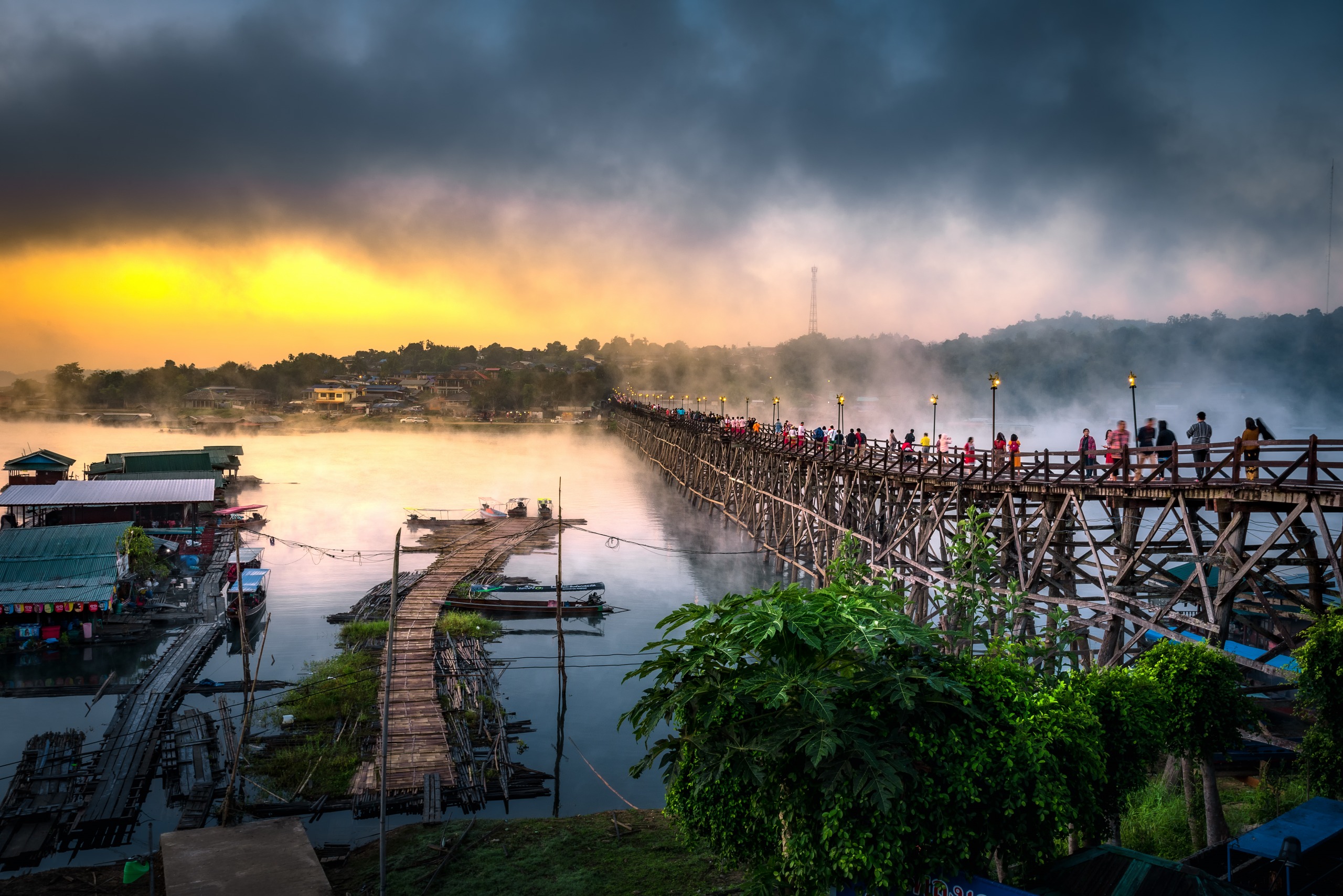
Sangkhlaburi: border village on a lake, famous for its wooden bridge and Mon population.
Thong Pha Phum National Park: mountainous forests and waterfalls, just 65 km away.
Amphawa and its floating market: weekend market and boat rides, perfect to combine with your return to Bangkok.
Damnoen Saduak: Thailand's most iconic floating market.
Ayutthaya: former capital of Siam and its UNESCO-listed temples.
Nakhon Pathom: home to the world's tallest Buddhist chedi.
Frequently asked questions
Plan 2 to 3 days for the essentials: the River Kwai Bridge, museums, Hellfire Pass and Erawan Falls. For a more in-depth exploration including Sai Yok and Sangkhlaburi, allow 4 to 5 days.
Yes, it's possible but tight. The Bangkok-Kanchanaburi journey takes 2.5 to 3 hours. A day excursion allows you to see the bridge and a museum, but spending a night in town is highly recommended to fully enjoy the region.
November to March, during the dry season. Trails are accessible and water is clearer. In September-October, the flow is powerful but some levels may be closed for safety reasons.
Yes. The railway daily connects Bangkok to Nam Tok passing through Kanchanaburi. The journey to Nam Tok, which runs along the Wang Pho cliff, is one of the most striking experiences in the region.
It varies. Choose sanctuaries that prohibit riding and forced bathing, and that value observation. Ask about practices before booking through your agency or directly on-site.
Not essential, the region is easy to explore independently. An English-speaking guide, however, brings real added value for understanding the history of the Death Railway and the context of World War II in Asia.
Photos
Attractions in Kanchanaburi
See all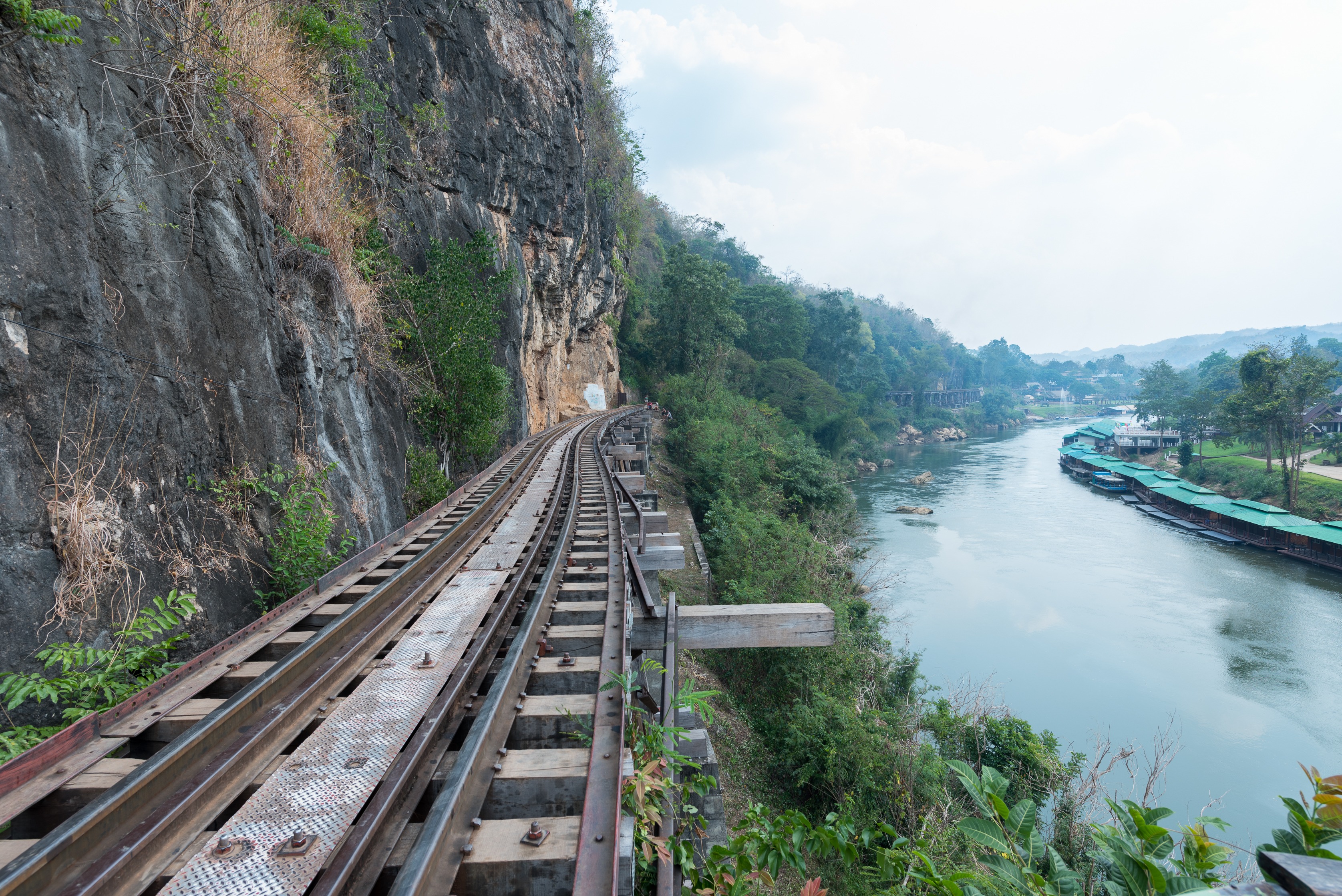
The Death Railway ou chemin de fer de la mort
Construite en 1942-1943 par les Japonais au prix de milliers de vies, la voie ferrée de la mort relie Kanchanaburi à Nam Tok le long de la rivière Kwaï.
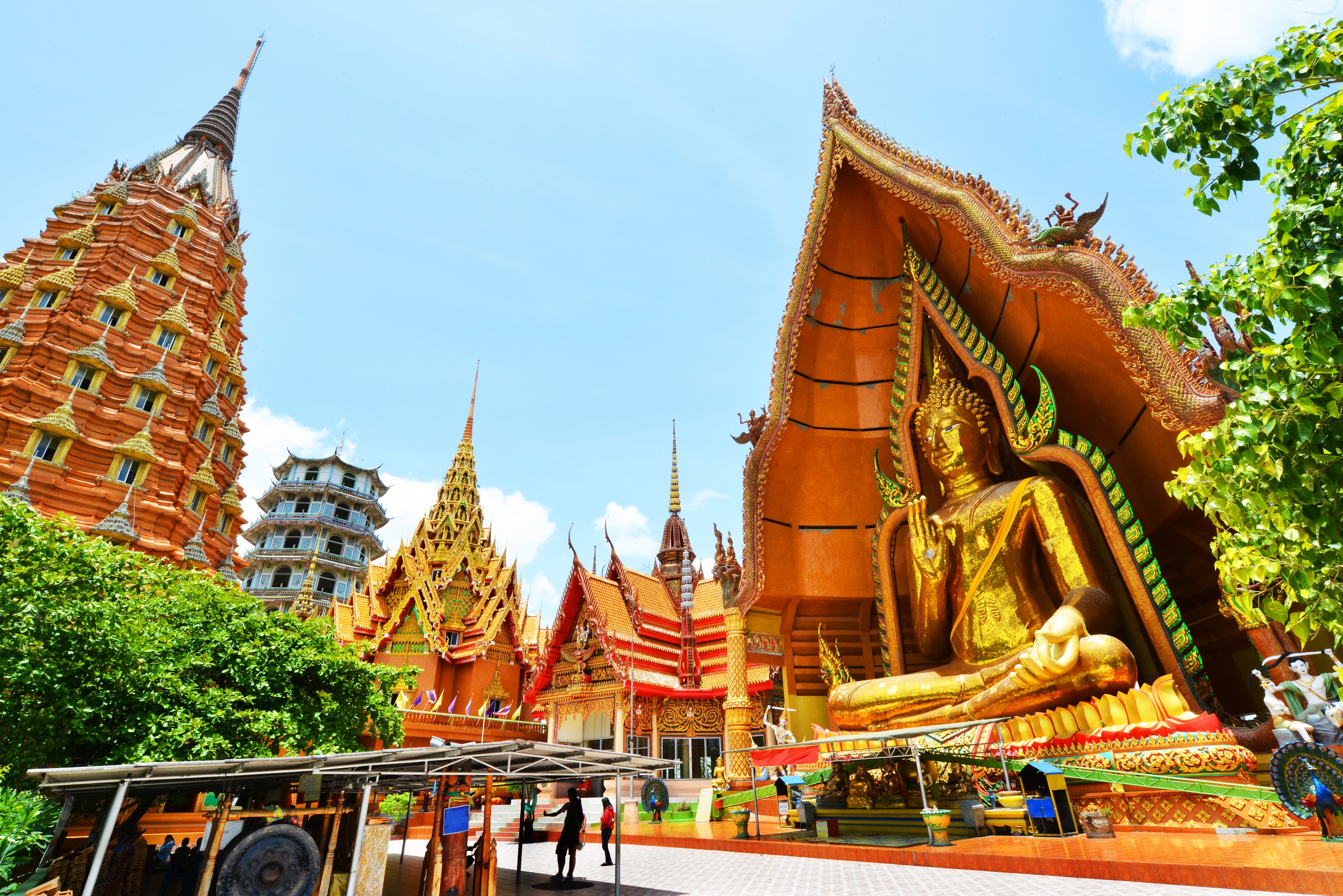
Chin Phrathanporn
Statue dorée de 18 mètres dominant le Wat Tham Sua près de Kanchanaburi, Chin Phrathanporn associe pèlerinage bouddhique et panorama sur la vallée.
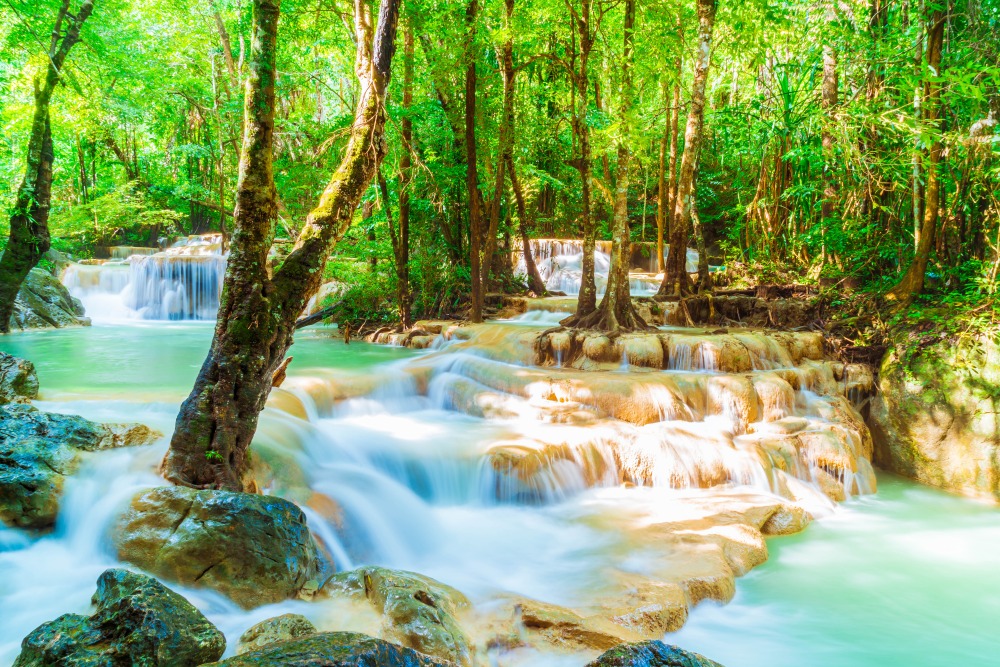
Parc national d’Erawan
Le parc national d'Erawan, près de Kanchanaburi, abrite une cascade à sept paliers, des bassins émeraude et une faune riche sur 550 km².
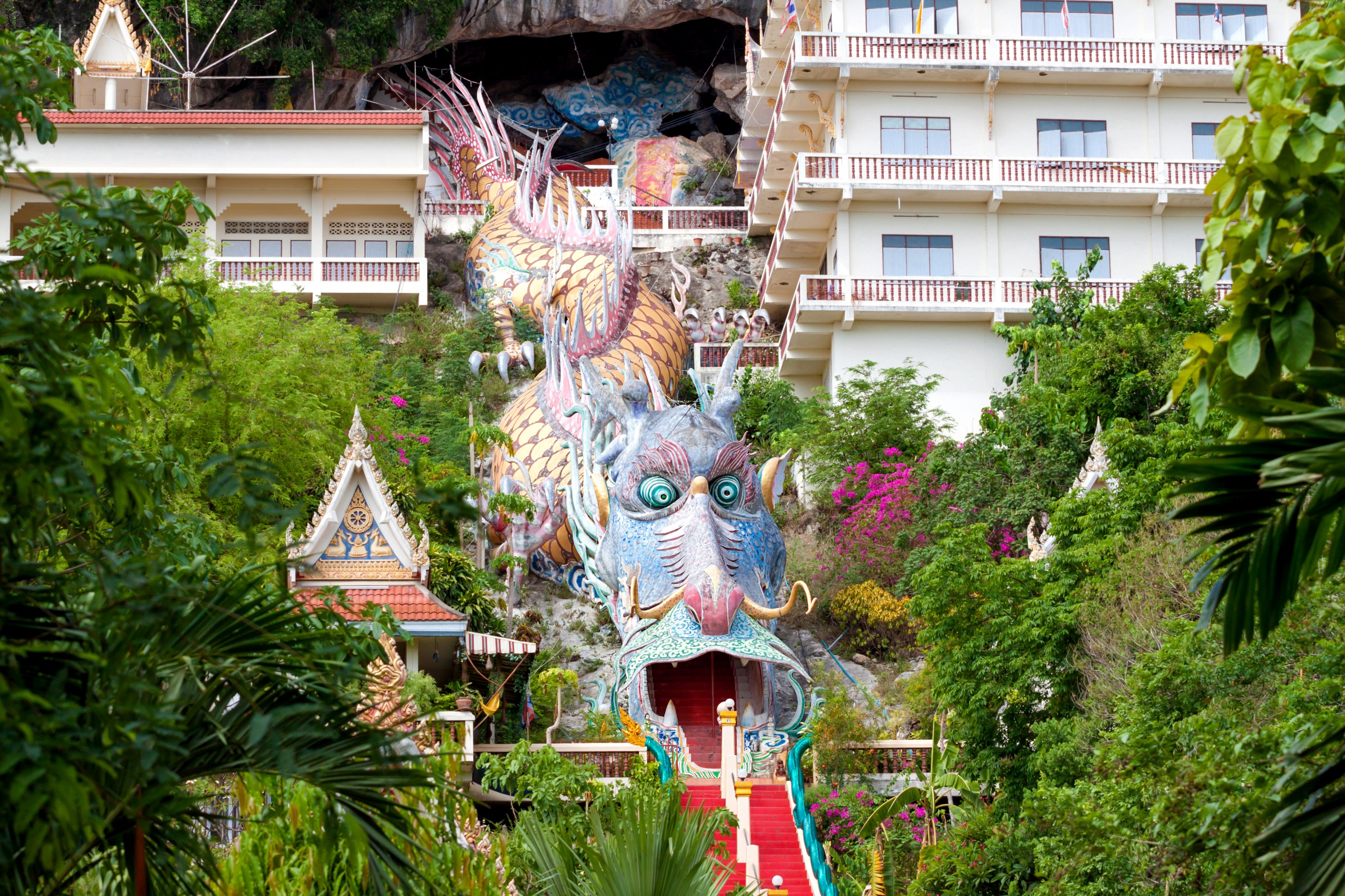
Wat Ban Tham
Le Wat Ban Tham, ou Temple du Dragon, près de Kanchanaburi : escalier en forme de naga, grotte-sanctuaire de la fertilité et stupa doré au sommet de 700 marches.
Parc national de Sai Yok
Forêts denses, cascades sur la Khwae Noi et grottes abritant la plus petite chauve-souris du monde : le parc national de Sai Yok, à Kanchanaburi, mêle nature préservée et mémoire de la Seconde Guerre mondiale.
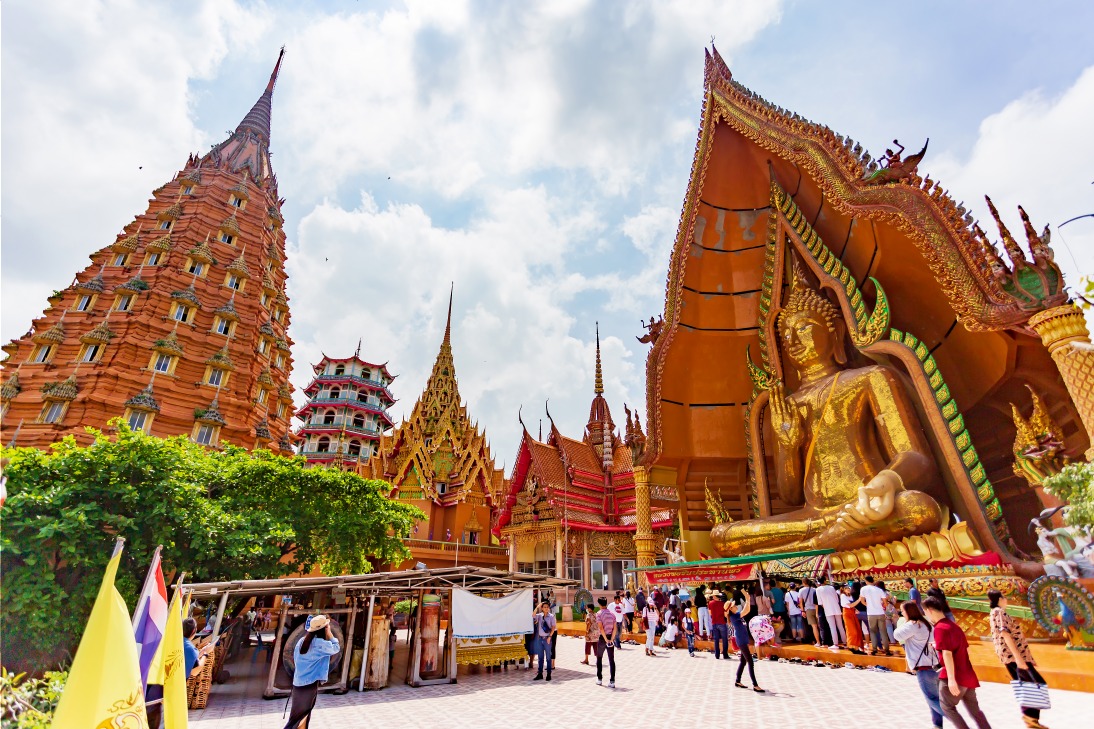
Wat Tham Sua
Temple bouddhiste perché au-dessus des rizières de Kanchanaburi, le Wat Tham Sua abrite un Bouddha doré de 18 m et un panorama sur la rivière Mae Klong.
Accommodation in Kanchanaburi
See all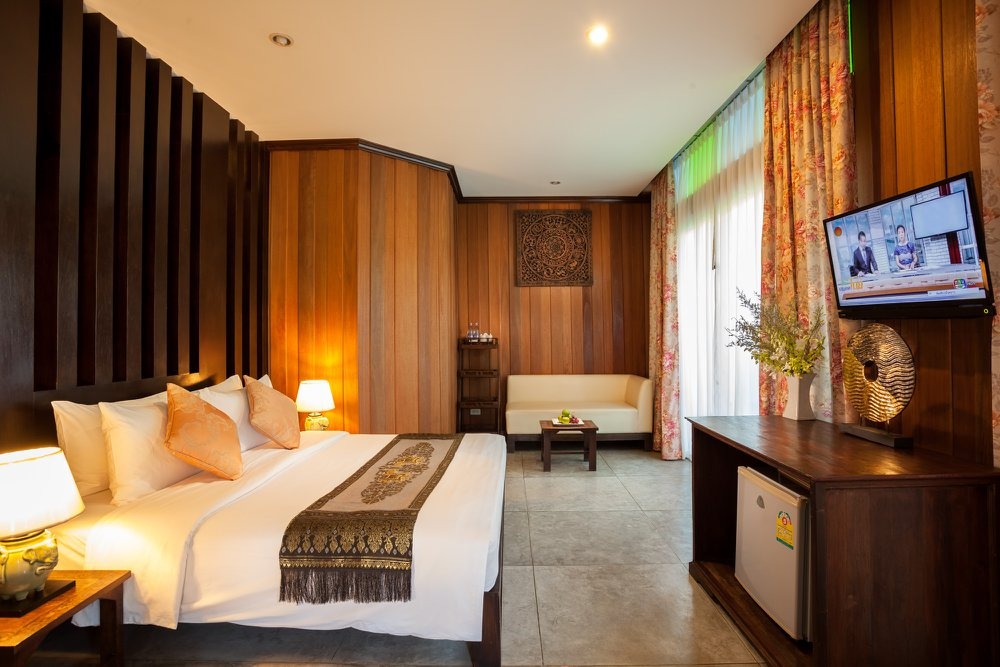
Royal Riverkwai Resort Spa
Hôtel 4 étoiles en bord de rivière Kwaï à Kanchanaburi, avec grande piscine verdoyante, spa et restaurant sur place, à 3 km du centre.
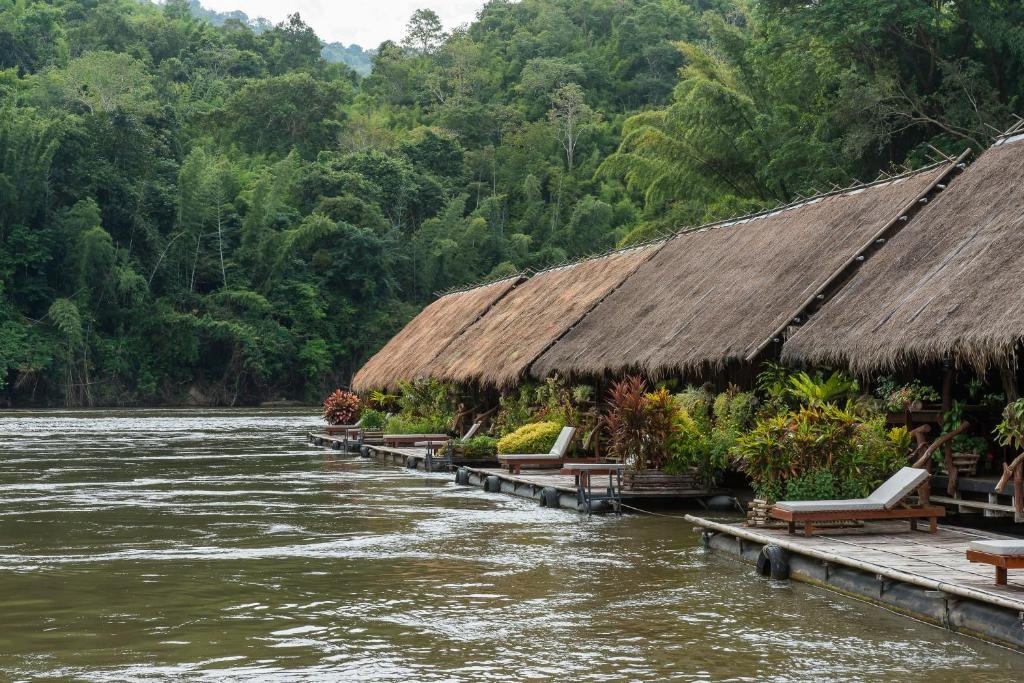
River Kwai Jungle Rafts
Hébergement flottant 3 étoiles sur la rivière Kwaï à Kanchanaburi, accessible uniquement par bateau, sans électricité en chambre, en pleine jungle.
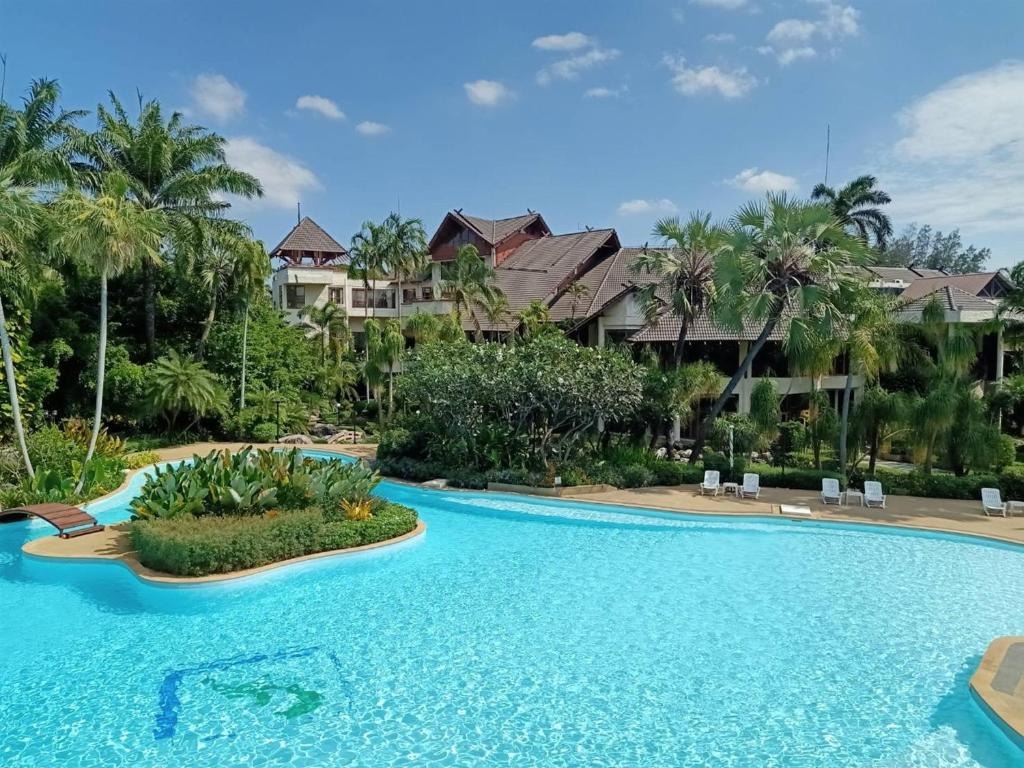
Felix River Kwai Resort
Resort 4 étoiles à Kanchanaburi, à deux pas du pont sur la rivière Kwaï, avec piscine, jardin et configurations familiales jusqu'à 6 personnes.
Want to discover this destination?
Our local advisors design your tailor-made trip.