Tham Khao Luang Temple
Tham Khao Luang Temple
4WMJ+2P4, Thongchai, Mueang Phetchaburi District, Phetchaburi 76000, Thaïlande
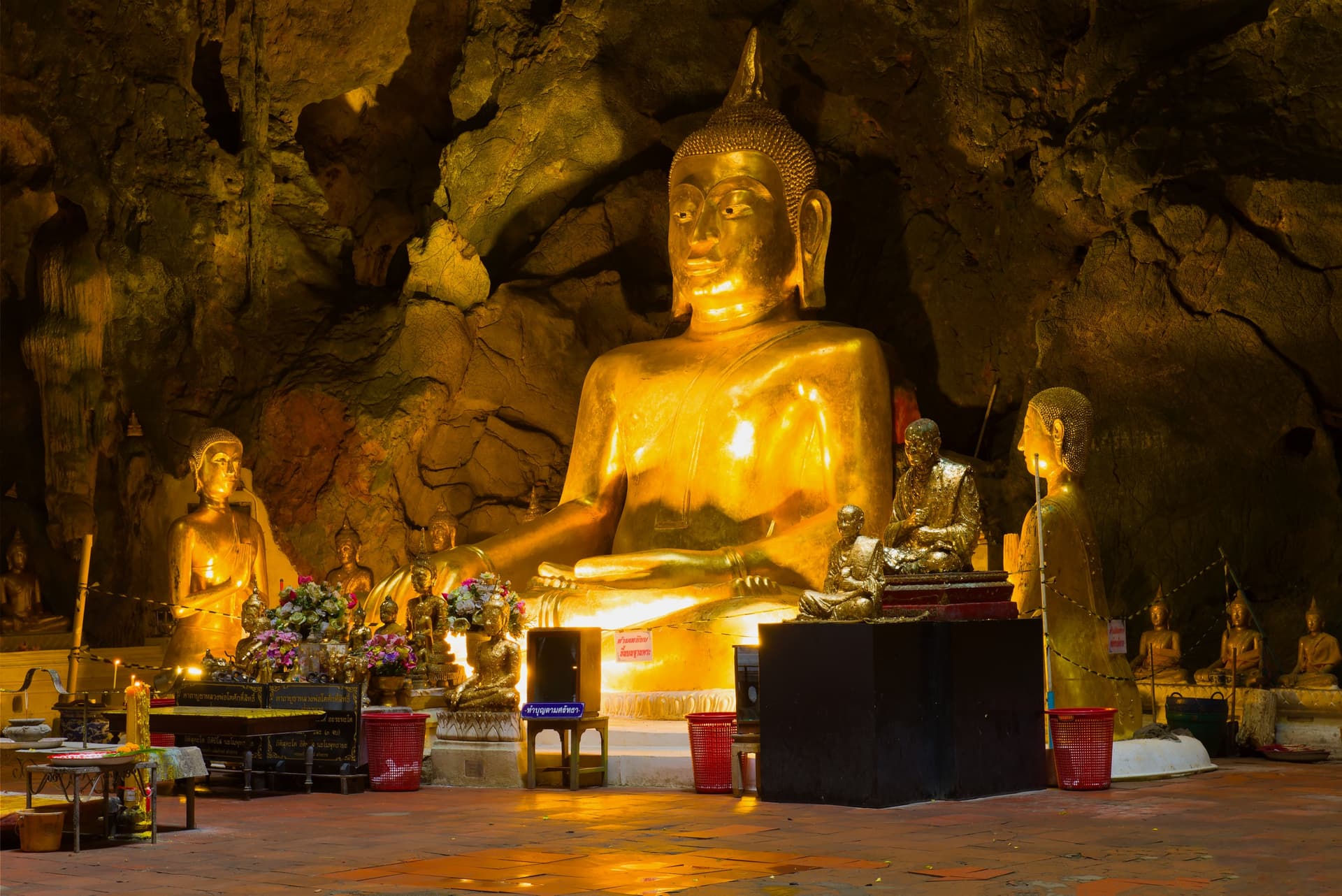
Less than 5 km from Phetchaburi, the Tham Khao Luang cave temple houses a reclining Buddha illuminated each morning by a natural light shaft piercing through the cavern.
Tham Khao Luang temple occupies a limestone cave less than 5 km from Phetchaburi in central Thailand. The sanctuary shelters a large reclining Buddha, dozens of ancient statues, and natural rock formations illuminated each morning by a light shaft piercing through the vault.
Why Visit Tham Khao Luang
The site's appeal lies in the meeting of a geological cavity and an active Buddhist sanctuary. The cave measures several dozen meters in height and receives sunlight through a natural opening, illuminating the statues between 9am and noon approximately. This phenomenon is particularly striking for the reclining Buddha from February to April, when the angle of morning rays reaches the main statue.
Beyond the interplay of light, Tham Khao Luang brings together a collection of standing, seated, and reclining Buddhas, some of ancient craftsmanship, others created in the 19th century in the Rattanakosin style distinctive to central Thailand. The location remains an active pilgrimage site, making a visit more immersive than a simple temple tour.
History of the Sanctuary
The site's development is linked to the Chakri dynasty. According to local tradition, King Mongkut (Rama IV) once visited the cave and expressed a wish to establish a monastery there. His son Rama V fulfilled this wish upon his accession to the throne by developing the sanctuary to honor his father's memory. Rama V was familiar with the cave: he had come to meditate there during his monastic period, moved by the stalactites within the cavity.
Work extended over seventeen years. Concrete stairs were constructed from the base of the hill to the entrance. The king had old Buddha icons collected from various regions transported into the cave, and commissioned new statues to complete the ensemble. Residents of Phetchaburi participated in the work.
One anecdote survives: a couple lived in a rear chamber of the cave. Moved by their situation, Rama V had a stone wall erected to preserve their privacy. The rear door remains closed to visitors today.
What to See in the Cave
The temple comprises four successive chambers. The main one, open to pilgrims, houses the large reclining Buddha, the most venerated statue on the site. This is where gatherings and offerings concentrate.
The Statues
As you progress through the galleries, several remarkable Buddhas stand out:
- The reclining Buddha of the main chamber, illuminated by morning sun between February and April;
- A seated Buddha in the gesture of calling the Earth as witness against Mara;
- Ancient images of archaic craftsmanship, contrasting with recent Rattanakosin-style statues;
- A bas-relief sculpture depicting the coat of arms of the first five Chakri sovereigns.
The Natural Décor
Limestone formations occupy much of the space: stalactites suspended from the vault, walls sculpted by water, a zenith opening that allows daylight to penetrate. The light window is most active between 9am and noon approximately.
The Macaques
A troop of macaques lives near the cave. They are familiar with the area and particularly mischievous: keep your bags closed and avoid displaying food or shiny objects at the entrance.
Practical Information
Temple entry is free. A donation is expected if you hire a local guide, who will offer services near the parking area; this is not essential for a simple visit, but useful if you wish to explore the site's history more deeply.
Plan for 1 to 1.5 hours on-site, excluding travel time. Clothing covering shoulders and knees is required, and you must remove your shoes at the entrance to the main sanctuary. Opening hours generally extend from morning to late afternoon, seven days a week; check with your accommodation on your visit day.
When to Go
The cool season, from November to February, offers the most comfortable conditions for the ascent. The period from February to April presents an additional attraction: it is then that the morning sun directly illuminates the reclining Buddha through the natural light shaft. Plan a visit between 9am and 11am to fully enjoy the phenomenon.
How to Get There
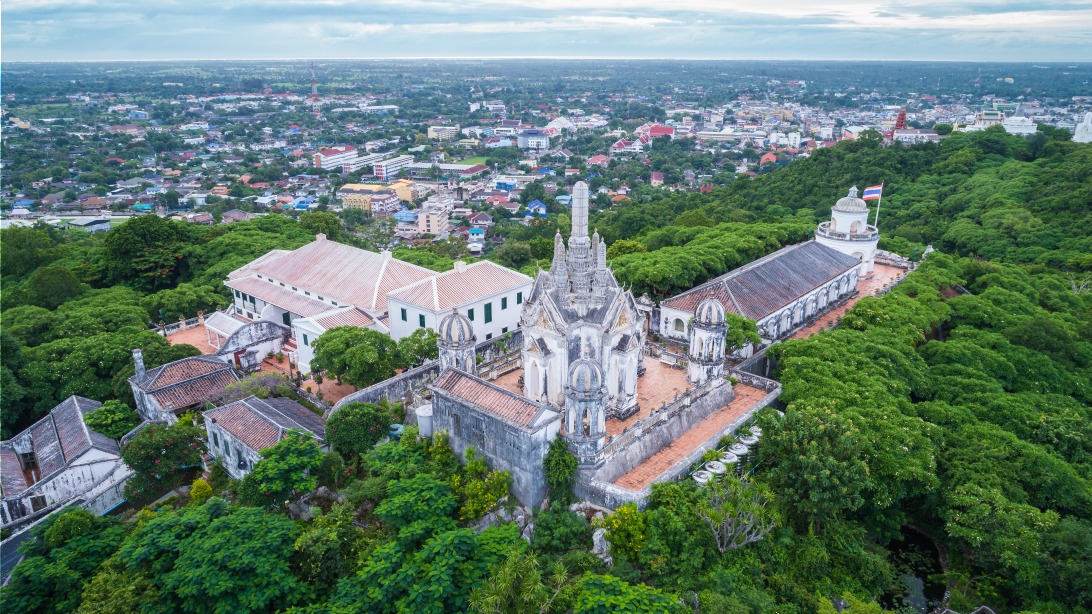
Tham Khao Luang is located less than 5 km from the center of Phetchaburi, in close proximity to Phra Nakhon Khiri. The site sits on a hillock approximately 90 meters high, accessible by a constructed staircase.
From downtown, a tuk-tuk remains the most practical option: the ride is short and the fare reasonable, to be negotiated before departure. Expect less than 10 minutes of travel. Once at the base of the hill, the staircase ascent takes about ten minutes. The descent can be more demanding in hot hours: a tuk-tuk can wait for you or pick you up at the bottom.
Nearby Attractions
The Phetchaburi region and western central Thailand feature several complementary sites:
- The Mae Klong Railway Market, an astonishing market built on an active railway line;
- The Klong Kone Mangrove, for a nature excursion by boat;
- Wat Bang Kung, a temple enclosed within the roots of a fig tree;
- Wat Bang Khae Noi, known for its carved wooden bas-reliefs.
Frequently Asked Questions
Frequently asked questions
The cool season, between November and February, offers the most pleasant conditions. To see the reclining Buddha illuminated by morning sunlight, target the period from February to April, between 9am and noon.
Access to the cave temple is free. Only the services of a local guide or your tuk-tuk fare from Phetchaburi are to be budgeted.
As in any Buddhist place of worship, plan for clothing covering shoulders and knees. You will need to remove your shoes before entering the main sanctuary.
They are not aggressive but highly mischievous. Keep bags and pockets closed, and do not display food or shiny objects at the cave entrance.
Plan Your Trip
Tham Khao Luang integrates easily into an itinerary combining royal heritage, markets, and nature in central Thailand. To build a customized stay including Phetchaburi and its surroundings, explore our Thailand journeys.
Photos
Also discover
Interested in this visit?
We can include it in your personalised itinerary.