Mahasawat Canal in Bangkok
Mahasawat Canal in Bangkok
Maha Sawat, Phutthamonthon District, Nakhon Pathom 73170, Thaïlande
Thirty kilometers west of Bangkok, Mahasawat Canal winds through rice paddies, orchid farms and floating markets. A long-tail boat journey blending river heritage and agricultural life.
Roughly thirty kilometers west of Bangkok, Mahasawat Canal (28 km) connects the Chao Praya River to the Tha Chin River. Dug some 150 years ago during the reign of Rama IV, it today offers a long-tail boat excursion through rice paddies, orchid farms and waterside markets, away from the beaten tourist trail.
Why visit Mahasawat Canal
Mahasawat Canal offers one of the rare glimpses of Bangkok's rural face. Where downtown klongs have largely been filled in or tamed, this waterway still winds through suburban agricultural landscapes: coconut palms, lotus flowers, fruit orchards, family-run farms. According to local historians, the very concept of Thailand's floating markets is said to have originated on this canal, making it a foundational site for understanding the country's river culture.
The appeal is threefold: a half-day boat journey, several themed stops (orchids, lotus, market, temple) and moderate crowds compared to Bang Khu Wiang or the more publicized floating markets on Bangkok's western outskirts.
Canal history
The dredging of Mahasawat dates back to the reign of Rama IV (mid-nineteenth century), an era when no roads or railways served the capital. The canal played a major economic role at the time: it transported rice, vegetables and produce from the provinces to Bangkok's markets. Linking Bangkok Noi to the Tha Chin River, it formed part of a dense network irrigating the entire central plain.
With the rise of roads in the twentieth century, river commerce declined sharply. Yet the canal retained its irrigation function and remains in use by local residents, who continue to travel it by boat to reach local markets. It is from this overlap between living agricultural activity and historical heritage that the journey's appeal emerges.
What to see along the canal
Orchid farms
The first usual stop on excursions, orchid operations exploit the humid climate and alluvial richness of the canal. More than twenty species are cultivated here, often organically, for the Thai market and export. The Thassanee farm, frequently recommended, opens its greenhouses to visitors: you can observe staking, grafting and harvesting techniques, with the option to purchase bouquets or plants.
Lotus ponds
A second stop allows you to visit a lotus farm, a plant omnipresent along the banks. The ideal time is early afternoon, when the flowers open: depending on the variety, their hue ranges from pure white to deep blue. Growers sell fresh flowers, dried flowers and edible seeds.
Don Wai market
Located west of Bangkok, near the Tha Chin River, Don Wai market extends the tour toward gastronomy. Still little-visited by European travelers, it brings together covered stalls and boats laden with fresh produce. Specialties include:
- a vegetable noodle soup with duck, a house specialty;
- rice cakes with sesame and minced pork;
- banana chips and dried mango leaves;
- a variety of tropical fruits depending on the season.
Wat Suwannaram
At the junction between Bangkok Noi and Mahasawat stands Wat Suwannaram (or Wat Suwan). Of the original structure, raised during the Ayutthaya period (fifteenth-sixteenth centuries), only the ordination hall survives, its curved roof evoking a Chinese junk. The temple was restored under Rama III in the nineteenth century; it preserves from that period significant murals signed by Luang Wichijesda and Luang Seniborirak, which illustrate the Mahanitapa Jataka and constitute major testimony to Rattanakosin art.
The site is also surrounded by a persistent legend: the place was said to harbor wandering spirits—those of soldiers executed by King Taksin during the Siamese-Burmese War—who haunted the bell tower and adjoining school courtyard.
Practical information
- Recommended duration: plan for a half-day combining boat travel, farms, market and temple. Shorter options exist but sacrifice one of the stops.
- Type of vessel: traditional long-tail boat, often shared by 6–10 people.
- Equipment: hat, sunscreen, water, easy-to-remove shoes for farm and temple visits; clothing covering shoulders and knees for Wat Suwannaram.
- Budget: moderate price for a guided half-day excursion including transport, boat and stops. Independent options (public transport plus boat rental on site) cost less but require time and some Thai language.
- Level: accessible to all, including families.
When to go
The best period runs from November to February: clear skies, manageable temperatures, stable canal flow. Conversely, the rainy season and flood period from May to October can complicate navigation, even forcing cancellations in case of heavy rainfall. March and April remain navigable but heat, often exceeding 35 °C (95 °F), can make the journey arduous.
For lotus flowers, aim to arrive at the ponds in mid-afternoon.
Nearby attractions
Mahasawat naturally pairs with other sites on Bangkok's western outskirts:
- the Khlong Lat Mayom floating market, more lively and frequented by locals;
- the Taling Chang floating market, reachable in a day from downtown;
- the Wat Samphran (Dragon Temple), about twenty kilometers to the northwest;
- the Wat Phra Pathom Chedi in Nakhon Pathom, the country's tallest stupa.
How to get there
The canal lies roughly 30 km west of downtown Bangkok. Three options:
- Organized excursion: the simplest solution, with hotel pickup, private or shared boat and included stops.
- Public transport: bus from the Southern Terminal (Sai Tai Mai) or train from Thonburi Station toward Salaya, then taxi or tuk-tuk to a landing. You can then rent a boat by the hour.
- Private taxi: a middle ground between flexibility and comfort, especially in a group.
FAQ
Frequently asked questions
A half-day is generally necessary to enjoy the boat journey and the three or four usual stops (orchid farms, lotus farm, Don Wai market, Wat Suwannaram). Longer options, spanning a full day, add lunch and an additional site.
November to February, during the dry season. The period from May to October combines rain and flood risks, which can complicate or interrupt navigation.
Yes. Buses and trains connect Bangkok to Salaya, and it is possible to rent a boat on site. An organized tour remains more convenient for optimizing stops and benefiting from explanations.
Yes. The pace is leisurely, boats are stable and the stops (farms, market) interest children. Bring hat, water and sun protection.
Absolutely possible. Khlong Lat Mayom and Taling Chang, closer to downtown, can complement the visit in a single day. Mahasawat stands out, however, for its rural atmosphere and historical dimension.
Prepare your trip
Mahasawat Canal integrates easily into a multi-day Bangkok stay. To build a tailored itinerary including this river excursion, consult our Thailand travel suggestions.
Photos
Nearby
Also discover
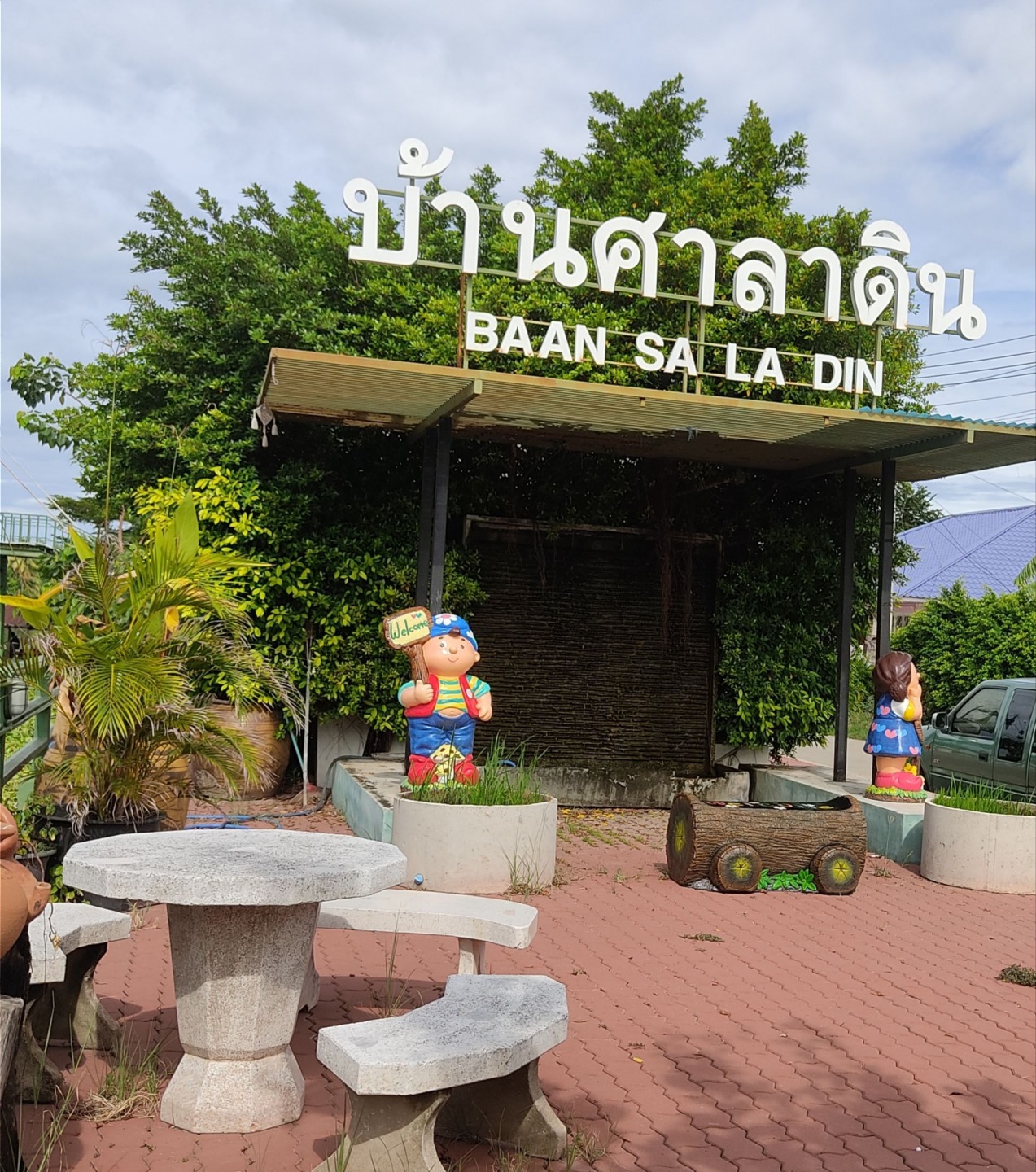
Baan Saladin Agrotourism Village
Just 35 km from Bangkok, Baan Saladin reveals an authentic floating market, lotus farms and community-based agrotourism nestled along the Maha Sawat Canal.
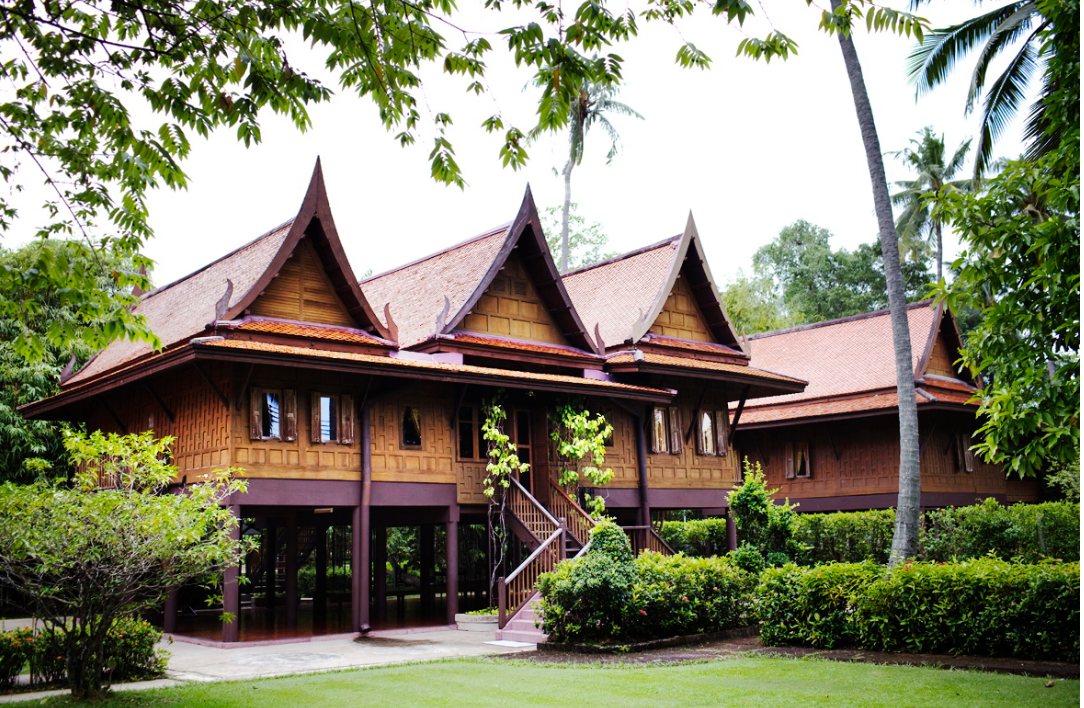
Sampran Riverside
A 4-star hotel on the Tatchin River, 1 hour from Bangkok, set alongside Patom organic farm and the Sookjai cooperative: a Thai stopover focused on sustainable agriculture.
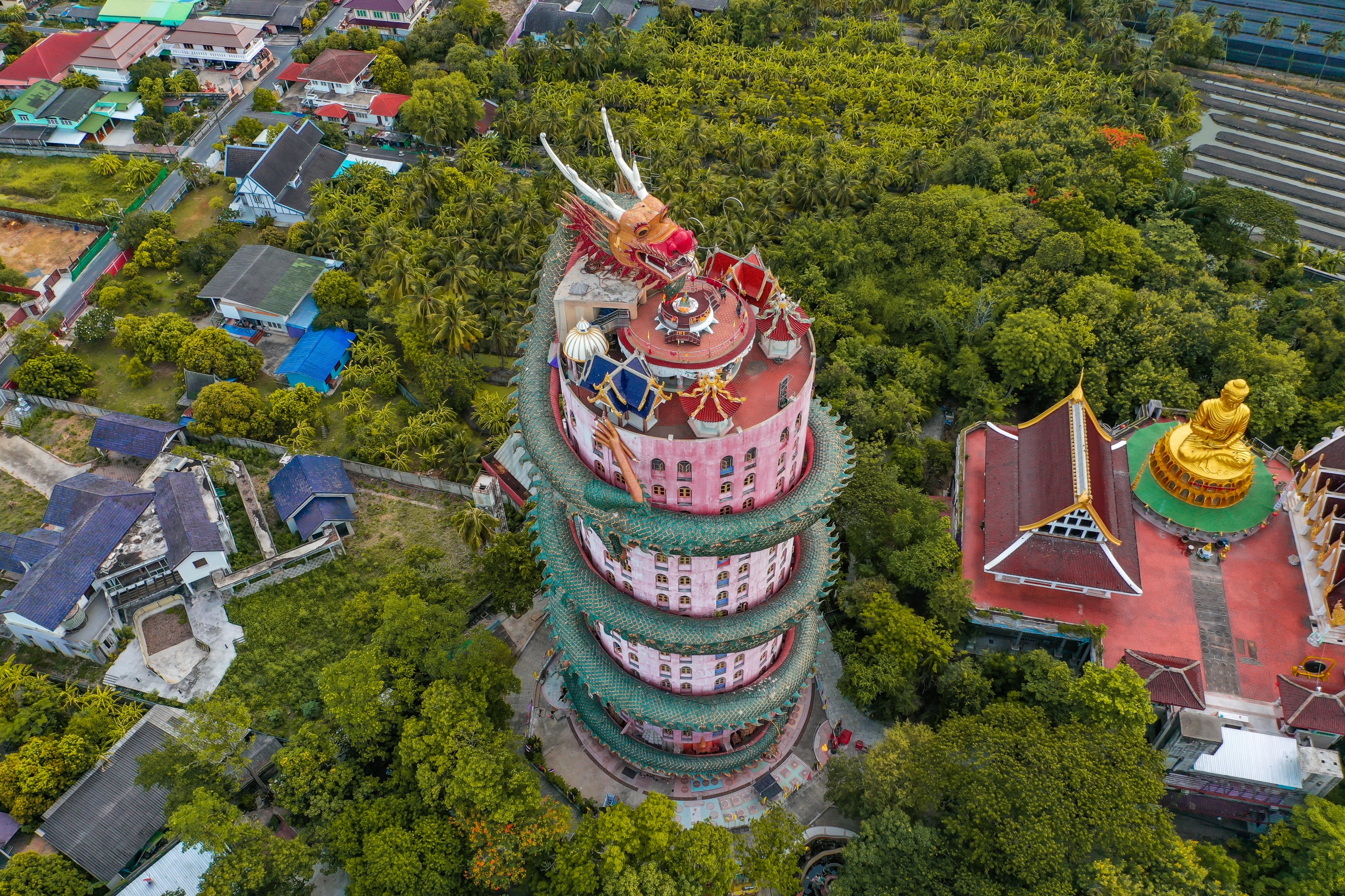
Wat Samphran, Dragon temple
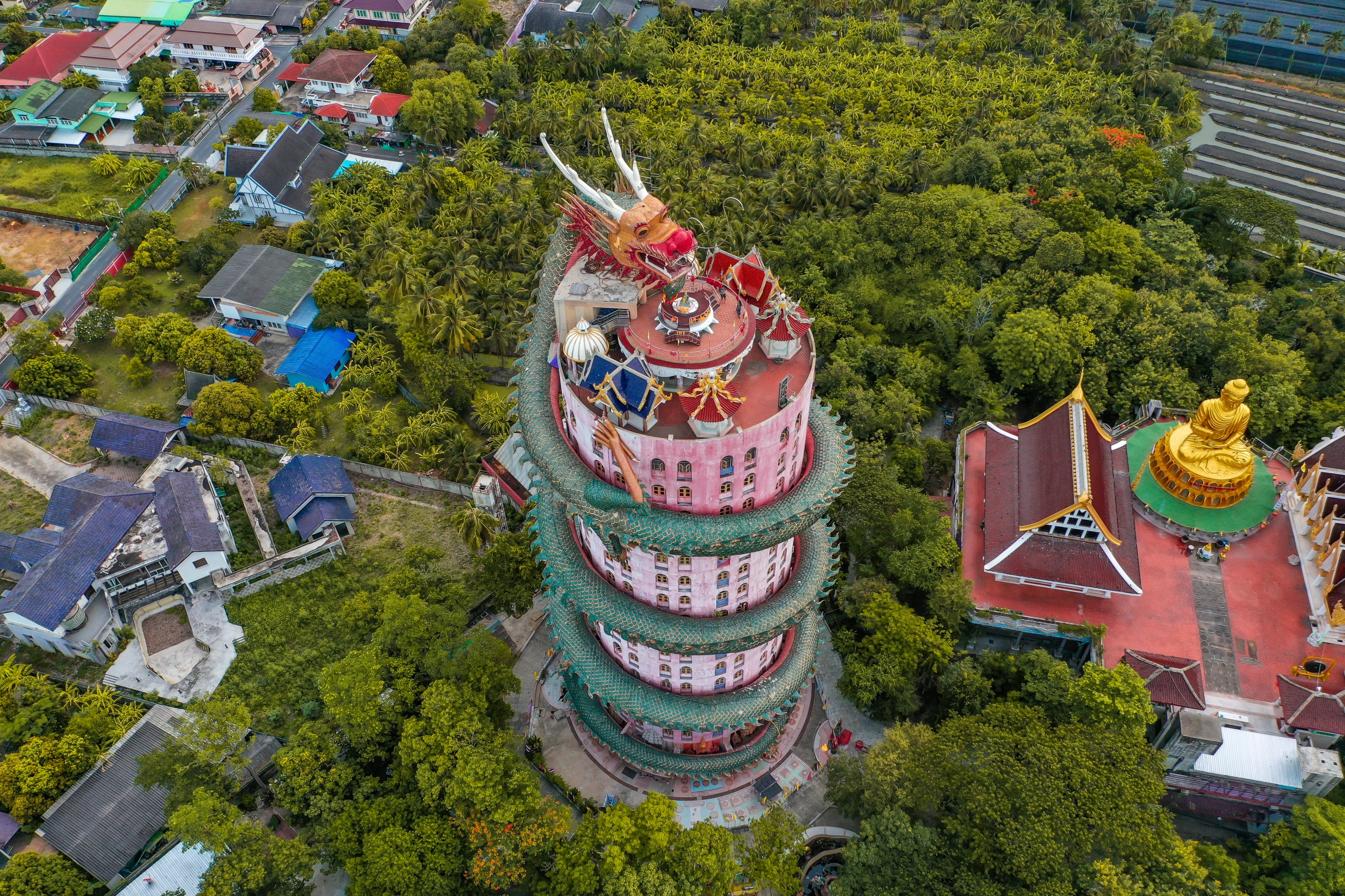
Located 40 km from Bangkok, Wat Samphran intrigues with its 17-storey pink tower entwined by a green dragon. A functioning Buddhist temple open since 1985.
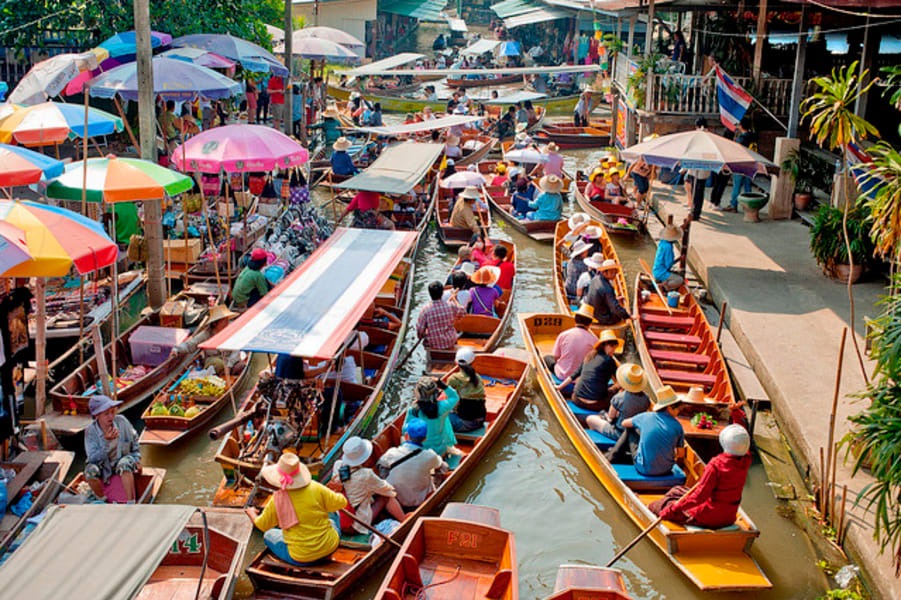
Bang Khu Wiang Floating Market
In Nonthaburi, near Bangkok, the Bang Khu Wiang floating market comes alive at dawn along a preserved canal, far from mass tourist circuits.
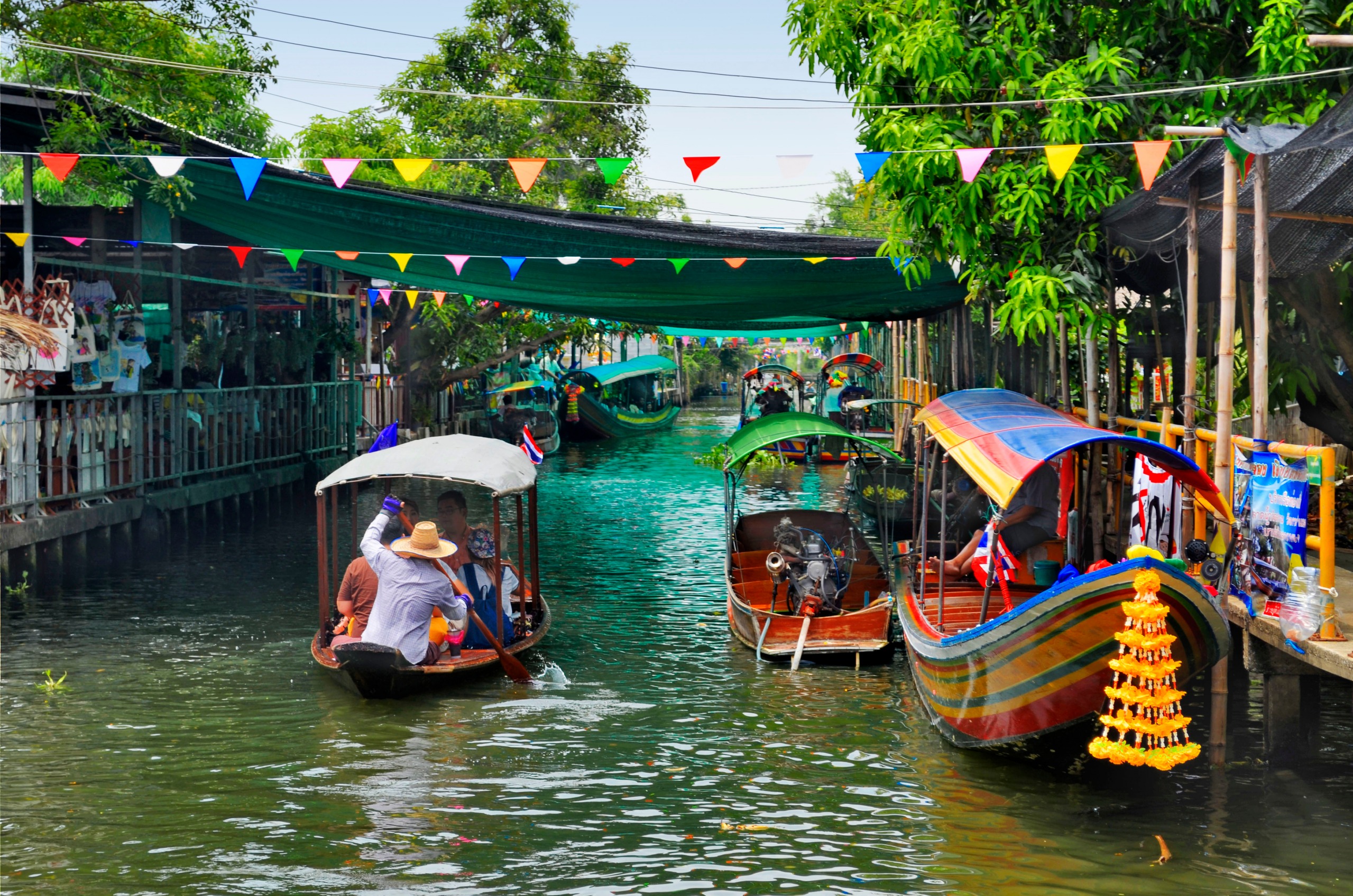
Khlong Lat Mayom Floating Market
A local floating market on Bangkok's Thonburi side, open weekends: six zones, Thai cuisine, canoe rides along the khlong.
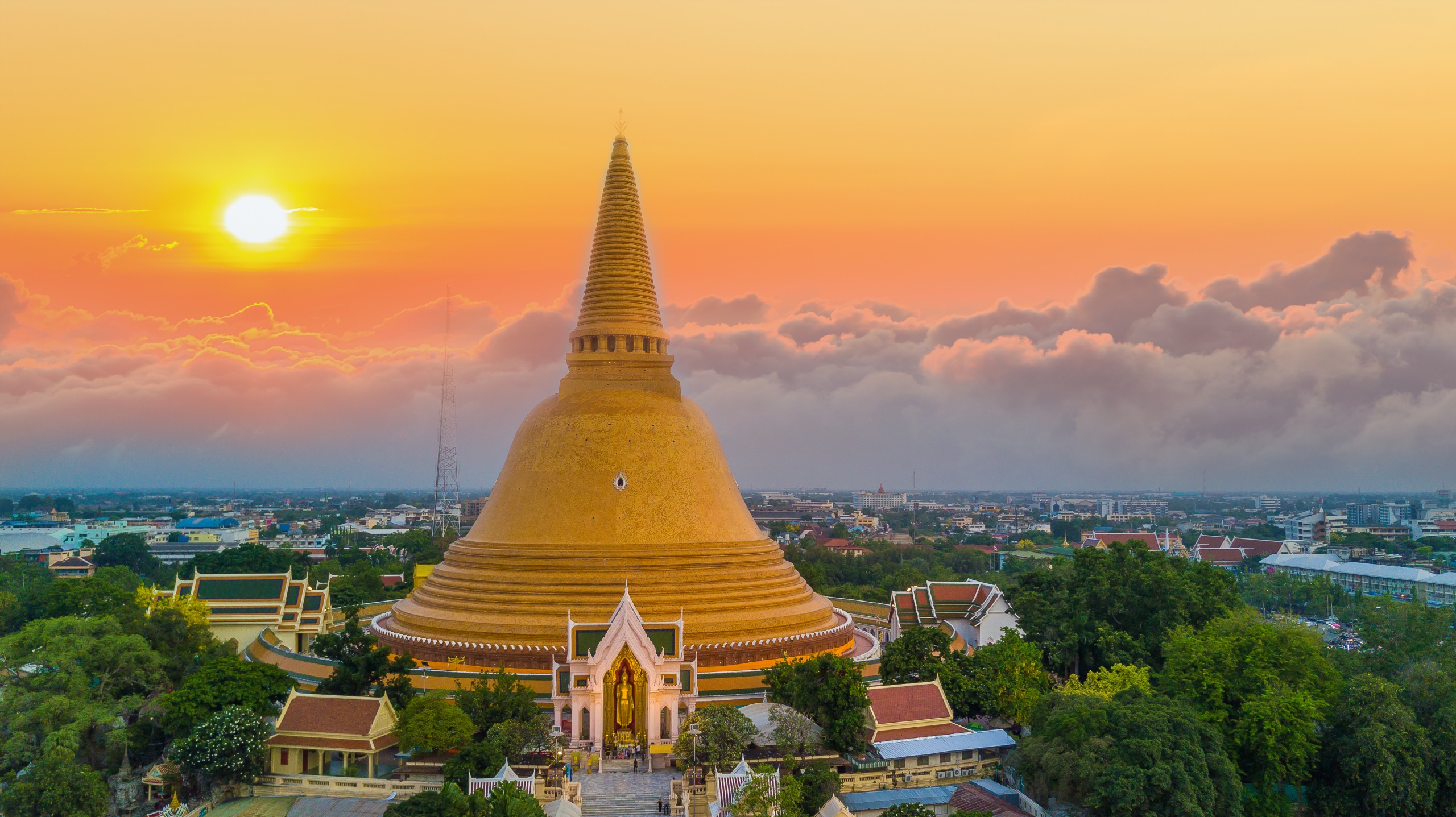
Nakhon Pathom
Just 55 km from Bangkok, Nakhon Pathom is home to the world's tallest stupa and 2,000 years of Buddhist heritage. Your complete guide to exploring this ancient city.
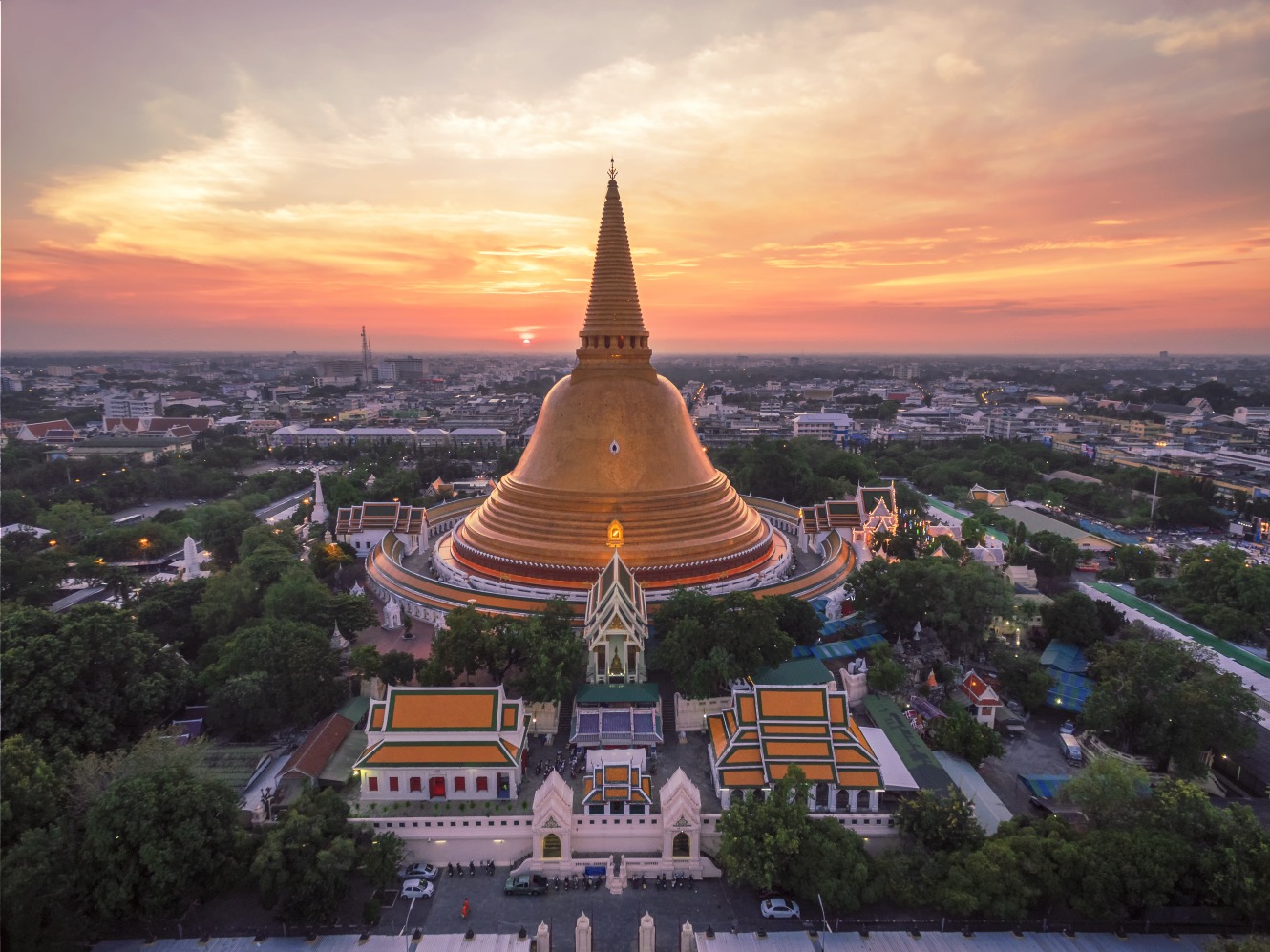
Wat Phra Pathom Chedi
In Nakhon Pathom, Wat Phra Pathom Chedi contains a 127-meter stupa, one of the tallest Buddhist structures in the world, and ranks among the six most revered temples in Thailand.
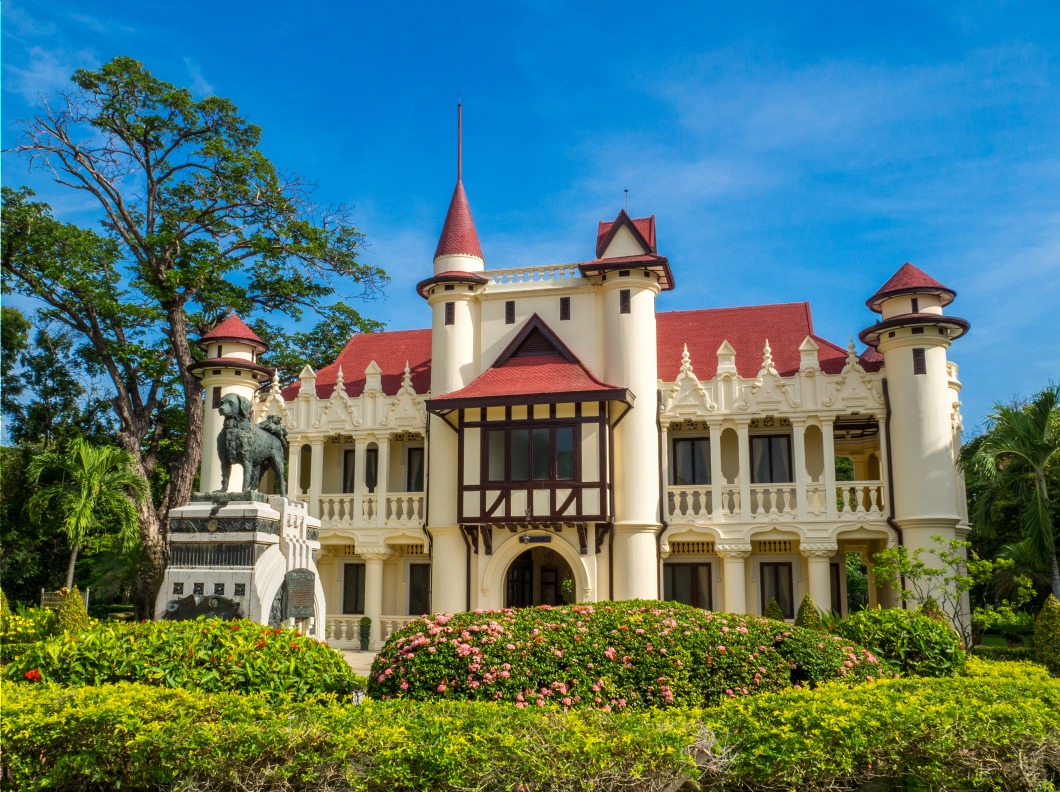
Sanam Chan Palace
Summer residence of Rama VI in Nakhon Pathom, Sanam Chan Palace comprises several buildings of contrasting styles set within a verdant park, 2 km from Phra Pathom Chedi.
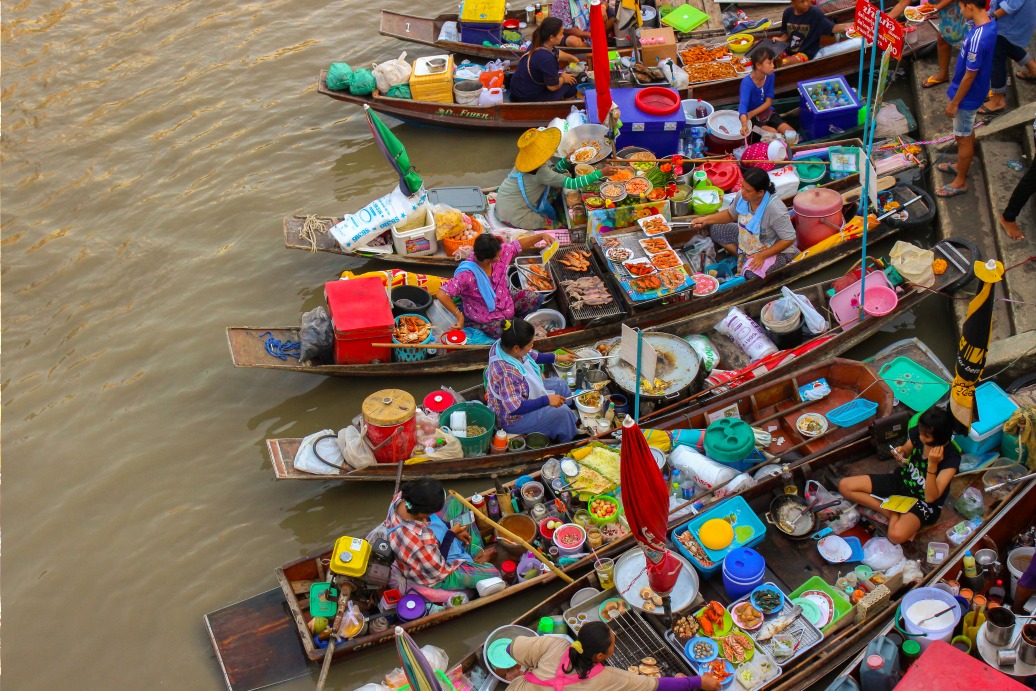
Taling Chan Floating Market
Weekend floating market in Bangkok, established in the 1980s along Khlong Chak Phra: floating restaurants, boat excursions, and authentic neighborhood atmosphere.
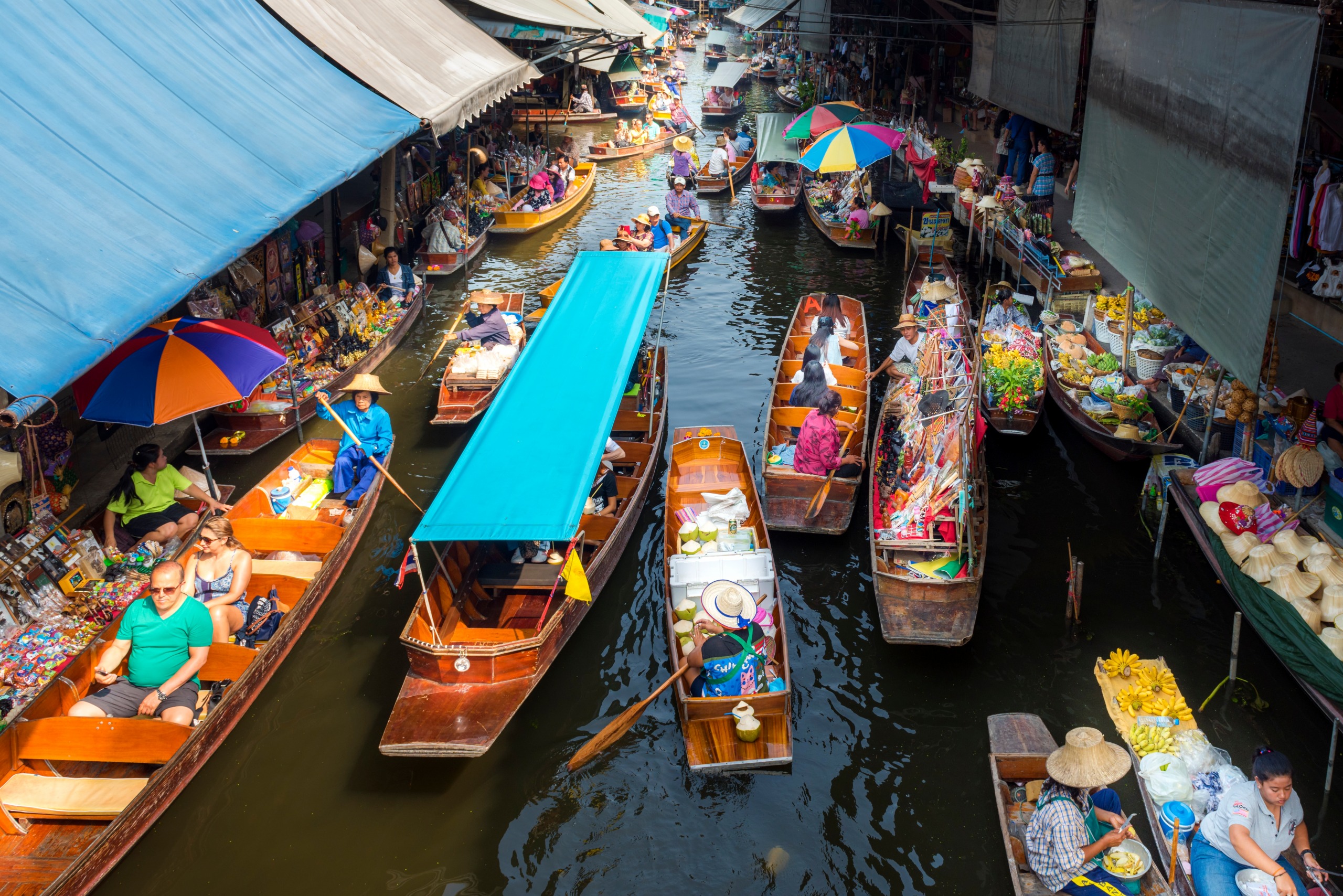
Khlong Bang Luang Floating Market
A former floating market turned artistic hub along the Khlong Bang Luang canal in western Bangkok: craftsmanship, puppetry and neighborhood cuisine.
Interested in this visit?
We can include it in your personalised itinerary.