Bang Khu Wiang Floating Market
Bang Khu Wiang Floating Market
Bang Khu Wiang, Bang Kruai District, Nonthaburi 11130, Thaïlande
In Nonthaburi, near Bangkok, the Bang Khu Wiang floating market comes alive at dawn along a preserved canal, far from mass tourist circuits.
About twenty kilometers from central Bangkok, the Bang Khu Wiang floating market operates at dawn along a canal in Nonthaburi. It is one of the most traditional floating markets in the metropolitan region, rarely visited by large tourist groups.
Why Visit Bang Khu Wiang
Unlike Damnoen Saduak, which has become a mass attraction tailored for tour buses, Bang Khu Wiang has retained its original purpose: a morning market where nearby villagers come to sell their products from their boats. Tourist traffic remains limited, allowing you to observe a river commercial scene without staged tourism.
Three elements distinguish this market:
- Activity concentrated over a few hours at dawn, ending early in the morning.
- The regular presence of monks navigating in boats to collect alms, a practice still alive in this semi-rural area.
- Food offerings oriented toward local consumption rather than tourist souvenirs.
Market History
The market was established in the late 1990s by the governor of Nonthaburi along the Bang Khu Wiang waterway. The objective was twofold: to support the agricultural activity of the peri-urban province, still largely agricultural at the time, and to supply Bang Kruai residents with fresh produce grown in neighboring orchards and vegetable gardens.
While road development has since reduced the commercial role of canals in the greater Bangkok area, Bang Khu Wiang continues to operate. Local Thais from the surrounding villages still come here, alongside a modest and primarily foreign tourist presence.
What You'll See
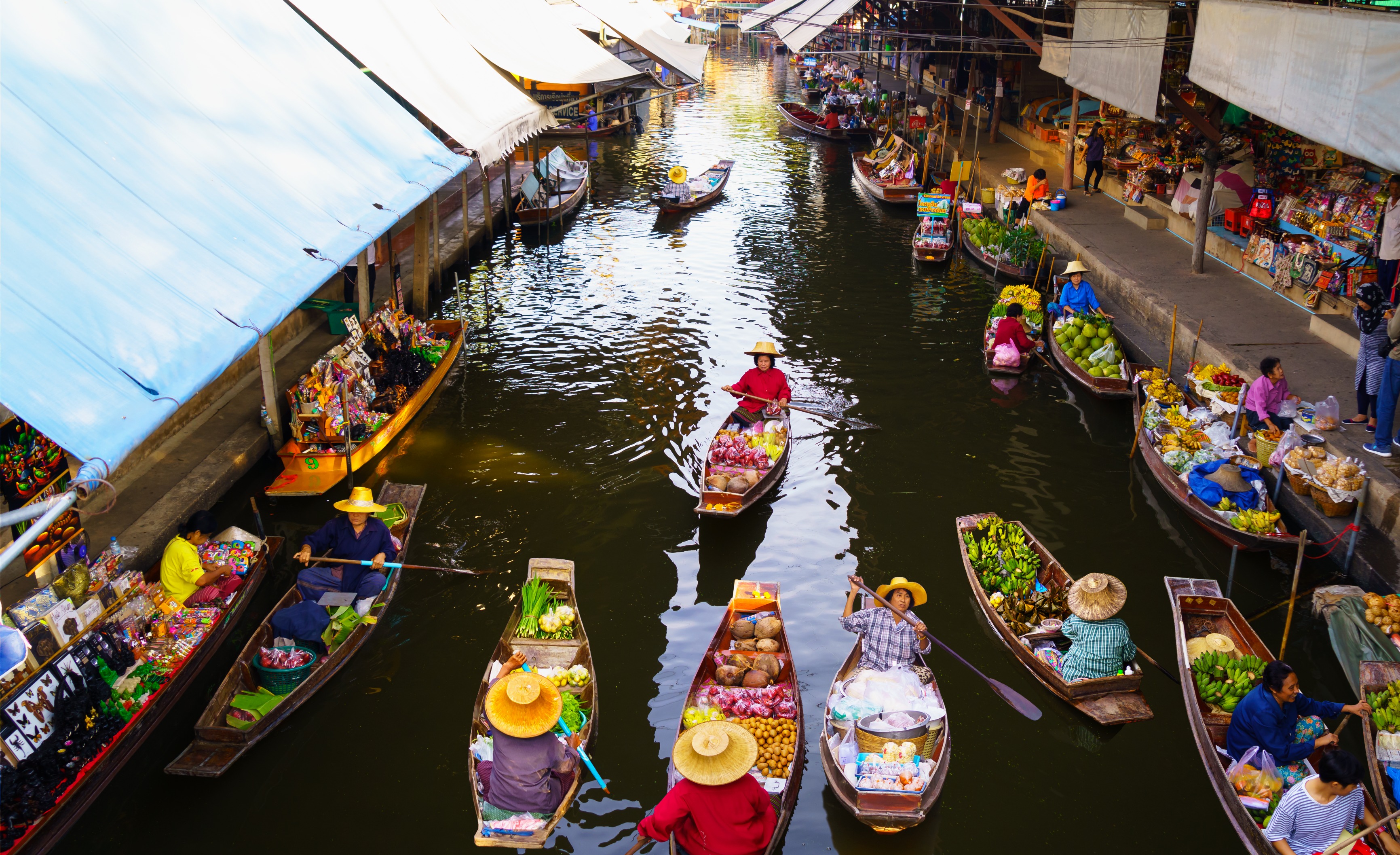
Activity unfolds along the canal and its banks. Vendors, mostly women from nearby villages, navigate boats laden with goods and dock at piers or pass each other on the water. You'll find mainly:
- Seasonal fruits harvested from Nonthaburi orchards (mangoes, durians, rambutans depending on the season).
- Fresh vegetables and aromatic herbs.
- Spices and curry paste preparations.
- Freshwater fish caught in neighboring klongs.
- Thai dishes prepared directly on the boats: noodles, soups, curries, coconut-based desserts.
Throughout the morning, you'll likely encounter saffron-robed monks moving from boat to boat collecting food offerings from the merchants, a daily ritual still integrated into the life of the canal.
Practical Information
The market operates early in the morning and empties quickly: stalls are packed away by 8 a.m. To make the most of it, you'll need to arrive at dawn or shortly after.
A few recommendations:
- Bring small bills in cash, vendors don't always have change.
- Plan to spend 1 to 2 hours on site to explore the canal and sample a few dishes.
- A cap or hat is useful once the sun rises.
- Local shuttle boat fares are very inexpensive.
When to Go
The dry season, from November to February, offers the most comfortable conditions: milder temperatures, low rainfall, generally clear skies. The rainy season (June to October) remains feasible but exposes you to morning showers and a muddier canal. The period from March to May concentrates intense heat, manageable before 7 a.m.
The market operates daily, but weekends see denser, more animated local attendance.
How to Get There
Access is via the Wat Chalo pier in Bang Kruai (Nonthaburi Province). From Bangkok, allow 30 to 45 minutes by taxi or ride-sharing depending on traffic and your starting point. Once at the pier, board a boat heading toward Bang Rao Nok and signal the pilot to stop at the entrance of the Bang Khu Wiang klong.
The river journey takes about ten minutes, with departures approximately every fifteen minutes. This boat portion itself is part of the experience, crossing a landscape of canals lined with stilt houses. At this very early hour, it's best to avoid public buses, which are impractical before dawn, and opt for a taxi or ride-sharing service instead.
What to Combine in the Same Day
Western Bangkok and Nonthaburi Province are home to several sites compatible with a morning at Bang Khu Wiang:
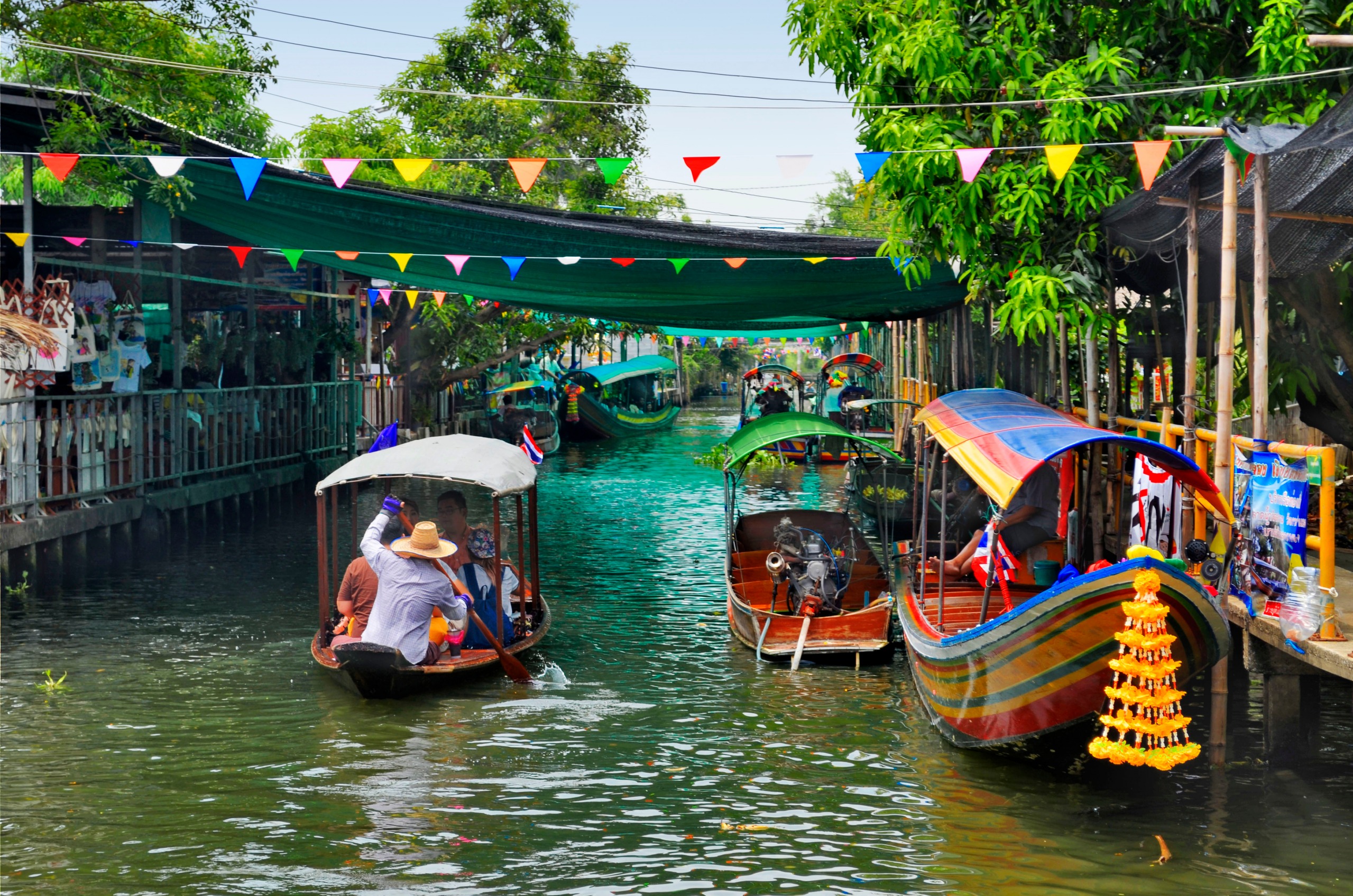
- The Taling Chan floating market, closer to the center, active primarily on weekends.
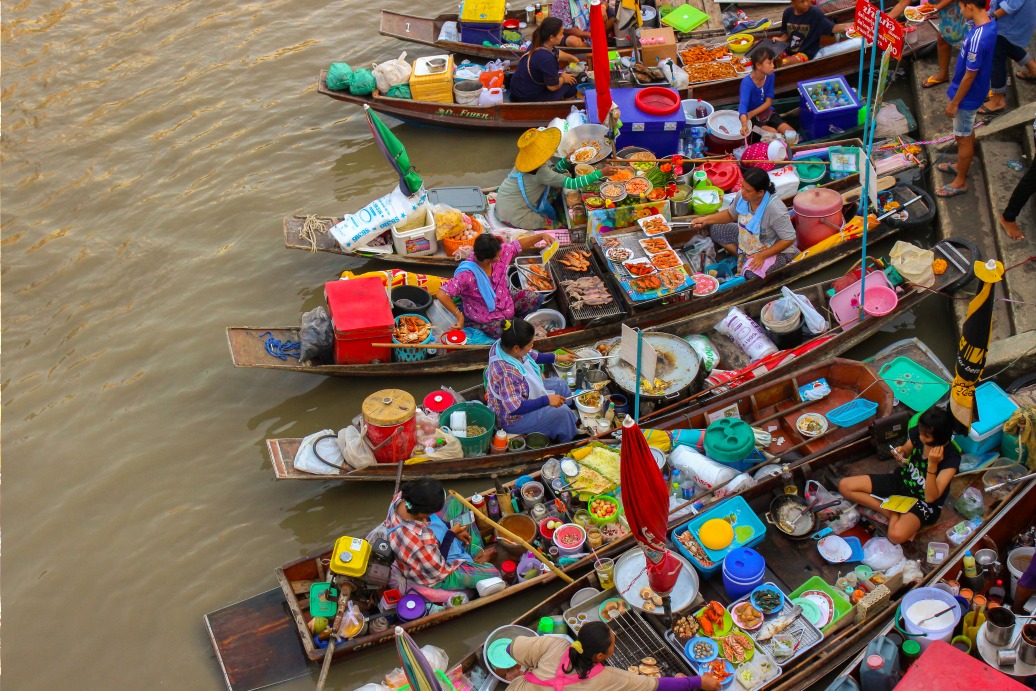
- The Khlong Lat Mayom floating market, in the Taling Chan district, focused on local cuisine.
- Wat Suwannaram, a Thonburi temple known for its Rattanakosin-era murals.
To place this excursion within a broader visit, consult our Bangkok guide.
Frequently asked questions
The market closes early: vendors pack up their stalls around 8 a.m. To enjoy the activity, it's recommended to be there between dawn and 7 a.m.
Yes. Bang Khu Wiang has retained a local commercial function and a more traditional atmosphere, with significantly less tourist traffic than Damnoen Saduak.
Seasonal fruits, vegetables, herbs, spices, freshwater fish, and Thai dishes prepared on the boats (noodles, curries, soups, coconut desserts).
The easiest way is to reach Wat Chalo pier in Bang Kruai (Nonthaburi) by taxi, then take a shuttle boat heading toward Bang Rao Nok. The river journey takes about ten minutes.
The dry season, from November to February, is most comfortable, with moderate temperatures and low risk of morning rain.
Thinking of including this morning in a broader itinerary? Discover our suggestions for traveling in Thailand.
Photos
Nearby
Also discover
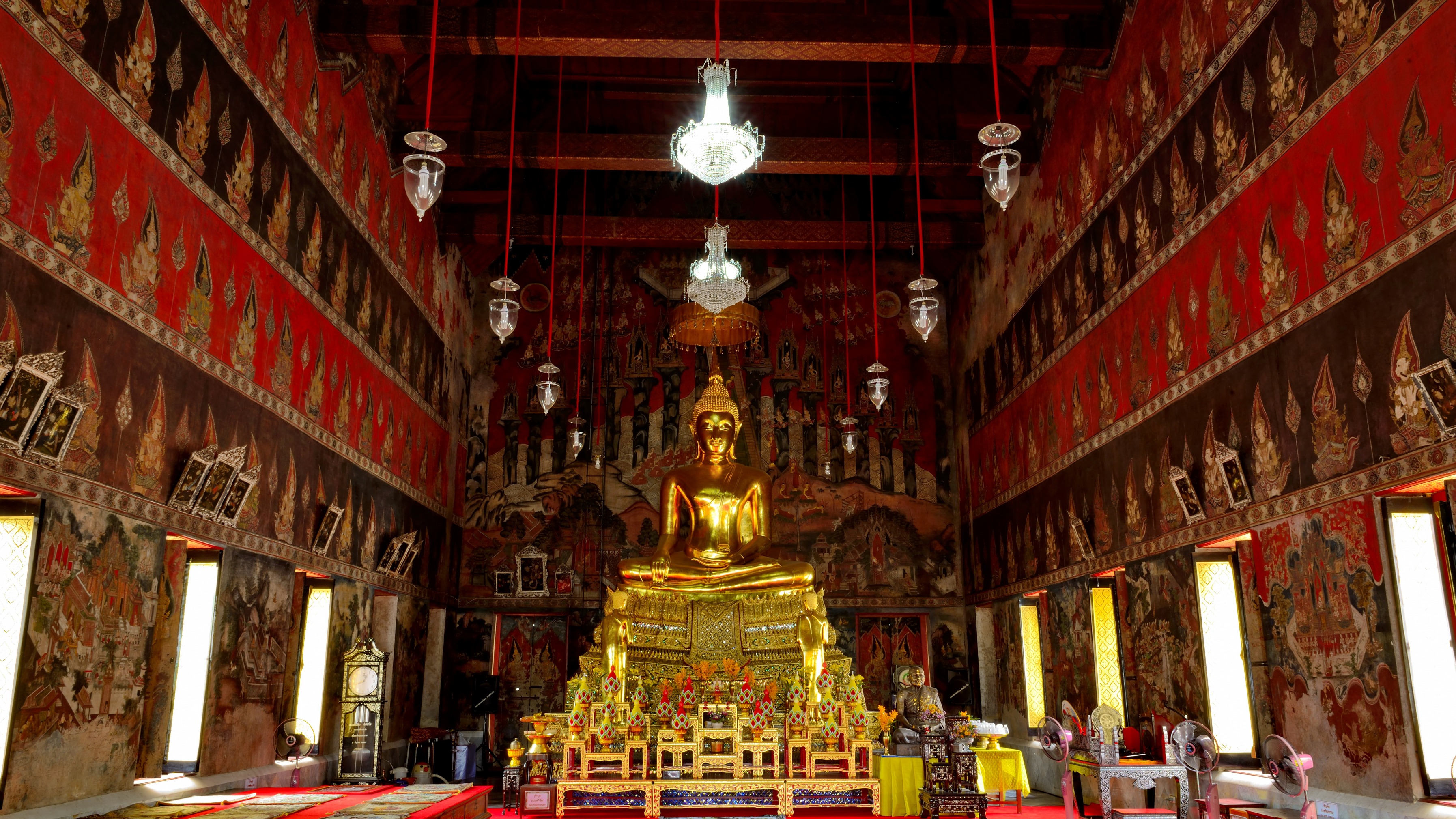
Wat Suwannaram
On the western bank of the Bangkok Noi canal, Wat Suwannaram combines Ayutthaya architecture, Jataka frescoes and the royal history of Siam.
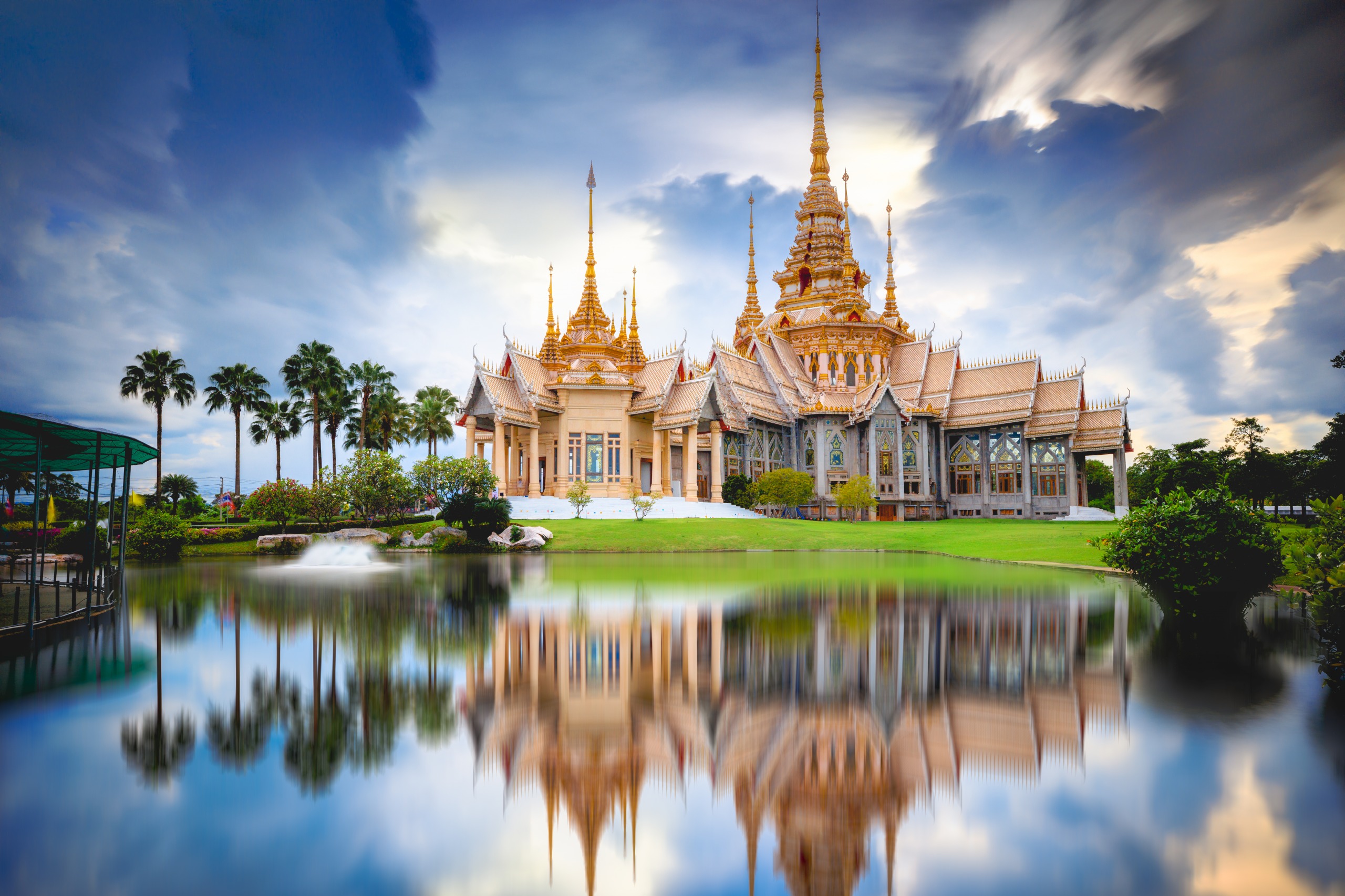
Phra Nakhon District
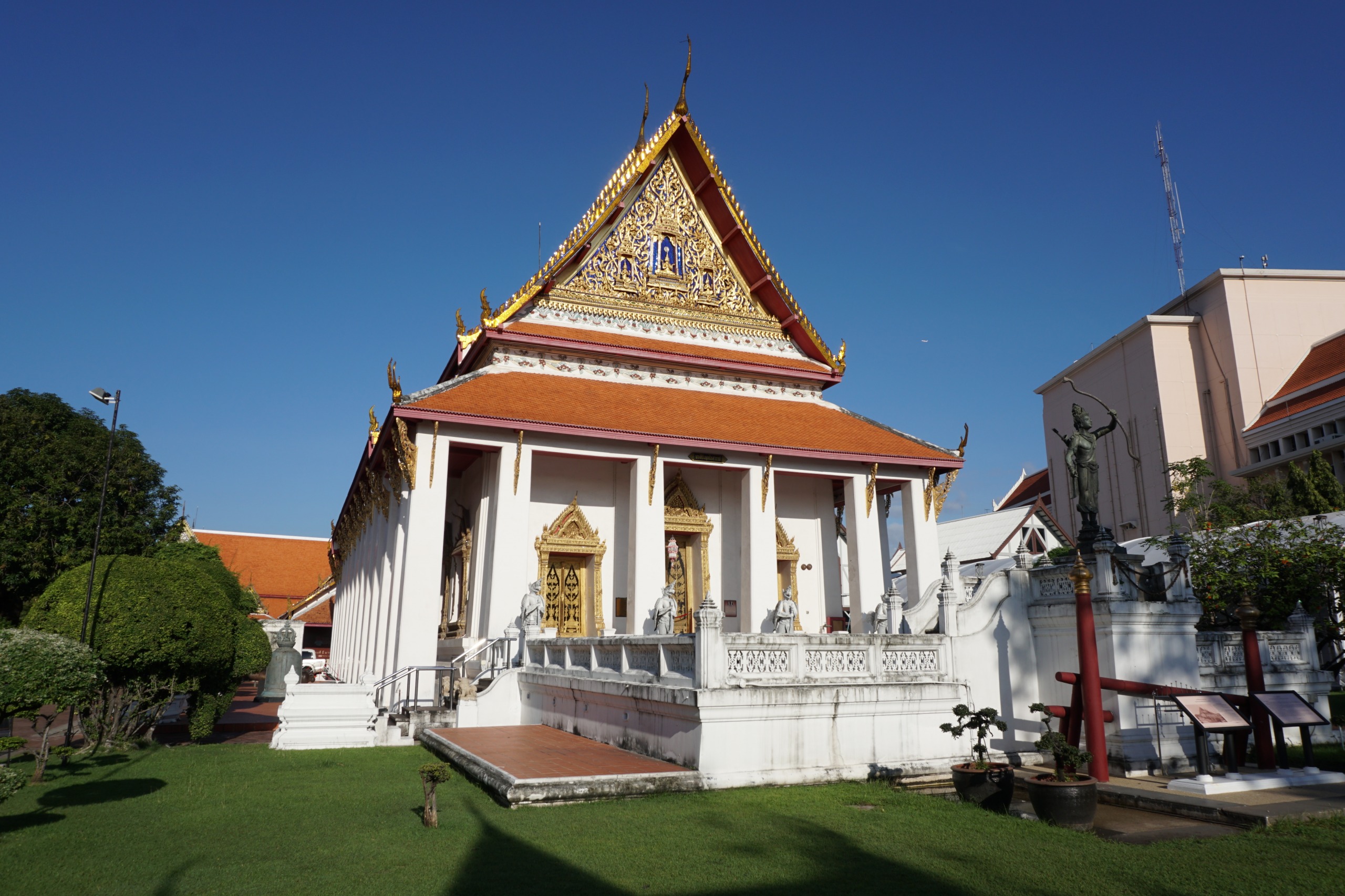
Phra Nakhon concentrates Bangkok's founding heritage: Grand Palace, Wat Phra Kaeo, Wat Pho, National Museum and the Indian quarter of Phahurat.
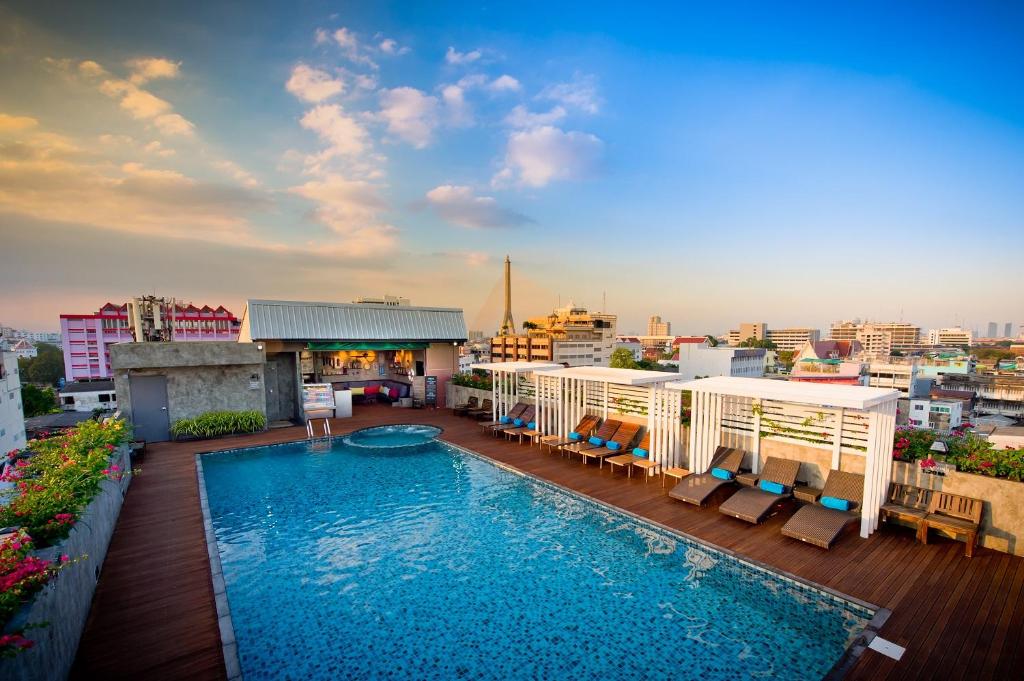
Nouvo City Hotel
Urban comfort hotel in Banglamphu's historic district, Bangkok: rooms of 32 to 38 m², spa, two pools and recognized halal dining.
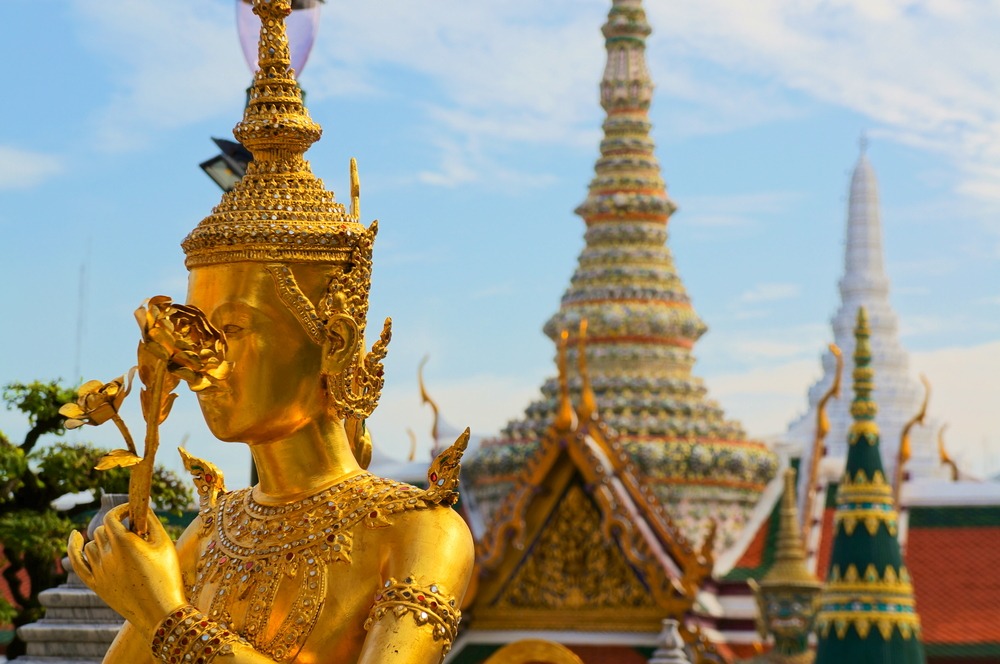
Wat Phra Kaeo
Royal temple of the Emerald Buddha, at the heart of Bangkok's Grand Palace, founded in 1783 by Rama I on the island of Rattanakosin.
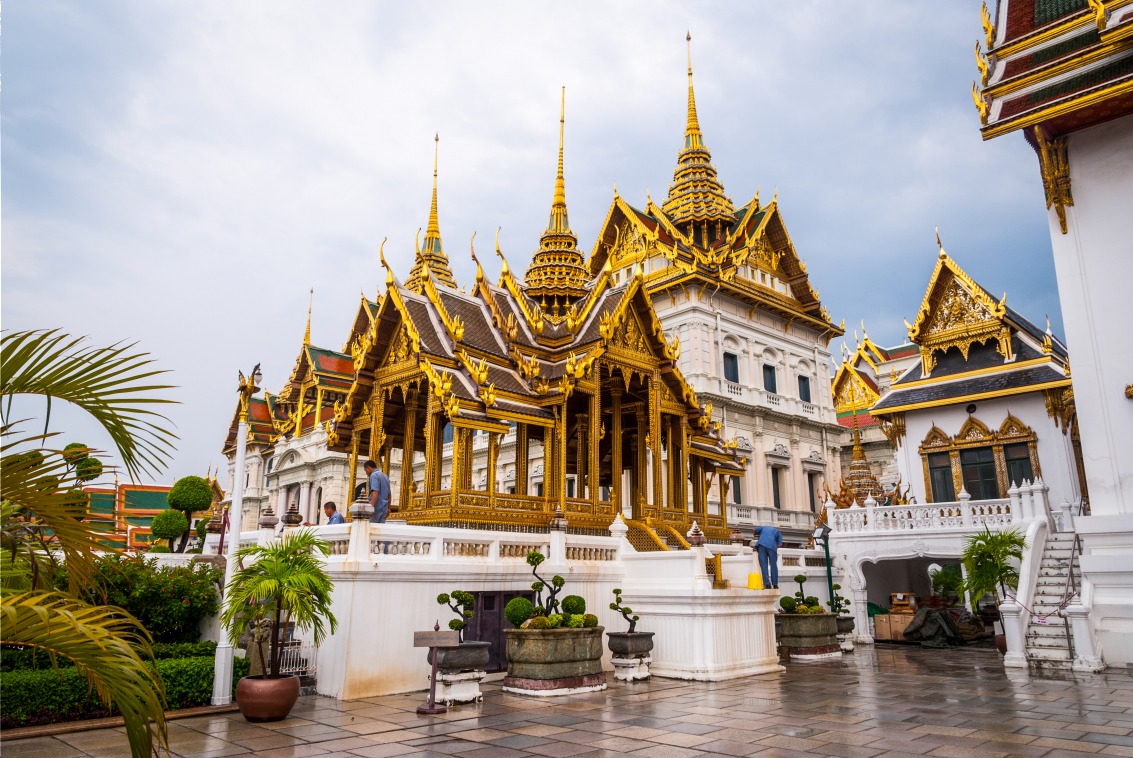
Grand Palace of Bangkok
Royal complex founded in 1782 by Rama I, the Grand Palace of Bangkok houses Wat Phra Kaeo and the Emerald Buddha. Practical guide to prepare your visit.
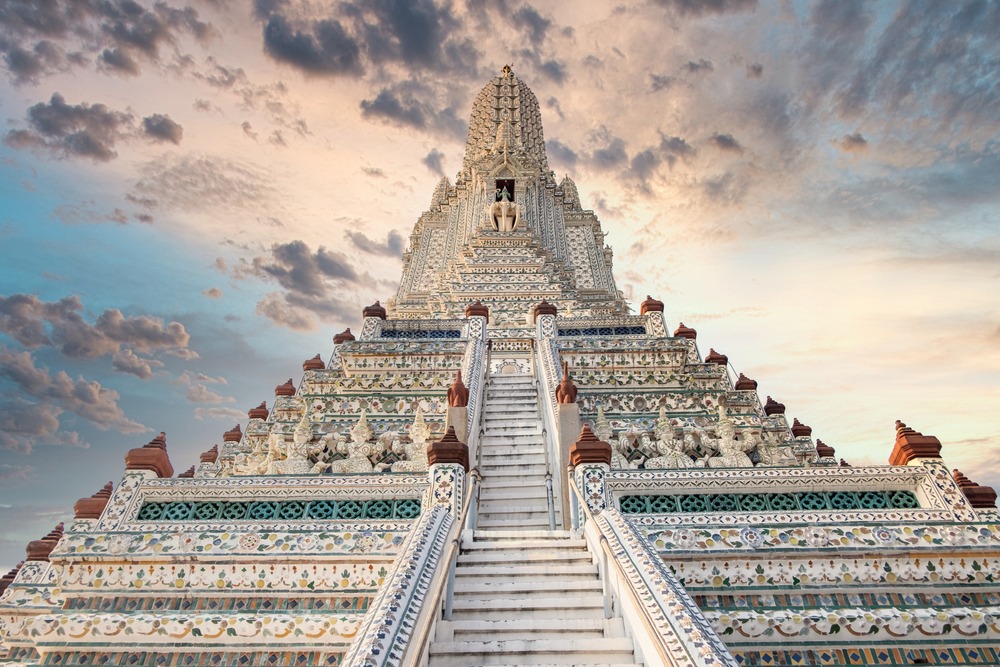
Wat Arun
Wat Arun, or the Temple of Dawn, dominates the western bank of the Chao Phraya in Bangkok with its 70-meter prang covered in porcelain mosaics.
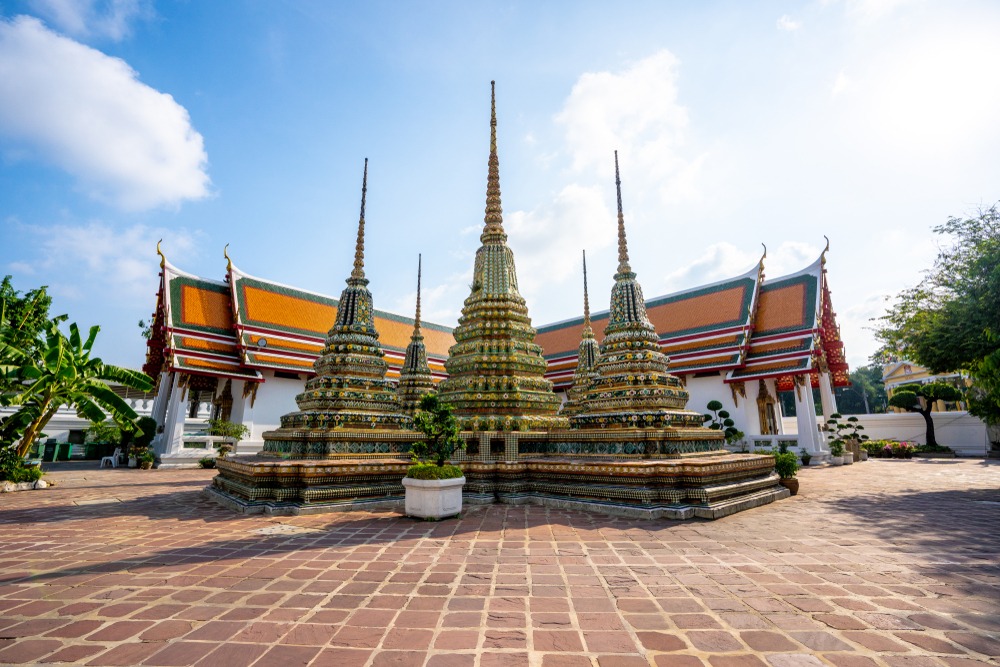
Wat Pho
South of Bangkok's Grand Palace, Wat Pho houses a 46-meter Reclining Buddha, 400 statues, and a UNESCO-recognized Thai massage school.
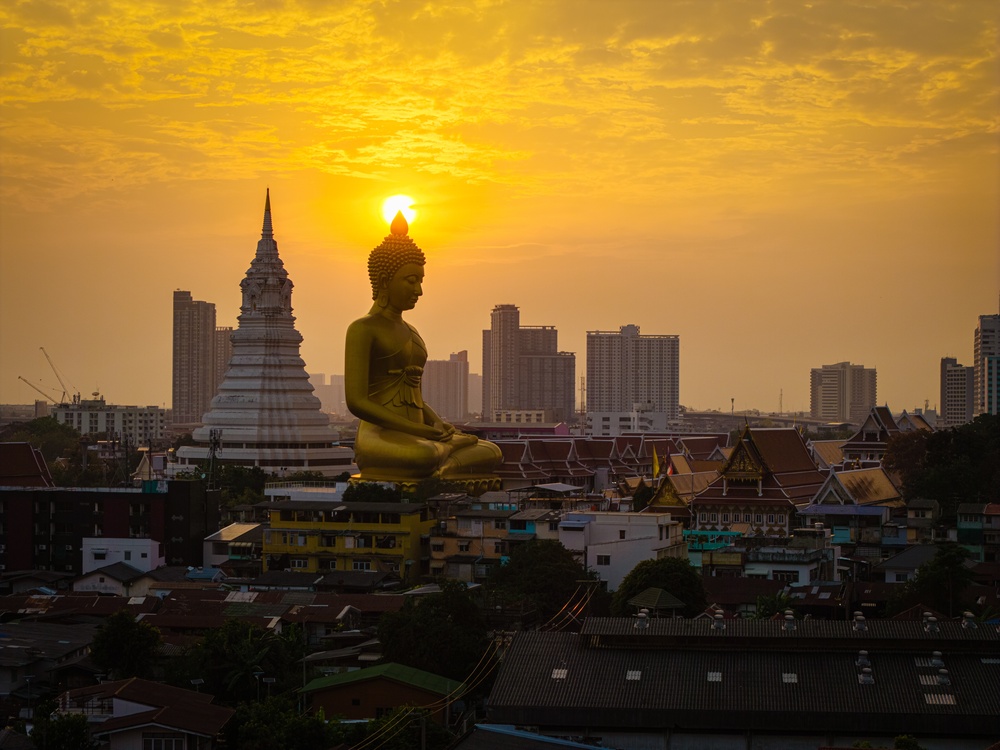
Bangkok
Bangkok, Thailand's vibrant capital, sometimes described as chaotic, is often overlooked by travelers who prefer the northern treks or southern beaches. Yet bypassing Bangkok during your Thailand trip means missing out on incredible Thai cultural diversity.
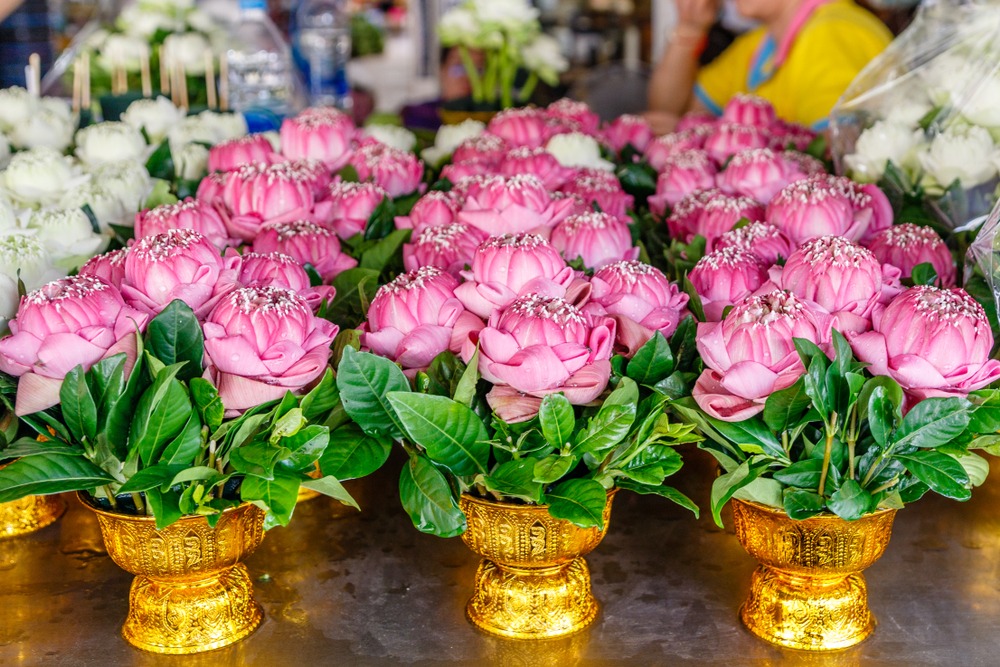
Pak Khlong Talat
Historic flower market in Bangkok, open around the clock near the Chao Phraya, supplying hotels, restaurants and temples in the capital with fresh blooms.
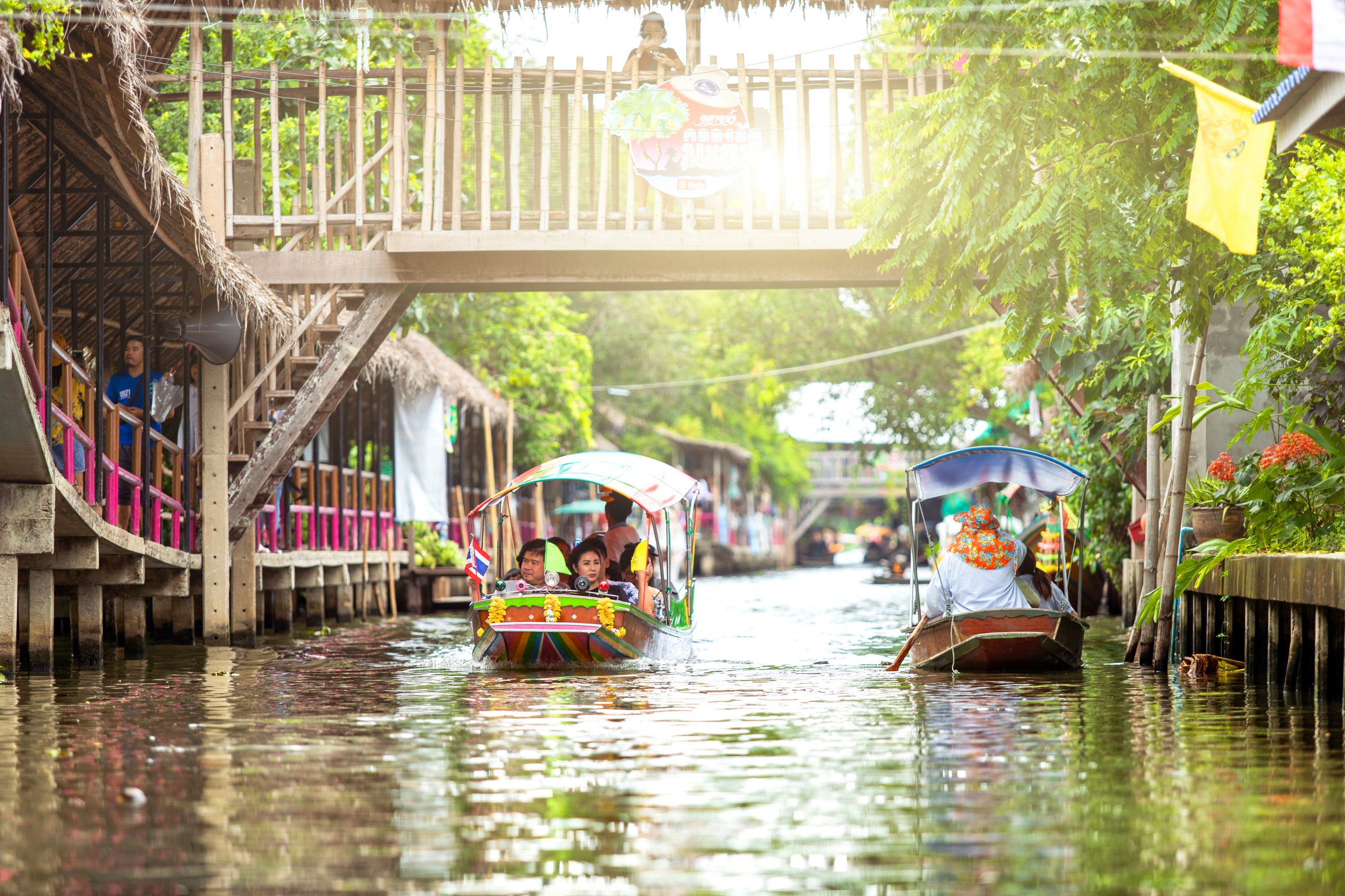
Khlongs of Thonburi
A network of historic canals on the west bank of Bangkok, the khlongs of Thonburi lead to Wat Arun, the Grand Palace and weekend floating markets.
Interested in this visit?
We can include it in your personalised itinerary.