Wat Tham Chiang Dao
Wat Tham Chiang Dao
At the foot of the Doi Luang Chiang Dao massif, this cave temple combines a Buddhist monastery complex, a Burmese 25-pointed Chedi and underground galleries steeped in legend.
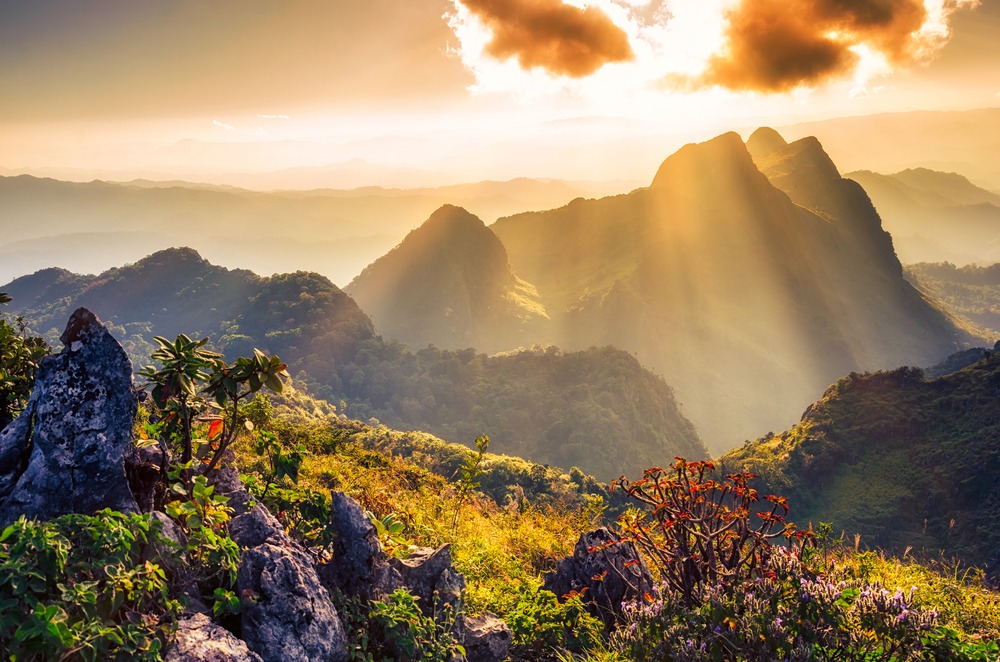
Wat Tham Chiang Dao merges a Buddhist monastery complex with a network of limestone caves carved beneath the Doi Luang Chiang Dao massif, Thailand's third-highest peak. Located roughly 1.5 hours' drive north of Chiang Mai, the site blends spiritual significance, local lore and subterranean exploration within a natural setting noticeably cooler than the lowland plains.
Why visit this cave temple
Wat Tham Chiang Dao takes its name from two Thai words: wat (temple) and tham (cave). The sacred site sits at the entrance to a karstic system inhabited by monks for centuries, and a visit combines two distinct experiences: wandering through the open-air monastery complex, and traversing underground galleries, some of which remain in complete darkness. The site's coolness—owing to altitude and forest canopy—contrasts sharply with Chiang Mai's heat, making it an appealing excursion year-round.
History and legend
The site's spiritual aura rests largely on the figure of the hermit Phrom Ruesi. Local tradition holds that this sage spent a thousand years meditating within the caves—a figure to be understood as legend rather than fact. According to the tales, the hermit persuaded mountain spirits to fashion wonders in the depths: a city of nagas (mythical serpents central to Southeast Asian Buddhist culture), a repository of divine textiles, and a solid gold Buddha from which streams an incandescent torrent. These creations are said to lie buried within the massif, beyond human reach. This narrative underpins the fervent devotion of Thai pilgrims who frequent the site, especially on weekends.
What to see here
The outdoor complex
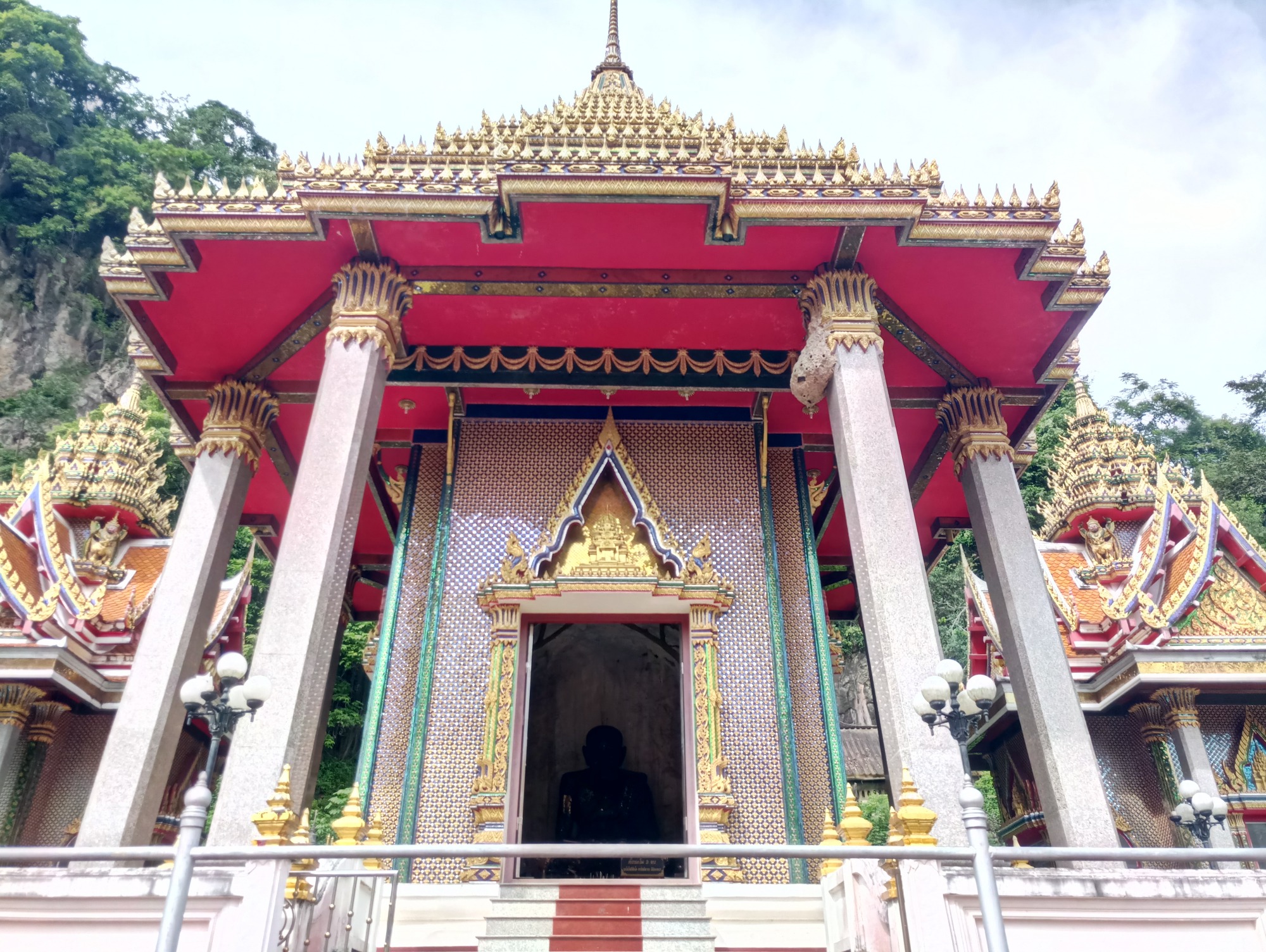
Before venturing underground, it's worth exploring the open-air complex. The Viharn dedicated to the monk Khru Ba Siwichai, a revered figure in northern Thailand, is recognizable by its finely carved blue-tinted pediment. Inside, a golden Buddha, attributed to the 1930s according to local sources, occupies the hall's center, flanked by pillars and exposed timber framing.
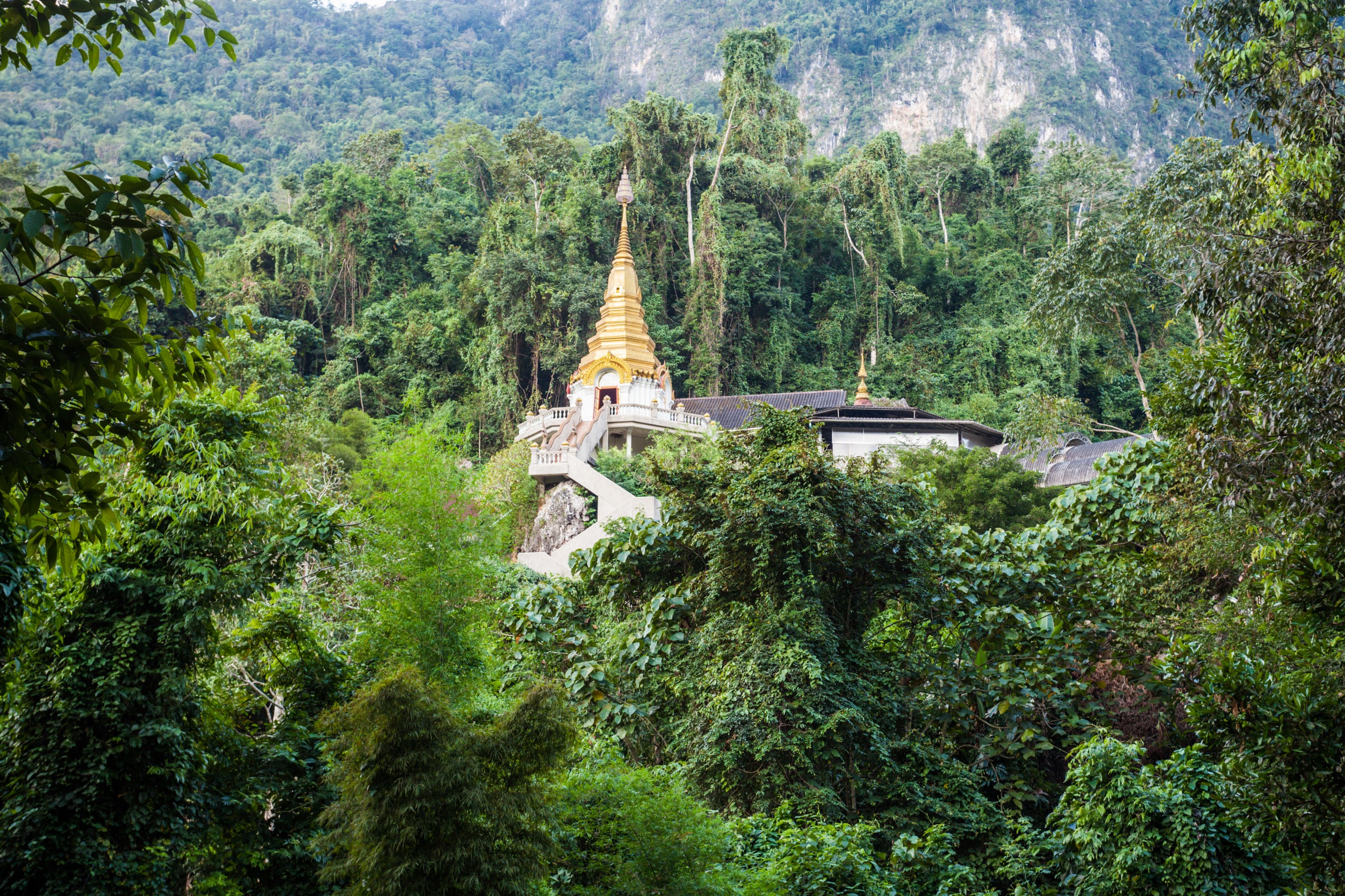
Nearby stands the Phra Chedi 25 Yot, a Burmese-style stupa whose twenty-five spires gave it its name (meaning "25 peaks"). The complex also includes:
a shrine dedicated to the Phaya Naga, the mythical serpent;
the Bodhi tree planted by King Rama IX;
cult statues carved directly into rock;
a large golden Buddha at the forest's edge;
figures representing the zodiac animals and the eight Buddhas associated with the days of the week;
a fish pond, frequented by devotees making offerings.
The Chiang Dao caves
The underground network stretches several kilometers beneath the massif, though the section open to visitors is more limited. Two modes of exploration coexist.
The first chambers, Tham Sua Dao and Tham Phra Non, are equipped with electric lighting and freely accessible. You'll encounter Buddha images arranged among concretions, along with an array of stalactites and stalagmites in unusual forms. The antechamber of the reclining Buddha, venerated by the faithful, is also part of this open section.
Beyond lie the chambers Tham Mah, Tham Kaew and Tham Nam, shrouded in darkness and visited only with a local guide carrying a gas lantern. Progress through narrow passages is punctuated by ancient statues and rock formations. Bat colonies inhabit the deepest sections; they should not be disturbed.
Practical information
The site opens daily, typically from 8am to 5pm (verify hours on-site). Entry to the illuminated caves incurs a modest fee; guided tours of the dark sections carry a separate charge, payable directly to guides at the entrance. Wear clothing that covers shoulders and knees, as in any Thai temple, and closed shoes for the caves, where floors may be wet and slippery. Allow 1.5 to 2.5 hours on-site depending on your chosen route.
When to visit
The dry season, November to February, offers the most comfortable conditions: cool temperatures at altitude, clear skies over Doi Luang Chiang Dao. The rainy season (June to October) greens the landscape but may make some passages slippery. Weekends draw many Thai pilgrims; a weekday visit, preferably early morning, allows for a quieter experience.
How to get there
From Chiang Mai, the journey to Chiang Dao covers roughly 70 km via Highway 107 northbound, taking about 1.5 hours by car. By public transport, buses depart from Chiang Mai's bus station to Chiang Dao town; the final stretch (around 10 km) is covered by shared taxi or tuk-tuk. Vehicle rental or a day-trip excursion offer the most flexibility, especially as they allow combining the temple with other sites in the region.
Nearby highlights to combine
Wat Tham Chiang Dao works well within a broader itinerary around Chiang Dao. A few kilometers away, Wat Tham Pha Plong offers another cave temple, accessible after a forest staircase climb. On the return route to Chiang Mai, the Mok Fah waterfall and Bua Tong falls (the famous "sticky cascades" with non-slip limestone) make worthwhile stops. Garden enthusiasts will extend toward Mae Rim and the Queen Sirikit Botanical Garden.
Frequently asked questions
The first chambers (Tham Sua Dao, Tham Phra Non) are lit and accessible freely. For Tham Mah, Tham Kaew and Tham Nam, which are unlit, a guide with a gas lantern is mandatory for safety reasons.
Plan for 1.5 to 2.5 hours depending on whether you stick to the lit section or also explore the dark caves with a guide.
November to February, during the dry season, for cool temperatures and clear skies. Choose a weekday and early morning to avoid weekend crowds of Thai pilgrims.
Allow about 1.5 hours' drive via Highway 107 heading north. By bus, get off at Chiang Dao town and take a tuk-tuk or shared taxi for the remaining kilometers to the temple.
To incorporate Wat Tham Chiang Dao into a wider itinerary, see our Thailand trip ideas.
Photos
Interested in this visit?
We can include it in your personalised itinerary.