Hueang River
Hueang River
A tributary of the Mekong stretching 110 km, the Hueang River traces the border between Thailand and Laos in the rural province of Loei.
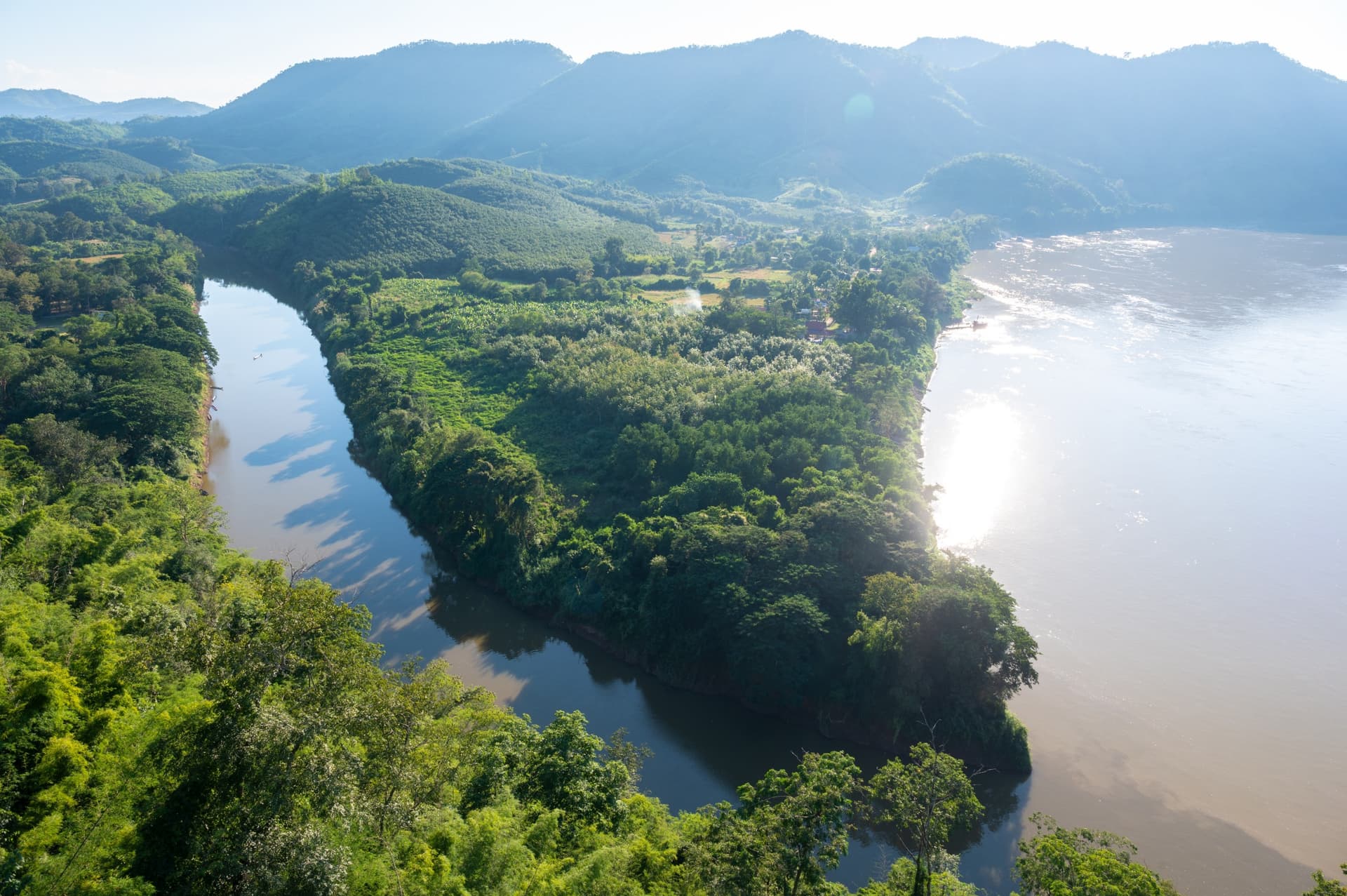
The Hueang River winds for 110 kilometers between Thailand and Laos before joining the Mekong at Chiang Khan, in Loei Province. Over 90 of these kilometers, it traces the natural border between the two countries. A secondary but vital tributary, it waters the districts of Dan Sai, Phu Ruea, and Tha Li, and flows through a mountainous region renowned for its cool climate.
Why visit the Hueang River
The Hueang attracts travelers seeking rural Thailand, away from the well-trodden circuits of north and south. The Loei region remains relatively untouched by international tourism. The river offers a vantage point for understanding border life between Thai and Laotian communities, who share these banks for fishing and subsistence agriculture.
One geographical detail deserves attention: near its source in Na Haeo District, the river takes on a brown hue due to erosion of clayey soils. As it nears the Mekong, it shifts to a green tint. The two colors meet visibly at the confluence, creating a distinctive color bifurcation at the Chiang Khan site.
What to see around the river
Several sites line the course of the water and its basin:
Phu Suan Sai and Na Haeo National Park: protected area near the sources, mountain forests, and hiking trails.
Nam Hueng Thai-Laos Friendship Bridge: border crossing linking Amphoe Tha Li (Thailand) to Kenthao (Laos).
Phrathat Si Song Rak: stupa nicknamed the "love stupa," a historic Buddhist monument of the region.
Ban Na Kha: peaceful village with several viewpoints overlooking the valley.
Amphoe Phu Ruea: one of Thailand's coolest areas, prized in the cold season for its plateau landscapes.
When to visit
The most favorable period spans November to February. The climate is dry, temperatures remain cool at altitude (Phu Ruea can drop near freezing at night in December-January), and visibility over the river is excellent. Avoid September: rainfall is heaviest that month, the current becomes dangerous for navigation, and landscapes are obscured by precipitation. The dry season also allows you to combine the river with nearby national parks, whose trails become passable.
How to get there
From Bangkok, the simplest route is to reach Mochit Bus Terminal (northern bus station) and take a long-distance bus to Loei. The journey takes around ten hours. From Loei, you then access by road to Chiang Khan, Tha Li, or the districts of Dan Sai and Phu Ruea depending on which stretch of river you wish to explore. Renting a car remains the most practical option for exploring the different access points, as riverside villages are scattered across an extensive area.
Nearby
The Hueang River fits into a broader itinerary in Thailand's northeast and north regions. From Chiang Khan, several Buddhist sites in the region lend themselves to extending your stay, notably Wat Phumin, Wat Phra That Cho Hae, and Wat Chom Sawan, which illustrate the architectural traditions of northern Thailand.
Practical information
Location: Loei Province, northeastern border with Laos.
Access: from Chiang Khan, Tha Li, Dan Sai, or Phu Ruea depending on the section.
Duration of visit: plan a half-day for the confluence at Chiang Khan, two to three days to explore the basin.
Navigation: boat excursions possible from certain riverside villages; inquire locally.
Budget: the region remains one of the least expensive in the country.
Frequently asked questions
Yes, via the Nam Hueng Friendship Bridge between Amphoe Tha Li and Kenthao. Check visa conditions before presenting yourself at the border post, which does not have the same status as major international crossings.
Near its source at Na Haeo, erosion of clayey soils tints its waters brown. As it approaches the Mekong, it turns green. At the confluence, the two colors remain visible side by side before mixing.
No. The rainy season, particularly in September, makes the waters too turbulent for tourist navigation. The dry period, from November to February, is most suitable.
Extend the experience
To integrate the Hueang River and Loei Province into a complete itinerary, consult our suggestions for travel in Thailand, which combine rural areas of the northeast with the country's greatest classics.
Photos
Interested in this visit?
We can include it in your personalised itinerary.