Phra Khanong District
Phra Khanong District
In southeast Bangkok, Phra Khanong is home to the 95-meter stupa of Wat Dhamma Mongkhol, a replica of the temple at Bodh-Gaya, and a thriving contemporary art scene.
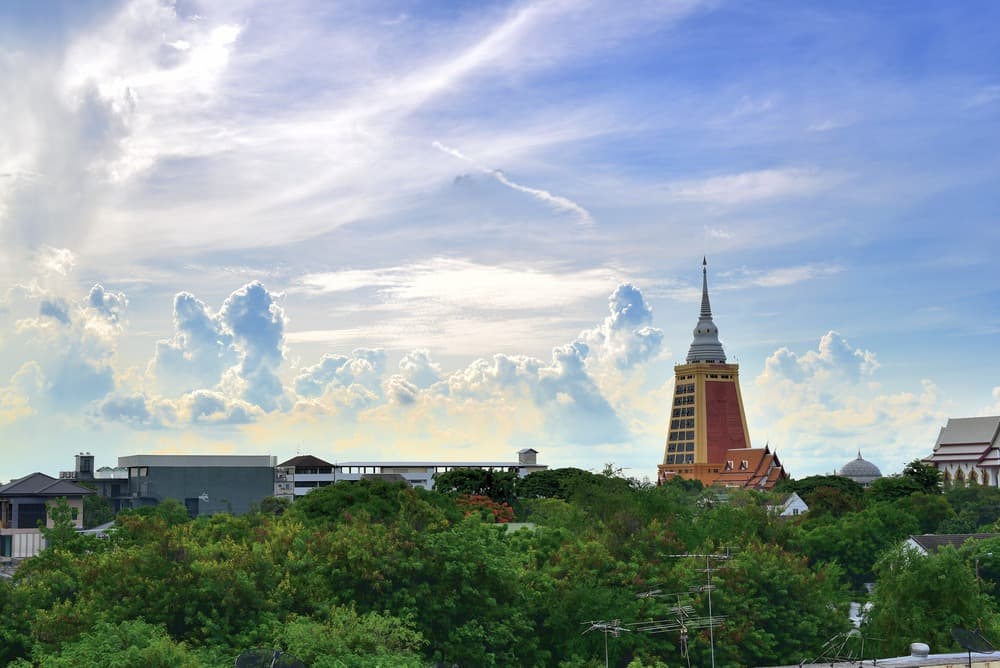
Phra Khanong is a district in southeast Bangkok, located between On Nut and Ekkamai, along Sukhumvit Avenue. The neighborhood is best known for Wat Dhamma Mongkhol and its 95-meter stupa, a Thai replica of the Mahabodhi temple at Bodh-Gaya, India. Away from the major tourist circuits along the Chao Phraya riverfront, Phra Khanong blends residential neighborhood life, a vibrant contemporary art scene, and street food destinations.
Why Visit Phra Khanong
Three elements set this district apart in a Bangkok visit:
Singular Buddhist heritage: Wat Dhamma Mongkhol houses one of Southeast Asia's rare replicas of the Mahabodhi stupa, the place where, according to tradition, Buddha attained enlightenment.
An active art scene: galleries, studios, and cultural complexes like Hof Art Space and Naiipa Art Complex offer fresh perspectives on contemporary Thai creativity.
Everyday Bangkok: markets, residential streets, independent cafés, and restaurants reveal a less touristic side of the capital, just a few BTS stops from Sukhumvit.
District History
The territory of Phra Khanong has existed for over a millennium. The region was marked by Khmer dominance before integrating into successive Thai kingdoms. The etymology of its name remains debated: some see it as the word for "eyebrow," others link it to "Khanon," a term associated with customs posts—a theory supported by the area's proximity to an ancient river trading port.
Long a simple village, Phra Khanong was elevated to district status in 1927 and transferred from Phra Pradaeng Province to Bangkok's jurisdiction. The neighborhood is home to approximately 90,000 residents today and is one of Bangkok's fifty districts (khet).
What to See in Phra Khanong
Wat Dhamma Mongkhol
This is the district's emblematic monument. Completed in the early 1960s, the temple was founded by the monk Somdet Phra Yannawachirodom after twenty years of forest meditation. His vision: to build a replica of the Mahabodhi stupa, the site of Buddha's enlightenment at Bodh-Gaya.
The result is a chedi 95 meters tall, with a square base that tapers toward the top in a bell shape. The pinnacle is set with precious stones: estimated at some 17 kilograms of gold and over 1,060 carats of diamonds. The stupa is visible from afar across southeast Bangkok's landscape and serves as a visual landmark for residents. Inside, the grounds offer a path through Buddhist teachings and welcomes the faithful in prayer.
Wat Wachiratham Sathit
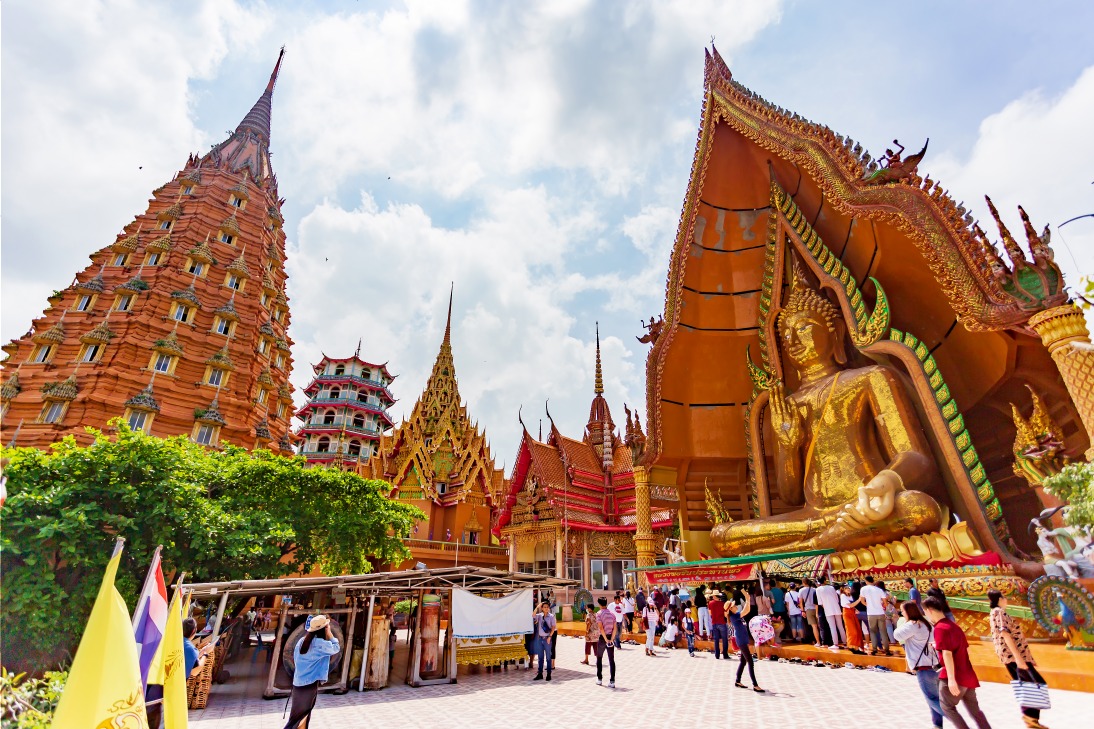
This royal-rank monastery features an ordination hall with multi-tiered sloped roofs that reflect the Lanna style typical of northern Thailand rather than Bangkok. The nearby two-toned stupa follows the same architectural tradition. The hall contains a Buddha sculpture carved in the Lanna style, approximately 500 years old, the temple's most precious possession.
Hof Art Space and Naiipa Art Complex
Phra Khanong's art scene centers on two main venues:
Hof Art Space: a contemporary art gallery exhibiting established and emerging Thai artists, occasionally hosting international guests.
Naiipa Art Complex: a collection of open-access studios designed around a leafy courtyard, where you can meet young artists at work.
Sukhumvit and Neighborhood Life
Sukhumvit Avenue, which runs through Phra Khanong, concentrates cafés, Chinese, Japanese, and Thai restaurants, as well as electronics and fashion shops. Adjacent sois host markets and street food stalls that showcase everyday Bangkok.
Practical Information
Visit duration: plan half a day to combine Wat Dhamma Mongkhol with a gallery; a full day if you extend into Sukhumvit.
Dress code: shoulders and knees covered to enter temples; shoes removed before entering interior halls.
Best time to visit: most pleasant from November to February, in the dry and moderate season. Avoid midday during hot season (March-May); temples are best visited in the morning.
How to Get There
Phra Khanong is easily accessible from central Bangkok via the BTS Skytrain, Sukhumvit Line. To reach Wat Dhamma Mongkhol, exit at Punnawithi Station, which opened in 2005; the temple is about 500 meters away. Before this extension, Bang Chak was the closest terminus, making temple access more complex. Taxis and ride-hailing apps also serve the neighborhood easily.
Nearby Areas
Phra Khanong sits within Bangkok's greater southeast belt. To extend your visit:
On Nut and Ekkamai: two BTS stations further west, vibrant neighborhoods known for night markets and food scenes.
Wat Saket: the Golden Mountain temple, in the historic center, accessible by metro and BTS.
Grand Palace of Bangkok and Wat Phra Kaeo: combine for a day devoted to royal heritage.
Bangkok National Museum: to place Buddhist works in their historical context.
Frequently Asked Questions
Frequently asked questions
Yes, for travelers interested in Buddhism and religious architecture: the Bodh-Gaya stupa replica is unique in Thailand. For a short first visit to Bangkok, the historic center temples are better prioritized.
Half a day is enough for Wat Dhamma Mongkhol and a gallery. Plan a full day if you combine temples, the art scene, and Sukhumvit exploration.
The easiest way is the BTS Skytrain, Sukhumvit Line, to Phra Khanong or Punnawithi stations (the latter being closest to Wat Dhamma Mongkhol).
Yes: shoulders and knees covered; shoes removed before entering halls. A scarf can help visitors in summer clothes.
November to February, when Bangkok's climate is drier and less hot. The rainy season (June-October) is still feasible with late-day showers.
Planning Your Trip
Phra Khanong naturally fits into a Bangkok stay mixing temples, contemporary scenes, and residential neighborhoods. To build a custom Thailand itinerary, explore our Thailand trips.
Photos
Nearby
Interested in this visit?
We can include it in your personalised itinerary.