General Tuan's Tomb
General Tuan's Tomb
Sixty kilometers from Chiang Rai, on the heights of Doi Mae Salong, General Tuan's tomb traces the history of the exiled KMT and the village's economic transformation.
Perched on the heights of Doi Mae Salong, some sixty kilometers northwest of Chiang Rai, an isolated pagoda shelters the remains of General Tuan Shi-Wen, the village's founder. This monument encapsulates a little-known chapter of twentieth-century Thai history—one of Chinese exile, Cold War intrigue, and economic reinvention.
Why visit General Tuan's tomb
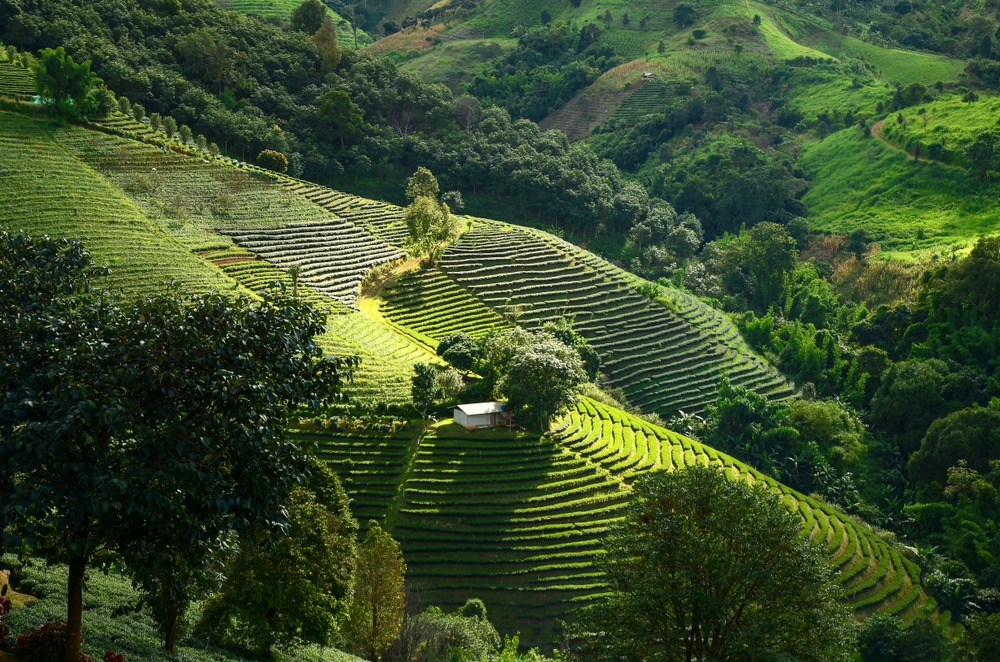
The visit appeals on three fronts. Historically, the site documents the trajectory of the exiled Chinese Nationalist Army (KMT) and its role in the Golden Triangle's opium trade. Scenically, the tomb overlooks terraced tea plantations characteristic of Mae Salong, commanding sweeping views across the mountainous borderlands with Burma. Culturally, the access road passes through a market frequented by Lahu, Karen, and Akha communities, adding an ethnographic dimension to the journey.
History: from exiled KMT to Mae Salong's reinvention
The story begins in 1949. Following the Chinese Communist Party's victory, several Nationalist units refuse surrender and retreat southward. The 93rd Division, commanded by General Tuan, crosses Laos and Burma before finding refuge in the mountains of northern Thailand at Mae Salong. Bangkok permits their settlement on the condition they combat local communist insurgencies. During the Vietnam War, some of these soldiers are engaged as mercenaries by the CIA. In exchange for these services, Thai citizenship is eventually granted to the KMT soldiers and their families.
Cut off from a return to China and installed in a harsh mountainous zone, Tuan's men turn to opium cultivation, then dominant in the region. The general himself publicly acknowledges this choice in a 1967 statement to the Weekend Telegraph: "We must continue to fight the scourge of communism, and to fight we must have an army, and an army must have weapons, and to obtain weapons we need money. In these mountains, the only monetary resource is opium." Between 1960 and 1975, Mae Salong ranks among the Golden Triangle's principal drug refineries.
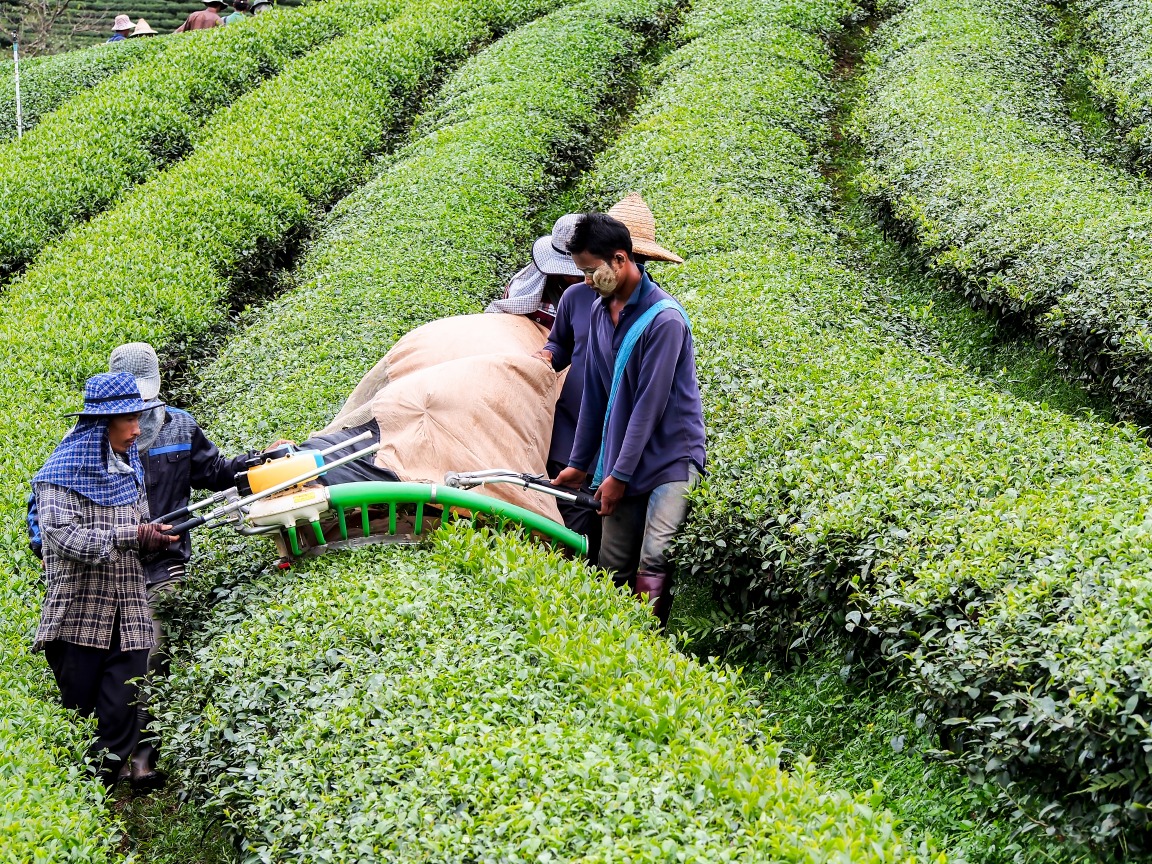
General Tuan dies in 1980. Spurred by Thai authorities and crop-substitution programs, the village gradually abandons the opium poppy for vegetables, fruits, and especially oolong tea, now renowned throughout the country.
What to see on site
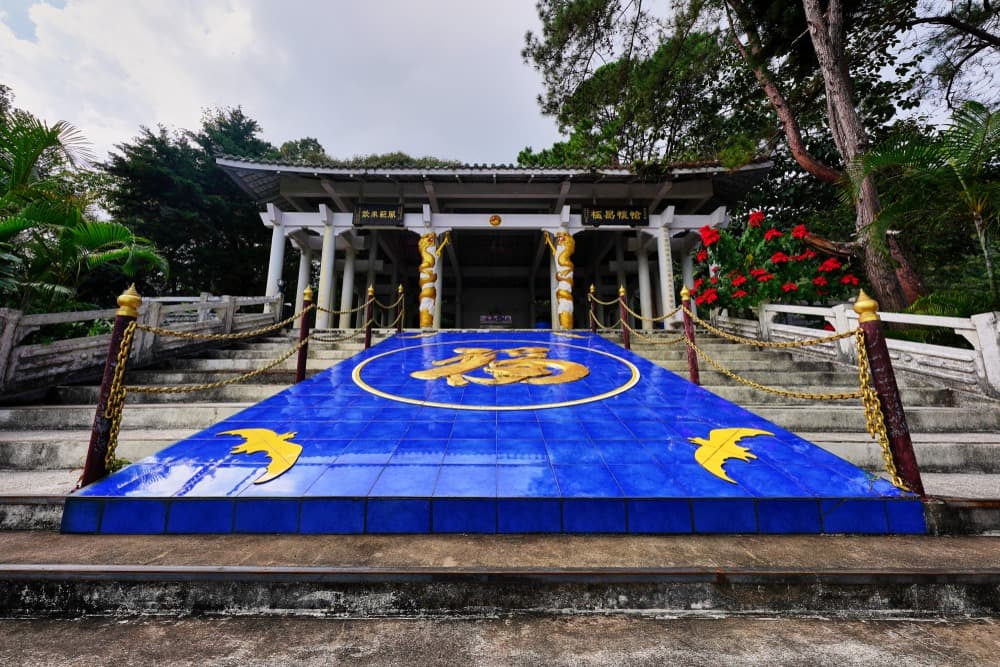
The tomb stands at the summit of a hill amid tea plantants, reached by a flight of steps. The structure takes the form of a Buddhist pagoda: a covered edifice with colonnades, open to the elements on all sides. At the far end rests the sarcophagus, before which are arranged bowls of food, candles, and incense sticks. A portrait of the general hangs on the wall behind the coffin. Flanking photographs trace the history of the 93rd Division and the exiled KMT forces.
A Chinese officer is usually present and offers incense sticks to visitors who wish to pay their respects. The exterior viewpoint affords an unobstructed vista across the tea plantations and surrounding valleys.
Practical information
- Length of visit: allow 30 to 45 minutes for the tomb alone, 1 to 2 hours including the market and viewpoints.
- Access: free. A modest donation is customary if you take incense sticks.
- Dress code: covered clothing recommended, as at any place of remembrance.
- Altitude: Mae Salong sits above 1,200 meters; bring an extra layer during the cool season.
When to visit
November to February is most favorable: clear skies, cool mountain temperatures, and maximum visibility across the highlands. This is also cherry blossom season, when trees bloom around the village. The rainy season (June to October) makes roads more challenging and visibility unpredictable.
How to get there
Mae Salong lies roughly 60 kilometers northwest of Chiang Rai by road, a journey of 1.5 to 2 hours depending on conditions. No direct buses serve the village. Three options are available:
- Rental car or motorbike from Chiang Rai, the most flexible choice for exploring the highlands.
- Songthaew (shared minibus) from Mae Chan, on the main highway between Chiang Rai and Mae Sai.
- Organized excursion from Chiang Rai, often combined with other Doi Mae Salong attractions.
Once in Mae Salong, the tomb is clearly signed and accessible within minutes by vehicle from the village center.
Worth combining with nearby attractions
- Mae Salong village: Yunnan-style atmosphere, tea salons, and Yunnan Chinese cuisine.
- Plantation 101: tour of terraced tea crops and oolong tasting.
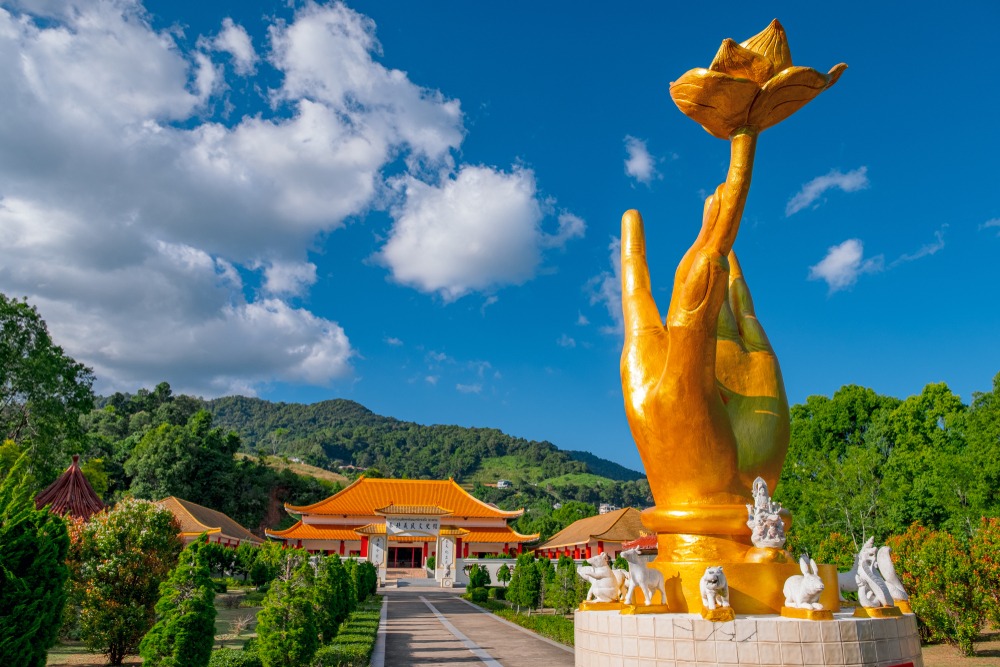
- The Martyrs Memorial Museum: historical context on the KMT.
- The Sinakarintra Stit Mahasantikhiri pagoda at the summit of Doi Mae Salong, dedicated to Princess Sinakarindra, mother of King Rama IX.
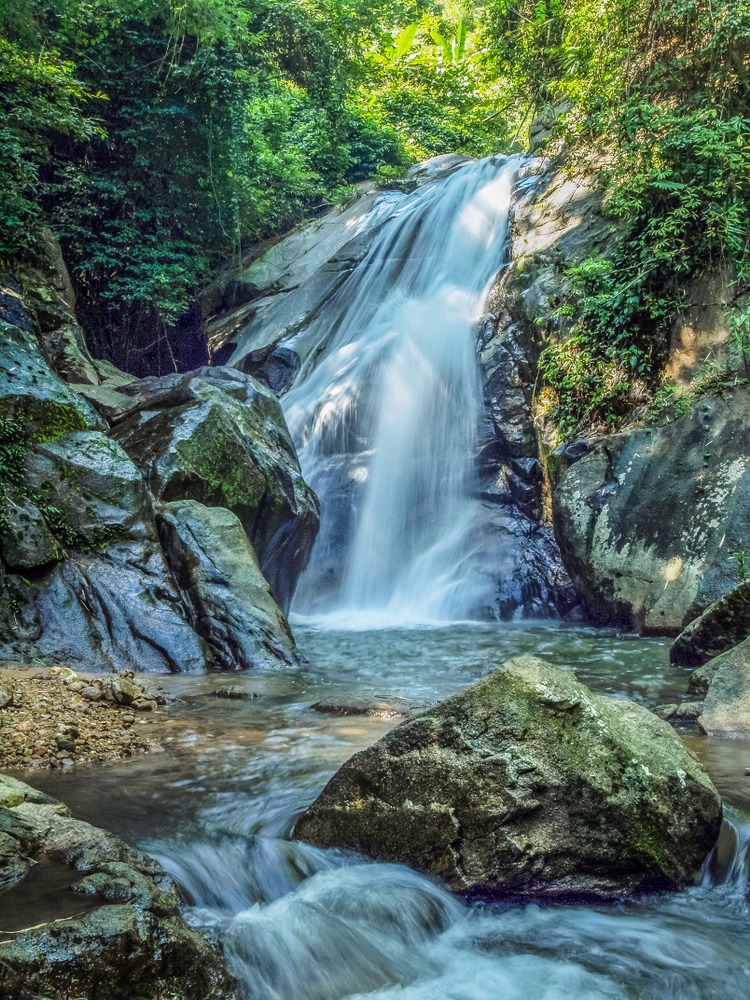
- Mae Sai Waterfall, on the northern route toward the Burmese border.
Frequently asked questions
Allow 30 to 45 minutes for the memorial. Including the local market and a viewpoint, plan for 1 to 2 hours in the area.
Entry is free. If an officer provides incense sticks, a modest donation is customary.
No direct buses serve the site. The easiest approach is a songthaew from Mae Chan, or renting a vehicle. Organized excursions from Chiang Rai offer a comfortable alternative.
The Sinakarintra pagoda at the summit of Doi Mae Salong, oolong tea plantations, the Chinese village of Mae Salong, and its Yunnan restaurants.
General Tuan's tomb fits into a larger itinerary across northern Thailand, between mountainous borders and Golden Triangle heritage. To plan your Thailand journey, our English-speaking advisors can integrate Mae Salong into a tailor-made circuit in the Chiang Rai region.
Photos
Nearby

Interested in this visit?
We can include it in your personalised itinerary.