Thailand-Burma Railway Centre
Thailand-Burma Railway Centre
73 Chao Khun Nen Rd, Tambon Ban Nuea, Amphoe Mueang Kanchanaburi, Chang Wat Kanchanaburi 71000, Thaïlande
Private museum in Kanchanaburi dedicated to the Siam-Burma railway line and the "Death Railway" built during World War II.
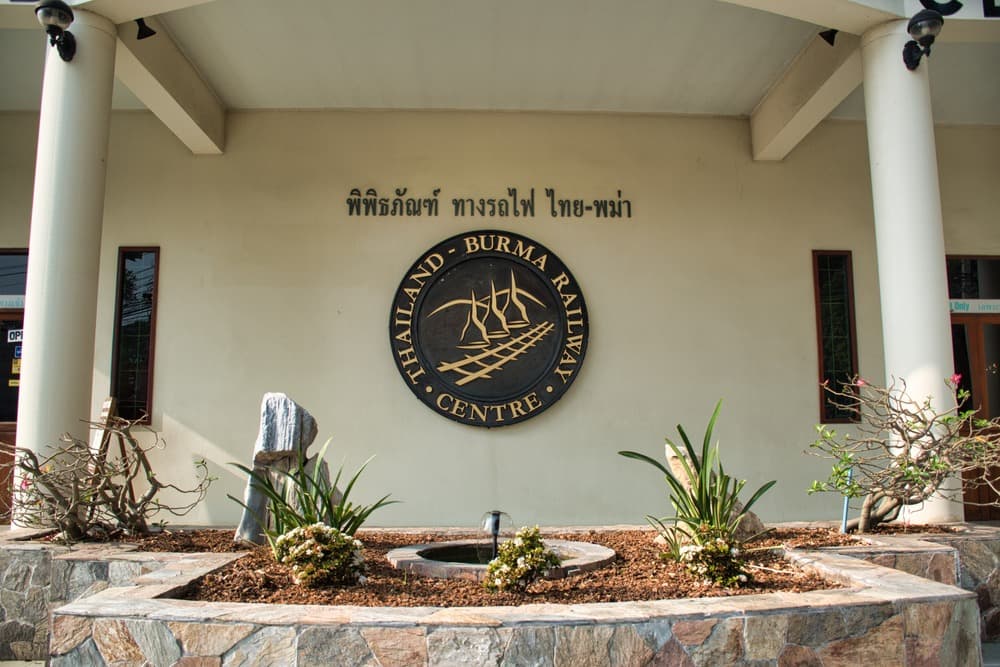
The Thailand-Burma Railway Centre is a private museum located in Kanchanaburi, on Saeng Chuto Road, directly across from the Allied War Cemetery. Dedicated to the Siam-Burma railway line constructed during World War II, it combines a museum exhibition with a historical research institute.
Why visit the railway centre
This museum stands out for the rigor of its documentation. Unlike other memorial sites in the region, it draws on decades of field research and presents a coherent collection of archives, artifacts, and testimonies. For those interested in World War II history in Southeast Asia, it represents an essential stop in Kanchanaburi, complementing a visit to the Death Railway and the neighboring cemetery.
The tone is educational and respectful. The scenography remains understated, suited to the memorial nature of the subject, and the English-language explanations are accessible to a non-specialist audience.
History of the museum and the Siam-Burma line
The centre opened in 2003, sixty years after the railway's completion. It is the work of Rod Beattie, an Australian historian and researcher who devoted much of his life to documenting the line. To conduct his inspections, he personally cleared and exposed a section of the railway track reclaimed by vegetation. The building is more than a museum: it also houses a research and documentation institute devoted to the Siam-Burma line, frequented by families of victims and scholars.
The railway was constructed in 1942 by the Japanese Imperial Army to link Bang Pong, in western Thailand, to Thanbyuzayat, in Mon State in southern Myanmar. The line was completed in October 1943. Faced with a labour shortage, the Japanese Army forcibly mobilised Allied prisoners of war (British, Australian, Dutch, American) as well as tens of thousands of Asian civilians, referred to as romusha. Working conditions – physical violence, tropical diseases, sleep deprivation, insufficient food – resulted in massive mortality, giving rise to the nickname "Death Railway."
What you will see on site
The exhibition unfolds across two levels, ground floor and first floor, following a chronological route:
the arrival of Japanese forces in Thailand and the strategic context of the project;
the design and route of the railway;
life in the work camps and the causes of mortality;
the opening of the line and the Allied bombing that led to its partial destruction.
The route combines explanatory panels, period photographs, and interactive displays. A small cinema room screens a documentary supplementing the visit. Several artefacts recovered along the old railway are on display, notably elements of a trestle bridge, as well as a detailed model of the camp clinic reconstructing the sanitary conditions of the time.
At the exit, a café and shop offer postcards, brochures, reference works, and DVDs of individual testimonies from former prisoners.
Practical information
The museum is open daily during daytime hours. Rates distinguish between adults and children; check locally or with your travel agency for current conditions. Allow approximately 1.5 to 2 hours to tour the entire exhibition at a leisurely pace.
The centre is fully covered: it can be visited any time of year, including during the rainy season.
How to get there
The museum is located about 1 km from Kanchanaburi town centre, on Saeng Chuto Road, opposite the Allied War Cemetery.
From Bangkok: a direct train departs from Thonburi Station for Kanchanaburi. The journey is slower than the road but allows you to travel part of the old railway line. Ask for the stop before the River Kwai Bridge, then follow Saeng Chuto Road southward.
From the River Kwai Bridge: walking is possible but lengthy; a tuk-tuk or taxi is more comfortable.
From town centre: songthaews, tuk-tuks, and taxis easily serve the cemetery area.
Nearby attractions
Kanchanaburi has several sites linked to World War II history that complement each other well over one or two days:
the Death Railway, whose route remains partly in operation;
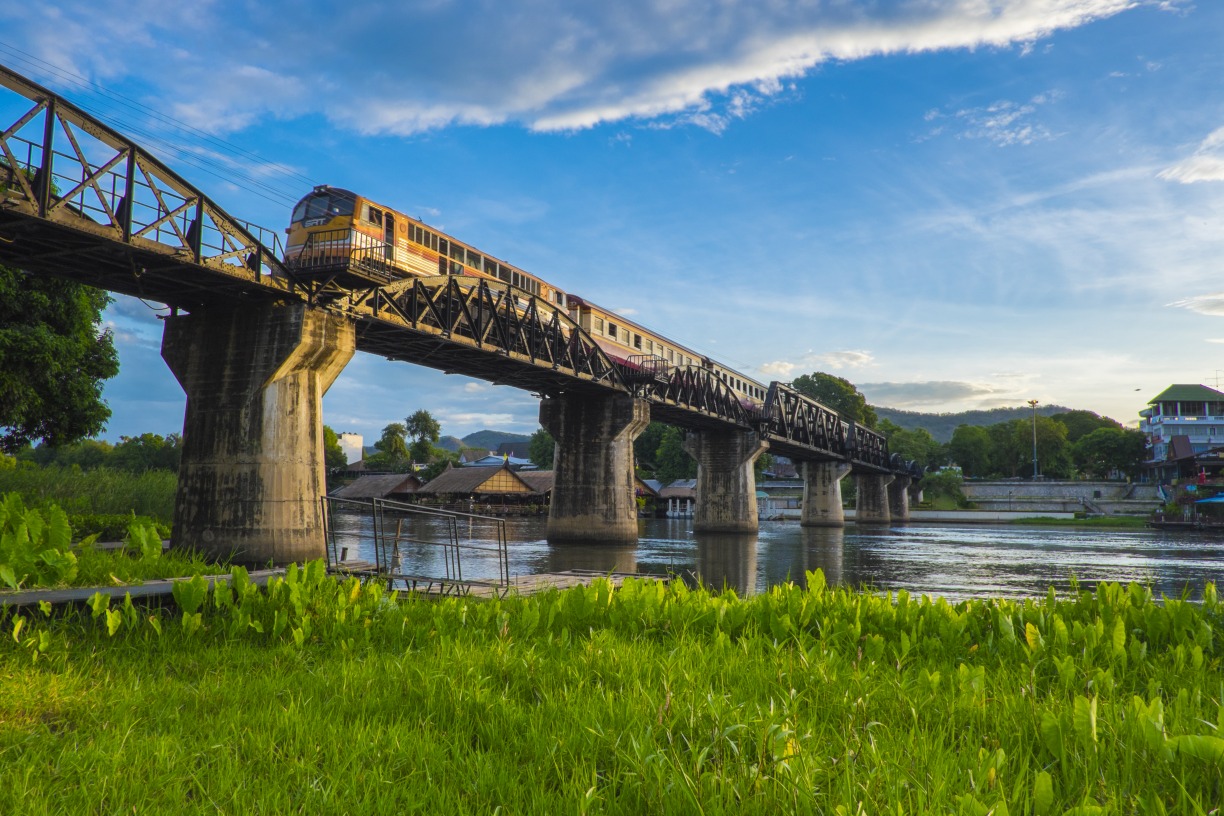
the River Kwai Bridge, a few kilometres to the north;
the Allied War Cemetery, right opposite the museum;
the Hellfire Pass Memorial Museum, further up the valley;
the JEATH War Museum, riverside in the heart of the city;
set apart, the sanctuary Wat Ban Tham, accessible as an addition to a city visit.
Frequently asked questions
Frequently asked questions
Both museums cover the same period but with different approaches. The Thailand-Burma Railway Centre offers a structured, chronological documentary exhibition backed by a research institute. The JEATH War Museum, older and more modest, presents a reconstruction of bamboo barracks evoking the life of prisoners. The two are complementary.
The subject matter – forced labour, disease, executions, bombing – is difficult. Some photographs and testimonies may be upsetting for younger visitors. The visit is better suited to teenagers and older, with accompaniment.
Yes, this is the most logical sequence. The cemetery is located directly opposite the museum and contains nearly 7,000 graves of Allied prisoners of war. Visiting both sites takes about half a day.
The exhibition is primarily in English. Some materials may exist in other languages, but a good understanding of English or the presence of an English-speaking guide greatly facilitates the visit.
Rules may change; it is best to check at the entrance. Given the memorial nature of the site, discretion is expected in the exhibition halls.
Integrating the museum into a Thailand trip
Kanchanaburi works well as a two- to three-day stop on an itinerary combining Bangkok, western Thailand, and nearby national parks. To plan a coherent stay around this region and the memorial sites of the Siam-Burma line, consult our suggestions for Thailand travel.
Nearby

Also discover
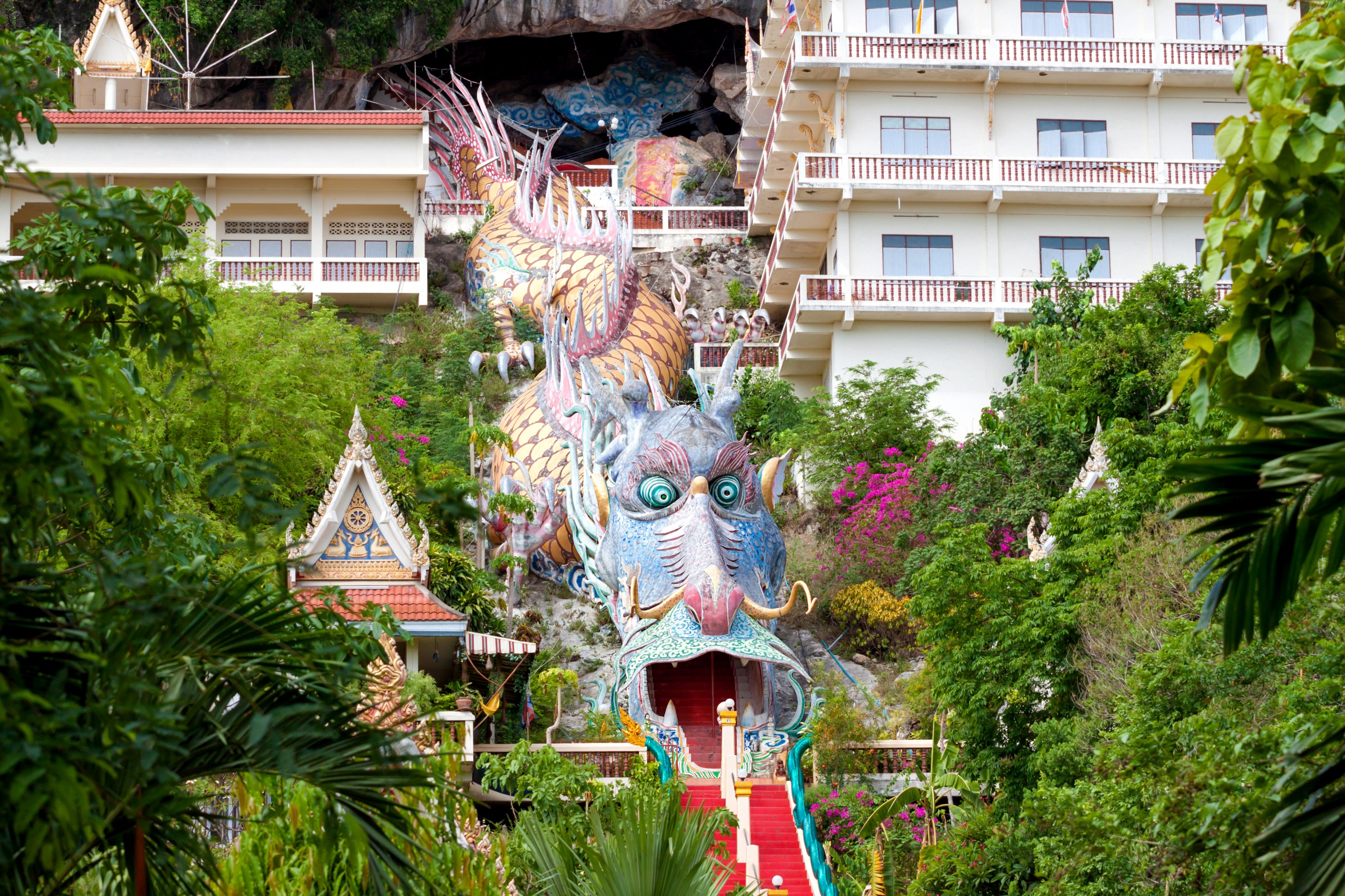
Wat Ban Tham
Wat Ban Tham, or Dragon Temple, near Kanchanaburi: a naga-shaped staircase, fertility sanctuary cave and golden stupa at the summit of 700 steps.
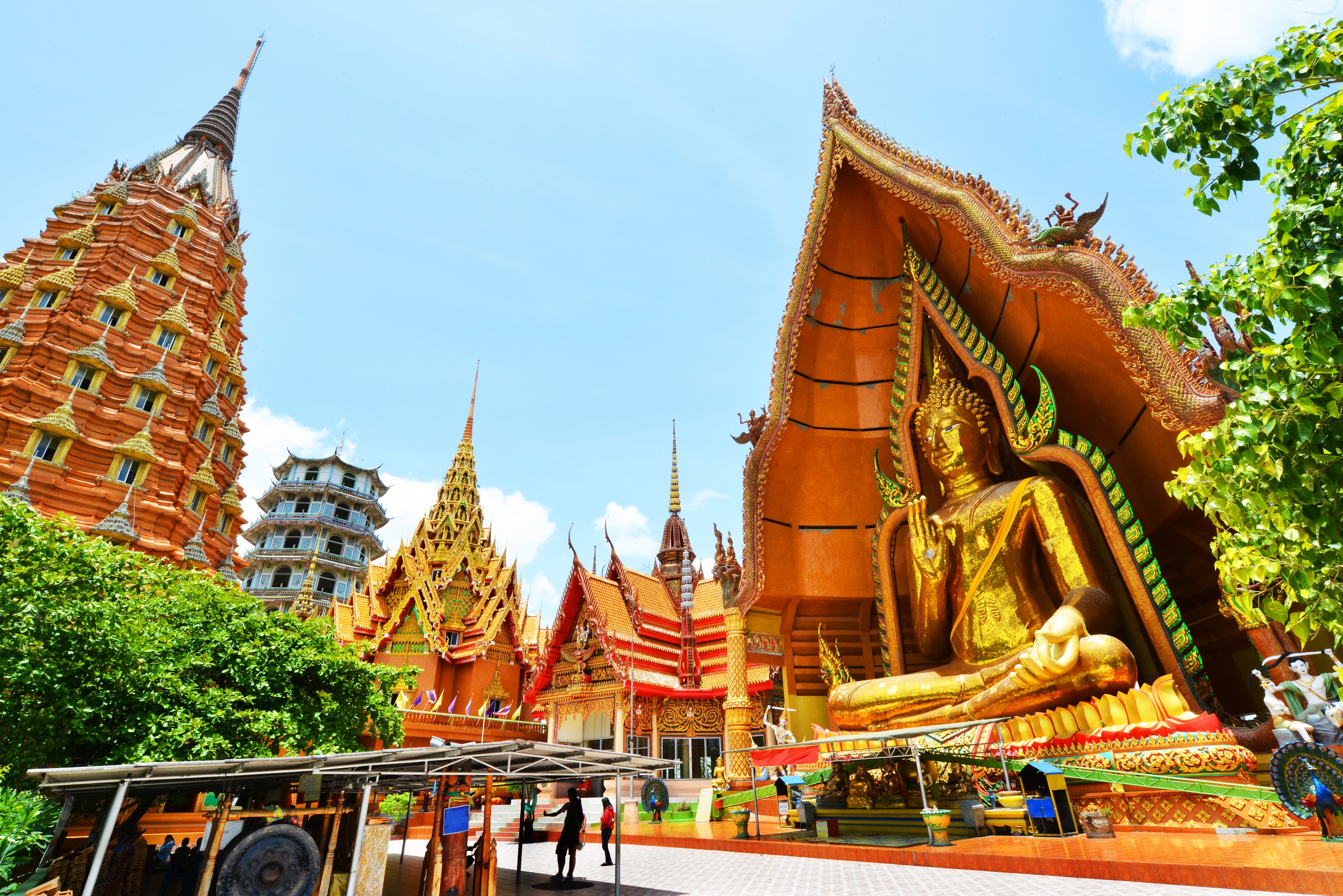
Chin Phrathanporn
A gilded 18-meter Buddha statue overlooking Wat Tham Sua near Kanchanaburi, Chin Phrathanporn blends Buddhist pilgrimage with sweeping valley views.
Interested in this visit?
We can include it in your personalised itinerary.