Pha Taem National Park
Pha Taem National Park
9GX5+F2R, Huai Phai, Khong Chiam District, Ubon Ratchathani 34220, Thaïlande
At the border between Thailand and Laos, Pha Taem protects 300 Neolithic rock paintings on a cliff towering above the Mekong, sculpted boulders, and a cascade.
At Thailand's easternmost tip, Pha Taem National Park preserves 35,000 hectares of sandstone plateau overlooking the Mekong River. The site is renowned for its prehistoric rock paintings, rock formations sculpted by erosion, and its border position facing Laos. Its official designation is Pa Dong Natham Forest Pha Taem National Park.
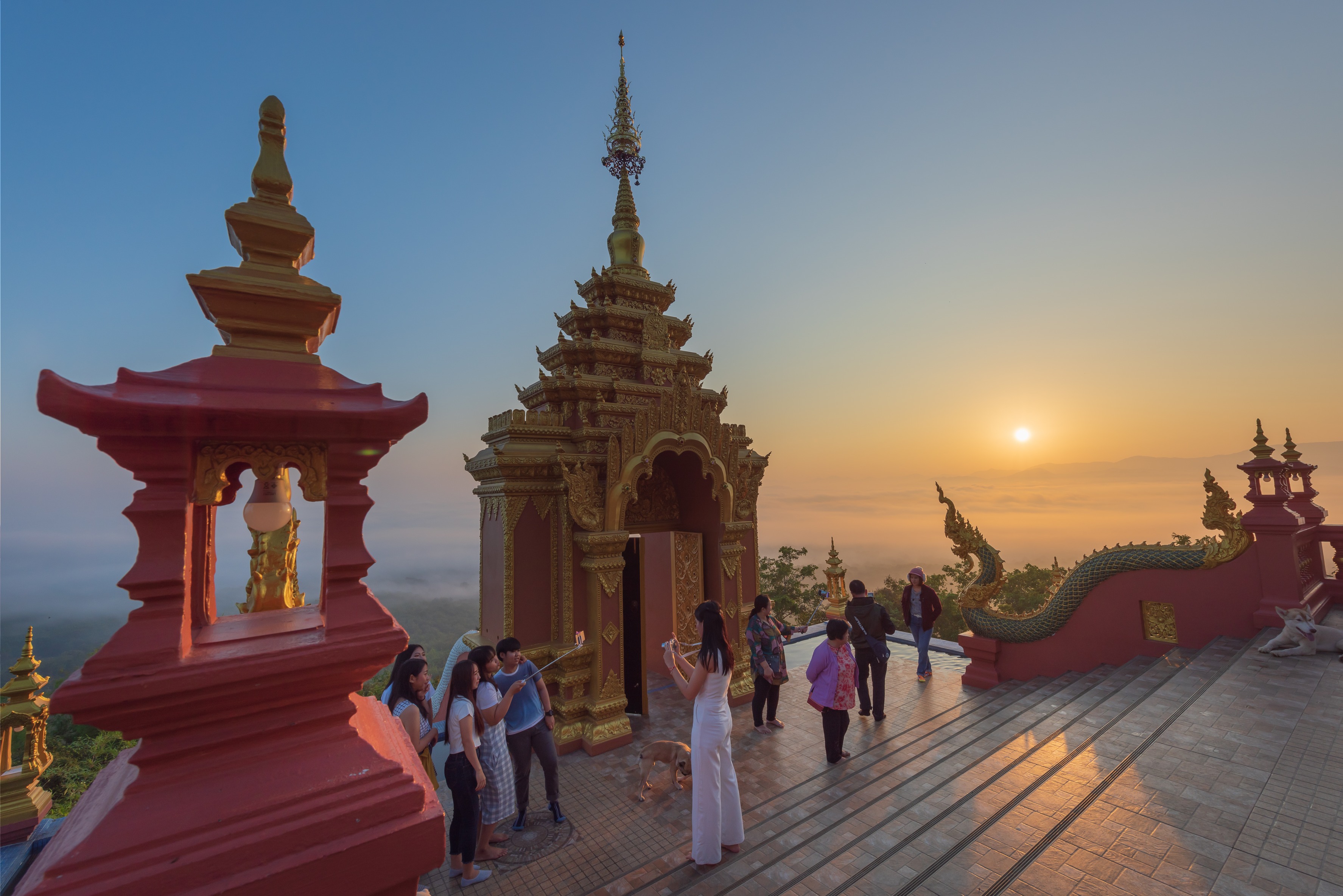
As the first point in the country to greet the rising sun, the park draws crowds of Thai visitors each New Year to witness dawn from the cliff edge. Throughout the rest of the year, visitor numbers remain moderate, making it possible to explore the trails, rock art, and waterfalls at a leisurely pace.
Why Visit Pha Taem
Pha Taem combines archaeological, natural, and spiritual interest that is uncommon in Thailand. The park brings together within a single boundary:
A collection of Neolithic rock paintings among the most significant in mainland Southeast Asia.
A natural vantage point offering sweeping views over the Mekong and the protected area of Phou Xieng Thong in Laos across the river.
Forest biodiversity typical of northeastern Thailand, including several remarkable species.
A troglodyte Buddhist sanctuary, Wat Tham Patithan.
The park lies 20 km from the village of Khong Chiam and approximately 200 km from Ubon Ratchathani, making it an accessible day trip from the provincial capital.
History and Rock Art
The Pha Taem cliff preserves roughly 300 rock carvings and paintings dating back 3,000 to 4,000 years. Executed in red ochre on the sandstone face overlooking the Mekong, they depict human figures, fish, water buffalo, fishing scenes, and tools. This collection bears witness to a Neolithic hunter-fisher society living along the river's banks.
A marked trail runs along the rock face, allowing visitors to observe the main compositions at eye level. Interpretation panels, partly translated into English, accompany the visit and place each grouping in its chronological and cultural context.
What to See in the Park
Rock Paintings and the Cliff Trail
The main trail traces the Pha Taem cliff face for approximately 500 meters and provides access to the four documented painting clusters. The walk also affords continuous panoramic views of the Mekong and Laotian forests.
Mushroom Rocks (Sao Chaliang)
Near the park entrance, isolated sandstone formations resemble squat mushrooms. This differential erosion, which carves deeper into the softer base than the crown, has sculpted a mineral landscape that has become emblematic of the site.
Nom Tok Song Chan Waterfall
In the northern section of the park, the Nom Tok Song Chan waterfall, known as the "Moonlight Cascade," flows from a rocky crevice into a forest-rimmed pool. Water volume fluctuates significantly by season: low during the dry season and more dramatic following the monsoon.
Wat Tham Patithan
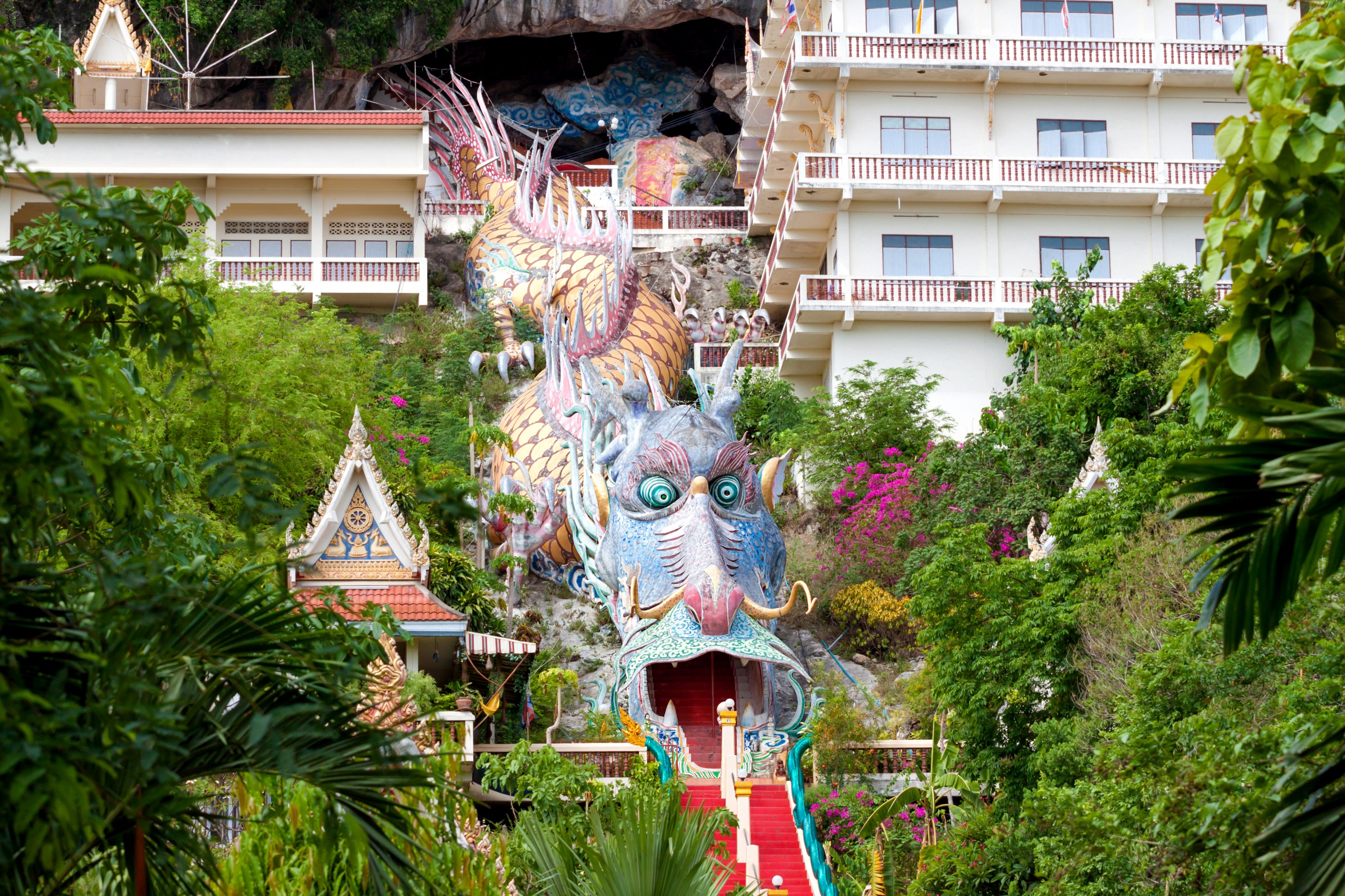
Also transcribed as Pa-Ti-Han, this troglodyte sanctuary occupies a sandstone cave. Access is via a staircase flanked by multi-headed nagas. The interior contains two prayer halls spanning 30 and 200 meters, as well as a large reclining Buddha. Dress covering shoulders and knees is required.
Fauna and Flora
The forest canopy is dominated by dipterocarps: Shorea obtusa, Shorea siamensis, and Dipterocarpus obtusifolius. Near the Mekong, dense evergreen forests prevail. Wildlife includes Asian palm civets, common civets, clouded leopards, Burmese hares, wild boar, serows, and muntjacs. An endemic frog species, Fejervarya triora, was first described here in 2005.
Practical Information
The park charges an entrance fee with a higher rate for foreign visitors and an additional vehicle supplement. Fees are periodically revised by the Department of National Parks; it is advisable to check the current rates before your visit.
The visitor center operates during daylight hours. Plan your visit for early morning or late afternoon to avoid midday heat. Water, a hat, and sturdy closed-toe shoes are recommended on the cliff trails.
When to Go
Northeastern Thailand has a tropical savanna climate, remaining warm year-round. The most favorable period runs from November through February: the monsoon has ended, temperatures are manageable, and vegetation remains lush. March through May brings intense heat; June through October, the rainy season, may render some paths slippery but feeds the waterfalls generously.
How to Get There
The easiest access is via Ubon Ratchathani, connected to Bangkok by air (daily flights, approximately 1 hour) or overnight train. From Ubon, two options:
By bus: local service to Khong Chiam, then taxi or songthaew for the remaining 20 km. Plan for approximately 2 hours total travel time.
By rental car: the road is paved to the park entrance, simplifying travel between the various sites (cliff, waterfalls, temple).
Nearby Attractions
Pha Taem easily combines with other sites in Ubon Ratchathani Province:
Khong Chiam, a riverside village at the confluence of the Mekong and Mun rivers.
The Mun River, the Mekong's principal tributary in the region.
Wat Phra That Nong Bua, an Indian-style stupa in Ubon Ratchathani.
Frequently Asked Questions
Frequently asked questions
The park houses approximately 300 rock paintings dating back 3,000 to 4,000 years, painted on a cliff overlooking the Mekong River. Additional attractions include sandstone formations ("mushroom rocks"), a waterfall, and a troglodyte sanctuary.
A half-day suffices to see the painted cliff, mushroom rocks, and panoramic views. Plan a full day if adding the Nom Tok Song Chan waterfall and Wat Tham Patithan.
Approximately 2 hours by road. Using public transport, take a bus to Khong Chiam, then a songthaew or taxi for the final 20 km. A rental car remains the most convenient option.
November through February, after the monsoon and before peak heat. To witness Thailand's very first sunrise, January 1st is the emblematic date but also the busiest.
Clothing covering shoulders and knees is required to enter Wat Tham Patithan. Closed-toe shoes are recommended on the cliff trails.
Plan Your Journey
Pha Taem fits well into an Isan itinerary—Thailand's least touristy region, rich in Khmer sanctuaries and Lao culture. To build a custom itinerary, explore our suggestions for Thailand routes and tours.
Photos
Also discover
Mun River
The principal waterway of northeastern Thailand, the Mun River flows through Isan for 750 km before meeting the Mekong near Ubon Ratchathani.
Khong Chiam
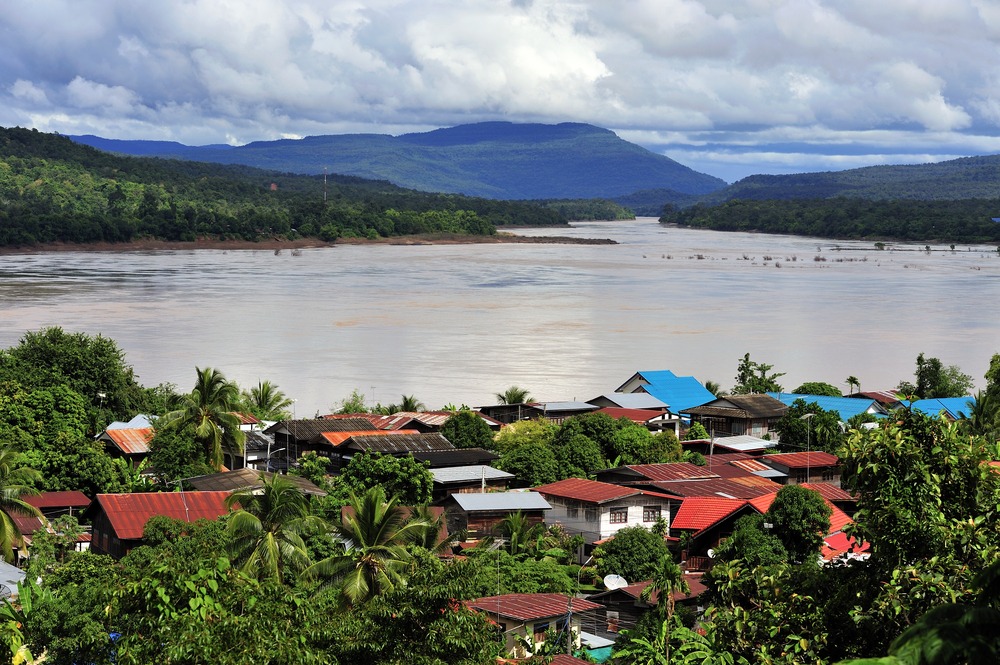
At Thailand's eastern edge, Khong Chiam aligns national parks, ancient rock paintings, and a spectacular confluence where the Mekong meets the Mun River.
Interested in this visit?
We can include it in your personalised itinerary.