Terraced Rice Fields of Baan Pa Pong Piang
Terraced Rice Fields of Baan Pa Pong Piang
บ้านระเบียงนา ป่าบงเปียง Tambon Chang Khoeng, Amphoe Mae Chaem, Chang Wat Chiang Mai 50270, Thaïlande
Two hours from Chiang Mai, the Karen village of Baan Pa Pong Piang cascades its terraced rice fields at the foot of Doi Inthanon, visible from July to October.
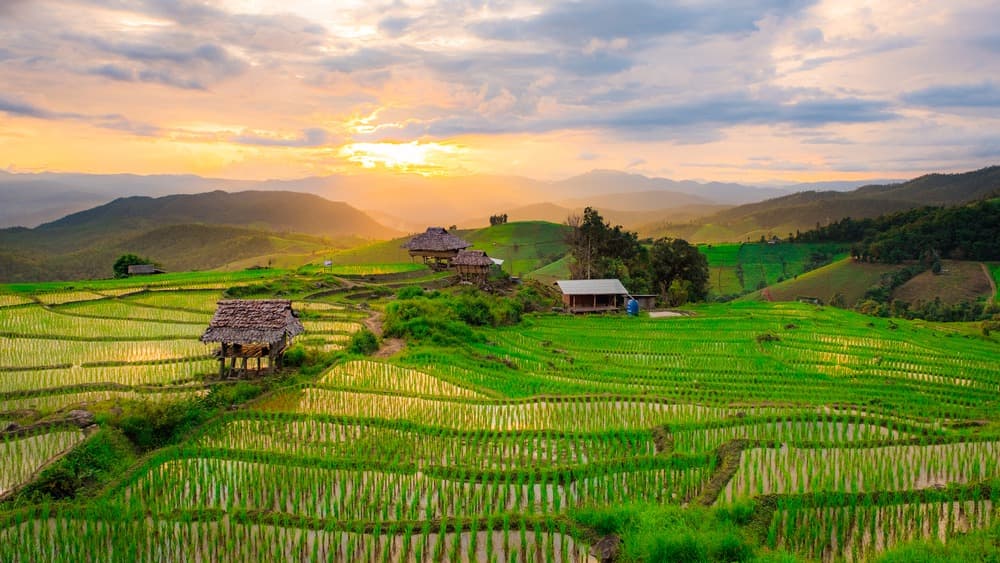
In Mae Chaem District, roughly two hours' drive from Chiang Mai, the hamlet of Baan Pa Pong Piang rises at 1,000 metres elevation at the foot of the Doi Inthanon massif. Its terraced rice fields, shaped by the Karen community over more than a century, offer a living agricultural landscape that sits beyond the well-trodden circuits of northern Thailand.
Why Visit Baan Pa Pong Piang
The site brings together three rarely combined attractions: an agricultural landscape structured in tiers along steep slopes, farming activity that continues as livelihood, and the possibility of genuine immersion with local families. Terrace rice cultivation here is not a reconstructed attraction but the actual subsistence of a village that grows rice for its own consumption. Visitors gain access to preserved rural daily life, free from heavy tourist infrastructure: no hotels, no electricity in the village, no dedicated shops.
For those seeking contrast with the buzz of Chiang Mai and its temples such as Wat Phra Singh or Wat Chedi Luang, Baan Pa Pong Piang represents the exact opposite of urban spectacle: silence, elevation and fieldwork.
What You'll See
The Terraces and Their Layout
Plots stack in tiers along the hillsides, each level retained by an earth ridge that follows the curves of the terrain. This technique, introduced over a hundred years ago according to locals, solved a concrete problem: erosion of watershed basins under monsoon rains, which rapidly depleted soils cultivated on slopes. Terrace farming slows runoff and stabilizes the fertile layer.
Depending on the season, the terraces shift through strikingly different hues: mirrors of water at planting time, tender green of seedlings, golden blonde as harvest approaches. The Doi Inthanon massif closes the horizon in the background, structuring photographic compositions particularly in late afternoon light.
Karen Village Life
The Karen people practise subsistence rice farming here: the rice produced feeds families, with no commercial circuit involved. Days revolve around agricultural tasks (ploughing, weeding, maintaining ridges) and domestic craftsmanship. The community maintains a quiet, low-mechanized way of life that explains the landscape's coherence.
When to Visit
The visiting window is narrow and dictated by the rice-growing calendar. Planting happens in July, after the first monsoon rains; harvest occurs in late October. Outside this period, village guesthouses close and terraces lie empty.
Two moments concentrate visual interest:
August–September: vibrant green terraces, landscape in full growth.
October: golden grain, harvest atmosphere, slightly higher visitor flow.
Pack rain gear: the monsoon remains active on these hillsides and showers are frequent.
Practical Information
Village Accommodation
There are no hotels in Baan Pa Pong Piang. Stays take place in guesthouses run by locals, with deliberately basic comfort: wooden walls, floor sleeping, mosquito nets and candles for light. The village has no electricity. Facilities are communal and outside (shower, washbasin, squat toilets). Breakfast and dinner are usually included in your night's stay. A night in a family guesthouse remains affordable; confirm prices directly with families or through a local agency, as rates vary by season.
What to Bring
Headlamp (no street lighting).
Waterproof clothing and closed-toe footwear.
Cash: no electronic payment methods on site.
Respect for quiet and discretion when photographing residents.
Getting There
From Chiang Mai, allow roughly 1.5 hours' drive to Mae Chaem town, then another thirty minutes on a secondary road to reach the village. The final stretch uses a mountain track: a suitable vehicle (4x4 or local pick-up) is recommended, especially during the rainy season. Most visitors arrange transport and a guide from Chiang Mai, as the final approach can be tricky to navigate alone.
Nearby Attractions
The summit of Doi Inthanon, Thailand's highest peak, and its hiking trails.
Mae Pan waterfall, accessible from the national park.
Other Hmong and Karen villages scattered across the surrounding ridges.
Mae Chaem markets for a glimpse of the local economy.
Returning to Chiang Mai, the contrast will be striking with Warorot Market or the artisan lanes around Wat Sri Suphan.
Planning Your Journey
Baan Pa Pong Piang fits well into a northern Thailand itinerary combining Chiang Mai, Doi Inthanon National Park and highland villages. To craft a custom route including this rural detour, explore our Thailand journeys.
Photos
Also discover
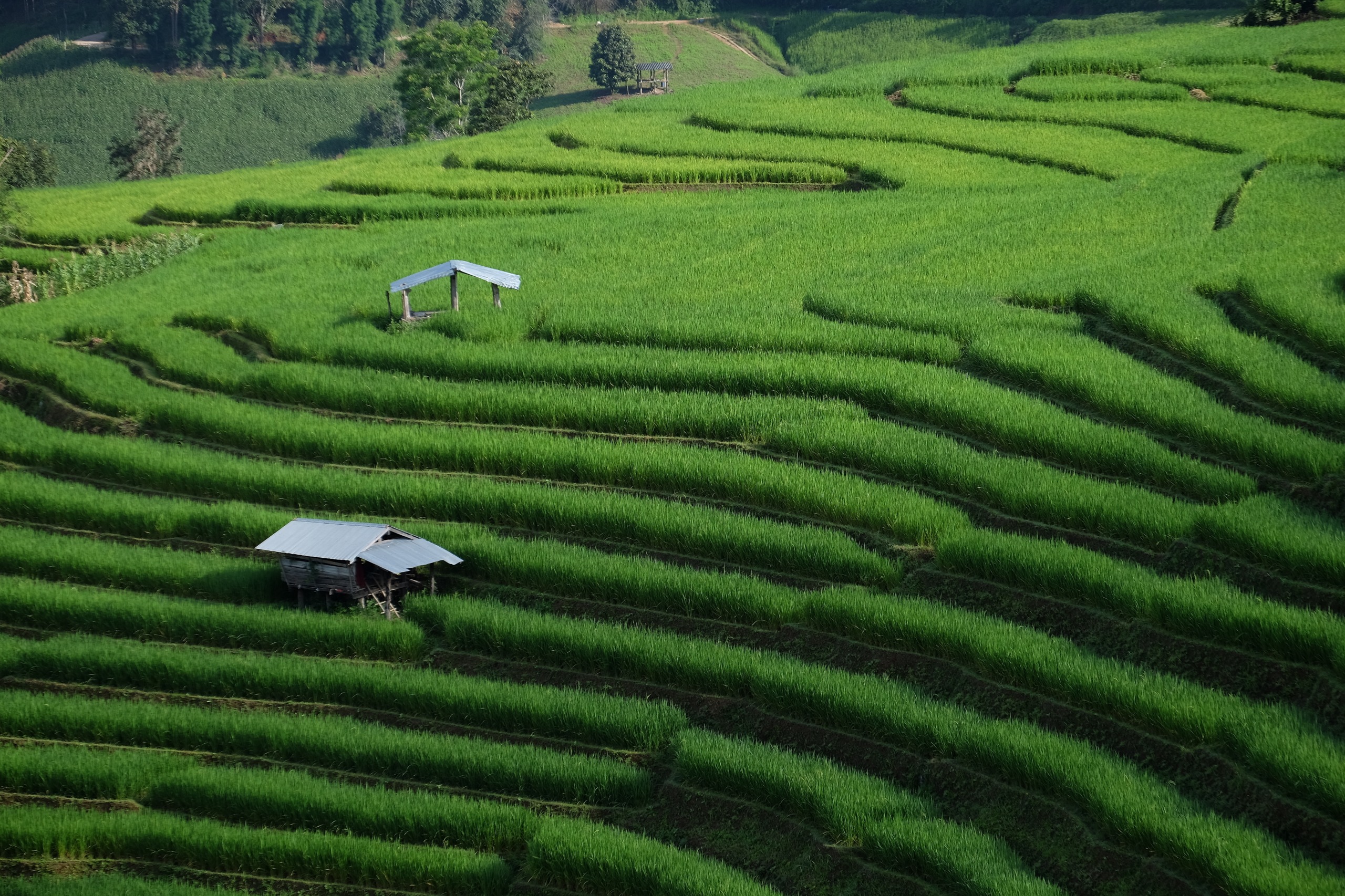
A Stay in Ban Pa Pong Piang: Thailand's Most Stunning Terraced Rice Fields
Discover Ban Pa Pong Piang, home to some of Thailand's most breathtaking terraced rice fields, and experience authentic village life nestled in the mountains of northern Thailand.
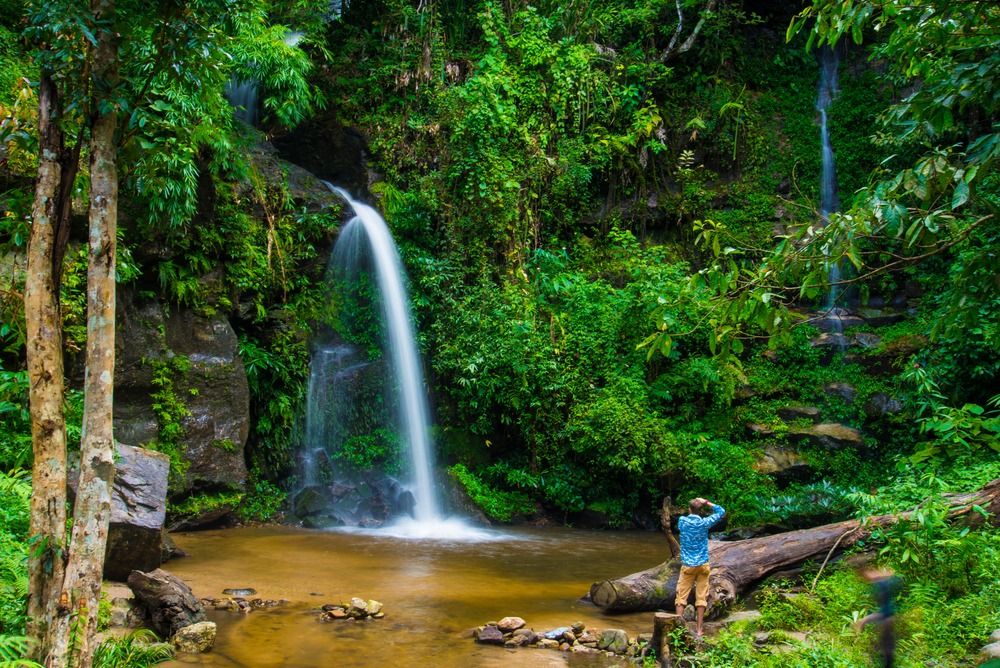
Doi
Located 13 km from Chiang Mai, the Doi Suthep-Pui massif brings together a national park, the golden sanctuary of Wat Phra That Doi Suthep and the royal Bhubing Palace.
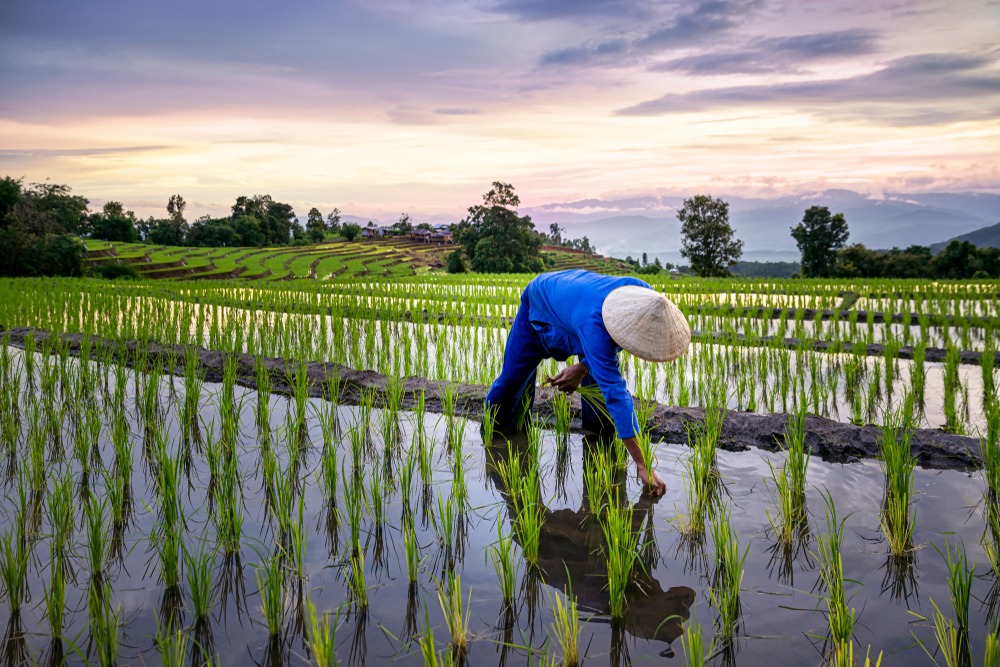
Mae Chaem
Located 150 km from Chiang Mai, Mae Chaem showcases Lanna temples, terraced rice fields, and Hmong villages. An authentic valley nestled at the foot of Doi Inthanon.
Interested in this visit?
We can include it in your personalised itinerary.